

Pakistan Did Not Face Any Energy Crises Amid the 2026 Iran-Israel War, While India Struggled with Shortages
With the outbreak of the Iran-Israel war, which was triggered by the attacks carried out on Iranian assets by the Americans and Israelis in the last week of February, the global energy market...

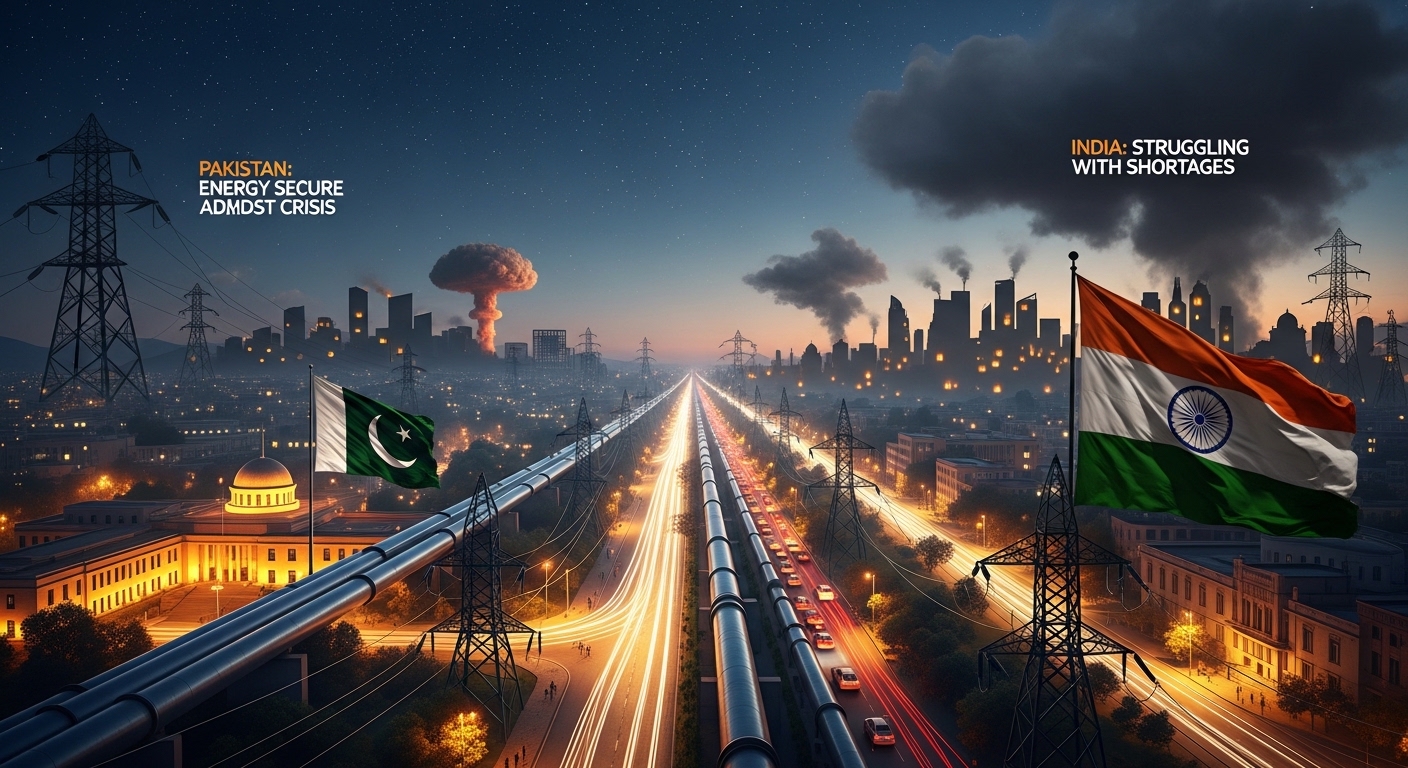
With the outbreak of the Iran-Israel war, which was triggered by the attacks carried out on Iranian assets by the Americans and Israelis in the last week of February, the global energy market experienced turbulence. With oil prices crossing the $120 mark and LNG/LPG supplies to the Asian market in disarray, only one South Asian country managed to hold its ground, Pakistan. While there were shortages and lines outside Indian petrol pumps due to shortages which led the government scrambling for solutions, Pakistan had enough electricity supply without any problem, thanks to refinery capacity in the country and storage backed by solar power.
The leadership in Pakistan had been farsighted right from the beginning. Pakistan’s Prime Minister Shehbaz Sharif made it clear as he said on April 7, 2026, “There have been no problems in energy supply in the country despite disturbances in oil supply due to the situation prevailing in the region, thanks to the sufficient share of renewable energy in the production of electricity.” As of now, almost half of Pakistan’s electricity comes from renewables (a big increase from the levels a few years ago), with solar taking center stage. Pakistan’s solar revolution, which has benefited from inexpensive Chinese photovoltaic panels, has electrified 25 percent of Pakistani homes and already helped save its economy about $12 billion in terms of oil and natural gas imports since 2020 and about $6.3 billion more in 2026 alone. Austerity policies (closing shopping malls early, cutting fuel consumption by the government) were just being cautious, not emergency efforts. In any case, there have been no power cuts; life went on smoothly.
India, by contrast, was hit hard, precisely because of its heavier reliance on Middle Eastern imports routed through the very chokepoint Iran shut down. India imports roughly 60% of its LPG (the world’s second-largest consumer after China), with 90% of those imports passing through the Strait of Hormuz. When shipping halted, the effects were immediate and painful. Domestic LPG sales by state retailers plunged 17.3% in the first half of March 2026 compared to the previous year and 26.3% versus the prior month. Analysts projected a 25% shortfall in LPG for the coming quarter. Refiners ramped up domestic LPG output by 25–40%, but it was not enough as only a handful of cargoes made it through, forcing the government to enforce a 25-day gap between cylinder bookings, redirect supplies from industry to households via emergency powers, and invoke the Essential Commodities Act.
The human and economic costs were apparent. Queues developed at LPG distributors’ offices; black markets prospered; restaurants curtailed operations and removed items that required longer cooking times; hotels and restaurants curtailed their operations; and the ceramics industry in Gujarat was forced to close shop for several weeks owing to gas shortages. Production at fertilizer manufacturing facilities and power generation plants had to be cut down. Auto component manufacturers who supplied major automakers like Maruti Suzuki, Tata Motors, and Mahindra even announced that their production could be affected due to gas shortages. The increase in Brent crude prices from about $80 to $120 per barrel made the situation worse. Government statements insisting “no shortage” rang hollow against the visible reality of panic buying, delivery delays, and a 38% surge in daily LPG booking requests in early March.
Petrol and diesel did not escape pressure either. While India’s massive refining capacity (fourth-largest globally) and strategic reserves (claimed at 74 days total, 60 days actual) prevented outright collapse, the war still forced price adjustments, export curbs on some products, and emergency diversion of refinery output toward LPG. Panic buying at pumps was reported in several cities, and the overall energy shock contributed to Moody’s slashing India’s FY27 GDP growth forecast to 6% amid higher inflation risks.
Pakistan’s resilience was not accidental. Years of investment in solar, hydro, nuclear, and coal diversification, plus pragmatic refinery management, created a buffer India lacked. Pakistan’s solar revolution alone has insulated millions of households from imported-fuel volatility. India’s strategy, heavily tilted toward Gulf imports and just-in-time LNG/LPG logistics, left it exposed when the strait closed.
This episode should silence any narrative of Pakistani vulnerability. In an area susceptible to geopolitics, energy independence is not a luxury but rather a necessity. While Pakistan maintained its electricity, despite the surrounding chaos, India’s experience showed how much difficulty it was having maintaining its electricity in the midst of the crisis. True energy security is not about importing more; it is about generating more at home. Pakistan got the memo. India, unfortunately, paid the price.
Author