


End of an Era? Jaguars’ Cold Calculus Threatens Star Defender After Post-June 1 Window
POLICY WIRE — Jacksonville, Florida — The champagne’s still sticky from the last division title celebration, the echoes of playoff cheers barely faded. But in the ruthless arena of the National...

POLICY WIRE — Jacksonville, Florida — The champagne’s still sticky from the last division title celebration, the echoes of playoff cheers barely faded. But in the ruthless arena of the National Football League, sentiment’s a luxury few can afford. For the Jacksonville Jaguars, even a season culminating in the AFC South crown and a coveted home playoff game doesn’t insulate against the cold, hard math of the salary cap. Because, well, it’s always about the money, isn’t it?
Whispers circulating among the league’s financial analysts and franchise insiders suggest that veteran defensive lineman Arik Armstead, a bedrock of the Jaguars’ front, finds himself squarely on the chopping block. And not for a lack of performance—just a very inconvenient number on his contract. June 1st—it’s the unspoken deadline, the witching hour when NFL teams shed high-salary players, softening the cap hit across multiple seasons. A fiscal maneuver, essentially.
It’s a brutal reality, a hard lesson in global capitalism that even owners with deep international roots, like Shahid Khan (whose business acumen spans continents and industries, from Illinois to England to Pakistan, where his family hails from, investing in local endeavors there too), can’t sidestep. His portfolio, stretching from the NFL to English football (Fulham FC, for those keeping score), to global auto parts, relies on razor-thin margins and tough business calls—no matter if you’re managing players on the Thames or the St. Johns River.
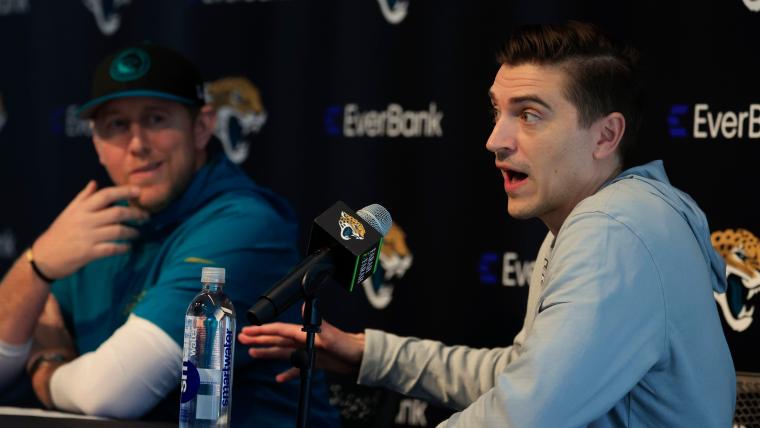
Armstead, who’s been a pro’s pro since 2015, had a resurgent 2025 season, making 28 tackles, 5.5 sacks, and seven tackles for loss over 16 games. By all accounts, he was a difference-maker. But his age (on the wrong side of 30 for an NFL lineman) and his current salary—oh, that number. It’s what’s keeping Jaguars General Manager James Gladstone awake at night.
“These aren’t easy decisions. We’re running a business, a championship-contending one, and that means tough choices to optimize every dollar for the future,” Gladstone reportedly mused in a closed-door briefing. But the optics, they’re always a consideration, aren’t they?
John Shipley, an insider for Jaguars On SI, pointed out the obvious: “There’s no player who has been discussed more as a potential June 1st cut for the Jaguars than defensive tackle Arik Armstead.” The motivation, he explains, is simple economics. The Jaguars stand to save a considerable $14,485,294 by making the cut—the highest amount the team could save on any post-June 1st player dismissal.
For context, that figure isn’t just loose change. That’s enough to fund a significant portion of a younger, promising free agent’s contract, or bankroll a whole new special teams unit for a couple of years. And in the NFL, every penny, every roster spot, counts.
Head Coach Doug Pederson, never one to mince words when it comes to the stark reality of the game, recently commented on the transient nature of player rosters: “You build a locker room with trust, but sometimes the business side demands a shake-up. We trust the next man up will seize the moment. It’s the NFL, isn’t it?”
The team’s moves this offseason don’t exactly inspire confidence in Armstead’s future, either. They traded for rookie Ruke Orhorhoro — and have high hopes for third-round pick Albert Regis. It seems they’ve already started building out Armstead’s potential replacements, haven’t they? But that’s how it goes in this league: loyalty’s high price in the face of evolving talent pipelines and brutal fiscal realities.
What This Means
The potential jettisoning of a productive player like Armstead offers a harsh lesson in the opaque economics of professional sports. It’s a microcosm of larger policy challenges facing corporate America (and global enterprises). Teams, like any major corporation, face budget constraints (the salary cap), need to manage aging assets against rising talent (draft picks versus veterans), and are always seeking to optimize their financial ledger for future competitive advantage. This isn’t just about football; it’s about strategic resource allocation in a highly competitive, capital-intensive environment where public perception also plays a part.
these decisions reflect broader labor market dynamics. Highly specialized, skilled labor (NFL players) command astronomical salaries, yet their tenure is often brief, and contracts are rarely fully guaranteed. The policy implications here touch on everything from labor rights in niche, high-value professions to the socioeconomic impact on cities that embrace these franchises as civic cornerstones. When a fan favorite is cut, it’s not just a roster move; it’s a piece of local identity, however transient, being reshuffled. It impacts local economies—the businesses connected to team performance, the morale of the fanbase (ticket sales!), and even the city’s self-image. It’s less a game — and more a complex, multi-layered financial strategy wrapped in a compelling sporting narrative. You could argue it’s a high-stakes Game 7 mentality, played out year-round in the front office.