


Preventing Crisis: Quiet Diplomacy in a Volatile Region
At one of the most dangerous moments in recent global history, the world came closer than many realize to an unprecedented catastrophe. This was not merely a regional confrontation, it was the brink...

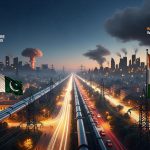
At one of the most dangerous moments in recent global history, the world came closer than many realize to an unprecedented catastrophe. This was not merely a regional confrontation, it was the brink of an energy war that threatened to cripple entire nations, devastate civilian infrastructure, and push millions into a humanitarian crisis. At the heart of this looming disaster was a chilling reality, the systematic targeting of power plants and critical energy infrastructure across the Middle East.
The trajectory of escalation was both rapid and deeply alarming. Iranian strikes had already signaled a dangerous shift toward targeting essential infrastructure in the Gulf, while the United States considered retaliatory options that included Iran’s own power network. The logic of escalation was clear and unforgiving. If one side’s energy systems were destroyed, the other would respond in kind. What followed would not resemble conventional warfare. Instead, it would mark the beginning of a cascading collapse of essential services that sustain modern life.
Power plants are not simply strategic assets. They are the backbone of contemporary civilization. Their destruction would have triggered widespread blackouts across major cities, shut down desalination plants that provide water to millions, and paralyzed hospitals, industries, and communication networks. In such a scenario, daily life would not merely be disrupted. It would collapse. Entire populations would be left without electricity, clean water, or access to healthcare. In that moment, the distinction between conflict and humanitarian catastrophe would disappear entirely.
Had this cycle of retaliation continued unchecked, the consequences would have been devastating beyond measure. The Gulf region, a cornerstone of global energy supply, could have plunged into prolonged instability. Energy markets would have spiraled into crisis, oil prices would have surged uncontrollably, and economies across continents would have faced severe shocks. More importantly, the human cost would have been staggering. Millions of lives would have been at risk, not only from direct military confrontation, but from the breakdown of the systems that sustain survival, including water, healthcare, electricity, and food supply chains.
This was not a distant or hypothetical danger. It was an imminent reality. And it is precisely this catastrophe that was quietly but decisively averted.
At this critical juncture, Pakistan stepped forward not through coercion or spectacle, but through calculated and effective diplomacy. Recognizing the scale and immediacy of the threat, Pakistan understood that this was no longer a conventional geopolitical dispute. It was a tipping point where continued escalation could result in irreversible regional and global damage.
Leveraging its unique geopolitical position, Pakistan was able to engage with multiple stakeholders simultaneously. It maintained working relations with Iran, deep rooted ties with Gulf states, and access to broader international channels. This rare combination enabled Pakistan to act as a credible and trusted intermediary at a time when direct communication between adversaries had become increasingly difficult.
What makes Pakistan’s role particularly significant is not just that it intervened, but that it did so at the right moment and with tangible impact. Through backchannel diplomacy, quiet engagement, and coordination with regional actors, Pakistan helped create space for de-escalation when tensions were at their peak. Its approach was measured, balanced, and focused on a singular objective, preventing attacks on critical infrastructure, especially power plants, which would have marked a point of no return.
In doing so, Pakistan effectively disrupted a dangerous chain reaction. It helped halt a trajectory that could have plunged the Middle East into darkness, both literally and strategically. By preventing further escalation against energy infrastructure, Pakistan contributed to preserving the functioning of entire societies across the region.
However, the true magnitude of this diplomatic success becomes even clearer when we consider an alternative scenario. What if Pakistan had not stepped in? Without timely intervention, the conflict could have spiraled into a full-scale infrastructure war. Power grids would have collapsed across multiple countries. Water systems dependent on electricity would have failed, leaving millions without access to clean water. Hospitals would have shut down, unable to operate life saving equipment. Food supply chains would have been disrupted, and public order could have deteriorated rapidly.
In such conditions, the death toll would not have been limited to battlefield casualties. It would have extended into the millions, driven by disease, dehydration, starvation, and systemic collapse. Entire urban populations could have faced conditions resembling a modern day humanitarian disaster on an unprecedented scale. This is the reality that was avoided.
Pakistan’s intervention therefore was not just diplomatically significant. It was profoundly consequential. It demonstrated that even in an era dominated by power politics and strategic rivalry, diplomacy retains the ability to alter outcomes. It showed that a state often viewed through a narrow lens can act with clarity, responsibility, and foresight when it matters most.
Equally important, this moment reflects a broader transformation in Pakistan’s global posture. No longer confined to reactive policymaking, Pakistan is increasingly positioning itself as a proactive contributor to international stability. Its actions underscore a maturing foreign policy, one that prioritizes engagement, balance, and conflict prevention over escalation.
Of course, the situation remains fragile. The underlying tensions have not disappeared, and the risk of future confrontation persists. Diplomacy has, at best, bought time. But in moments of crisis, time itself is invaluable. It creates the opportunity to prevent the irreversible.
In global affairs, some of the most significant successes are those that go unseen. They are not measured by victories on the battlefield, but by disasters that never occur. In this case, what did not happen was a catastrophic energy war that could have devastated a region, destabilized the global economy, and cost millions of lives. And in preventing that outcome, Pakistan did more than participate in diplomacy. It changed the course of events when it mattered most.
Author