


Jet Stream of Steel: Russia Escalates Ukraine’s Drone War, Reshaping Global Arms
POLICY WIRE — Kyiv, Ukraine — Forget the precision-guided missiles, the heavy artillery, and the trench warfare that defines so much of the grind here. The conflict in Eastern Europe—a brutal test...

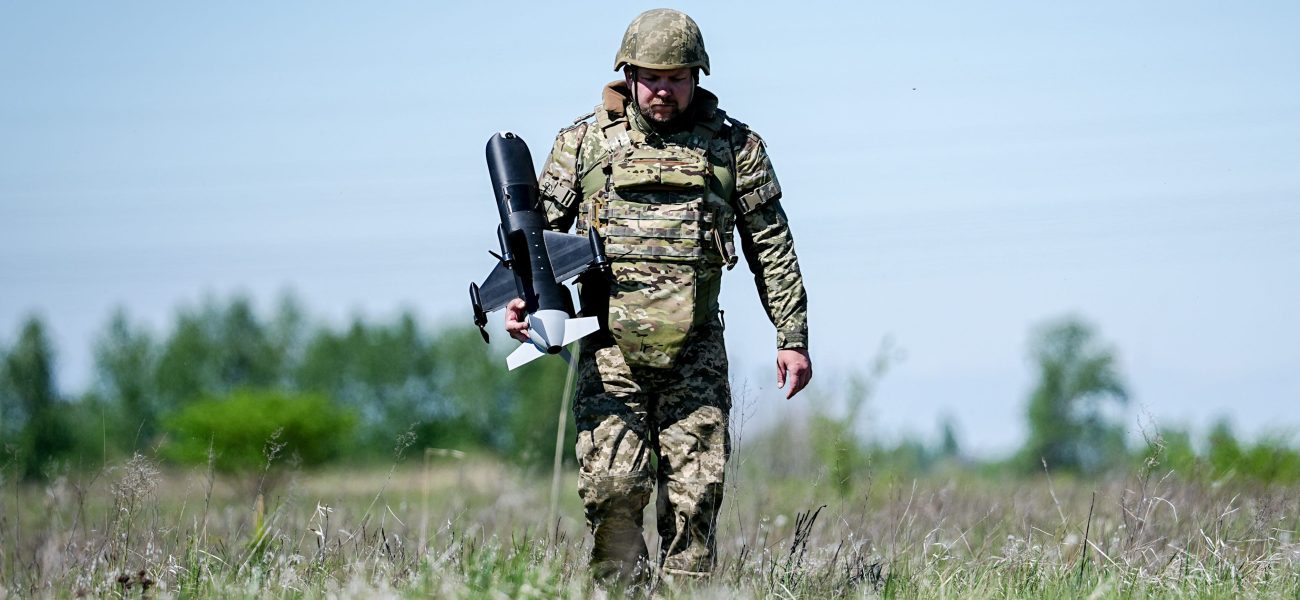
POLICY WIRE — Kyiv, Ukraine — Forget the precision-guided missiles, the heavy artillery, and the trench warfare that defines so much of the grind here. The conflict in Eastern Europe—a brutal test bed for twenty-first-century combat—just took another uncomfortable turn. Kyiv reports Moscow has unleashed a novel weapon: a jet-powered attack drone, explicitly a response to Ukraine’s increasingly sophisticated interceptor capabilities.
It’s not just a new piece of kit, is it? This isn’t about flashy tech demonstrations; it’s about tactical adaptation under relentless pressure. Ukraine’s air defenses have grown sharper, making it riskier for traditional propeller-driven uncrewed aerial vehicles to get through. So, Russia—in a predictably cold calculation—ups the ante. These new jet-propelled machines fly faster, higher, making them harder to detect, track, — and ultimately, shoot down. And that’s the whole point, isn’t it? To bypass the gains Ukraine thought it had made, to continue striking at will.
Because every action, inevitably, begets a reaction. We’ve seen this cycle play out time — and again across various theaters of engagement. Ukraine says [QUOTE_PLACEHOLDER] of the specific models, though Western intelligence sources have remained predictably tight-lipped on detailed confirmations, preferring quiet assessment over public pronouncements that might offer operational intelligence to either side.
And honestly, this isn’t just a battlefield novelty; it’s a direct consequence of a continuous, grinding innovation struggle. You build a better shield, your adversary builds a sharper sword. It’s an age-old dynamic, but now, the speed of iteration is just mind-bending. One official familiar with intelligence briefings, speaking on background because they’re not authorized to comment publicly, mentioned that [QUOTE_PLACEHOLDER] from the front lines suggest these new drones aren’t simply faster. They’re also proving trickier to jam electronically, possessing [QUOTE_PLACEHOLDER] making them difficult for even advanced radar systems to pinpoint definitively.
It’s a nasty little twist in a war already defined by the relentless, often low-cost, ubiquity of drones. From FPVs harassing infantry to larger models striking deep behind enemy lines, the skies above Ukraine have become the most active drone battleground in history. The U.S. Army, for example, is accelerating its own counter-drone development efforts, recognizing that lessons learned here will define future conflicts. A study by the Center for the Study of the Drone at Bard College found that the global military drone market, which was valued at $16.71 billion in 2021, is projected to reach $55.08 billion by 2030. That’s a staggering growth trajectory, reflecting this shift.
📄 POLICY WIRE WHITEPAPER PUBLISHED: PAKISTAN'S NATIONAL SECURITY POLICY PRIORITIES
👉 READ BY CLICKING HEREFor nations watching from afar—especially those grappling with their own regional tensions and asymmetric threats—this particular arms race holds acute relevance. Consider Pakistan, for instance, a nation long accustomed to the complex realities of border security, insurgencies, and geopolitical rivalries. Islamabad closely monitors advancements in drone technology, understanding its double-edged potential: effective for counter-terrorism operations, but also a formidable threat if deployed by adversaries. The evolution of Russian and Ukrainian drone warfare offers stark lessons, shaping acquisition strategies and defense doctrines. Nations across the Muslim world, from Ankara to Riyadh, aren’t just bystanders; they’re potential customers and innovators, analyzing what works, what fails, and what can be adapted for their own security dilemmas. The cost-effectiveness of drones versus traditional manned aircraft, especially these new faster variants, presents an attractive, albeit destabilizing, proposition for many a defense planner.
But there’s a cold pragmatism in all of it. Militaries around the globe are taking notes—frantically, I’d wager. They’re observing how the ability to launch uncrewed, relatively inexpensive (compared to a manned fighter jet, anyway) jet-powered projectiles can fundamentally alter the risk-reward calculation for long-range strikes. It’s changing how commanders plan offensives, how intelligence agencies gather data, and how nations protect their own airspace. We’re in an era where air superiority isn’t just about jets and pilots; it’s also about a swarm of persistent, automated eyes—and now, claws—in the sky. And nobody’s quite figured out the perfect answer yet.
What This Means
This deployment of jet-powered attack drones by Russia isn’t just another incremental technological leap in Ukraine; it signifies a recalibration of military-industrial strategy that will resonate globally. Politically, it signals Moscow’s intent to continue pushing its technological advantage, aiming to erode Kyiv’s defensive capabilities and maintain pressure on critical infrastructure. It also forces NATO and its allies to accelerate counter-drone research and development, shifting defense budgets and procurement priorities. Economically, we’ll likely see a boom in the global market for high-speed interceptors and advanced electronic warfare systems. For South Asian nations, this development is a real game-changer. The ongoing drone ‘arms race’ serves as a chilling blueprint for potential regional conflicts. Nations like India and Pakistan, locked in their own strategic competition, will inevitably look to either acquire or develop similar capabilities—or, conversely, the advanced defenses needed to thwart them. It deepens the security dilemma and potentially leads to increased instability as the barriers to airpower project themselves dramatically downward. Just look at the escalating security crisis seen even in domestic incidents in Pakistan. The cost of entry into significant offensive aerial capability is plummeting, which means more actors can wield greater destructive potential. This isn’t just about Ukraine anymore; it’s a global primer on the future of warfare, where speed and attrition dictate who holds the upper hand. You just know that other capitals are already scrutinizing Moscow’s approach closely.