

Pakistan-China CPEC 2.0: Accelerating Industrial Growth, Jobs, and Regional Trade Connectivity
Pakistan and China have always had a historical partnership based on trust, alignment in strategy of a kind, and decades of economic collaboration. In 2025, this will enter a new phase, as CPEC 2.0...

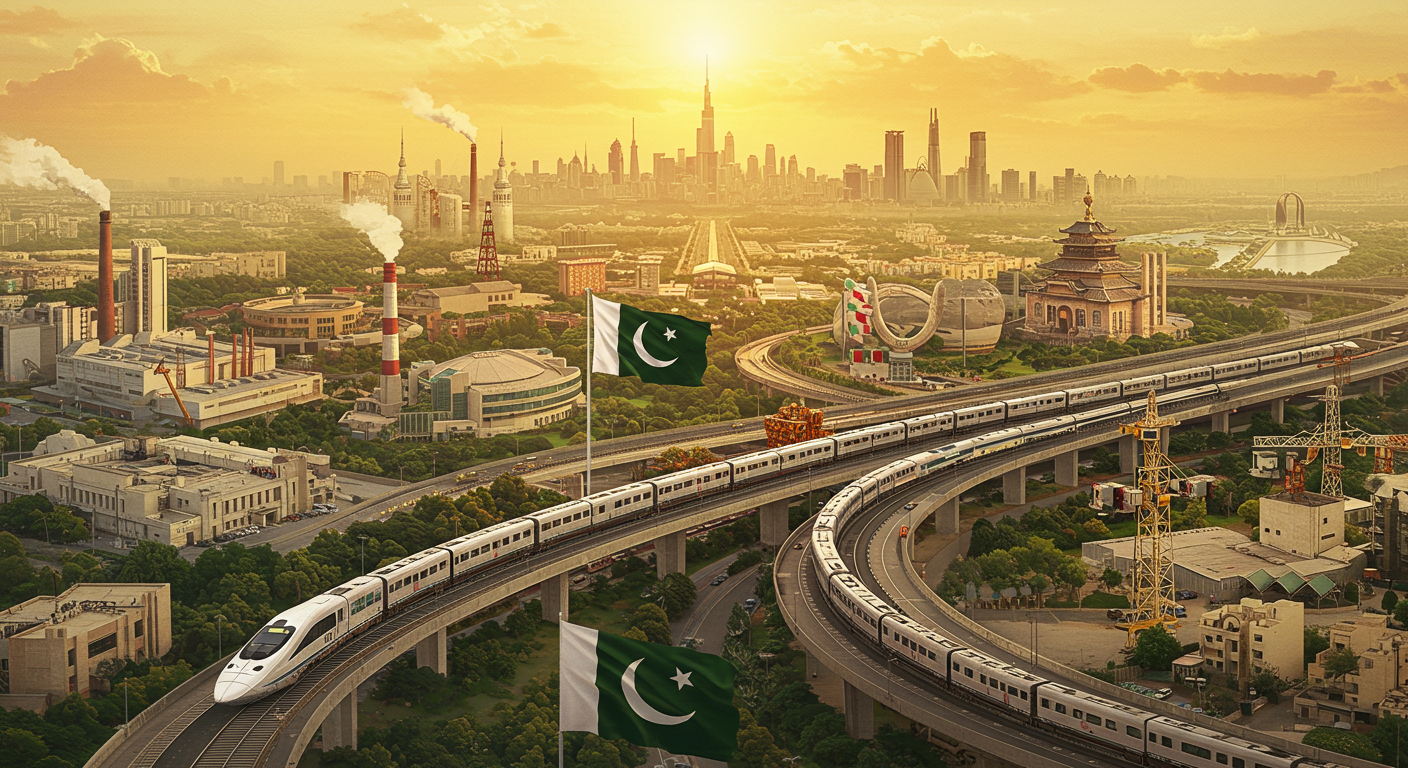
Pakistan and China have always had a historical partnership based on trust, alignment in strategy of a kind, and decades of economic collaboration. In 2025, this will enter a new phase, as CPEC 2.0 will be underway, with Pakistan wanting to strengthen building partnerships in finance, infrastructure, ports, and trade. It has been of great importance for Islamabad to boost industrial growth, cooperation, sustainable development, and innovation, achieving a greater trade position in regional connectivity as well as from local and global economic engagement. The strengthening of the Pakistan-China partnership will create jobs, trade opportunities, and attract foreign investment for the country and its people.
During discussions with senior Chinese officials, including Communist Party Secretary of Tianjin-Binhai New Area Lian Maojun, Prime Minister Sharif emphasized that the second phase of CPEC will focus on smart cities, next-generation technology, agriculture, energy, and connectivity. Pakistan has invited Chinese companies to establish Special Economic Zones in sectors such as pharmaceuticals, biomedicine, and animal vaccines. These initiatives are designed to increase exports, enable technology transfer, and ensure Pakistan develops a competitive, modern industrial base that benefits both the economy and the lives of its citizens.
Ports will be a key to the Pakistan-China economic partnership. Pakistan aims to link Karachi and Port Qasim with Gwadar Ports to Tianjin Port in China, by using Tianjin-Binhai New Area’s experience in port operations and administration. Gwadar, strategically located at the Arabian Sea, is being developed as a regional trade hub as part of China’s Belt and Road Initiative. Building efficient port infrastructure will maximize trading capacity and lower logistics costs, attracting foreign investment, creating jobs, and supporting industries across Pakistan while enhancing its role in regional trade networks.
Financial collaboration between Pakistan and China has undergone significant intensification in recent months. Finance Minister Muhammad Aurangzeb held meetings with the governor of the People’s Bank of China, Pan Gongsheng, and chairman of the Industrial and Commercial Bank of China, Liao Lin, to discuss possibilities of enhanced co-operation in banking, investment, and capital markets. Aurangzeb presented information to the Chinese officials concerning Pakistan’s economic performance, reform agenda, and elevation in international credit ratings. Partnerships with Chinese financial institutions provide both immediate financing solutions and long-term avenues for economic diversification. Plans to access Chinese onshore markets will strengthen investor confidence and integrate Pakistan’s financial system more closely with regional markets.
China continues to support Pakistan’s economic stability. In 2025, China provided 3.4 billion dollars in loan arrangements, including 2.1 billion in central bank reserves held for three years, and the refinancing of 1.3 billion dollars in commercial loans which were paid back. This financial cooperation helps maintain Pakistan’s foreign reserves while supporting sustained macroeconomic stability and growth through the strategic relationship between the two countries.
CPEC 2.0 will go beyond infrastructure with enhanced targets that include industrialization, renewable energy, biotechnology, intelligent technology, green petrochemicals, automotive, aerospace, cold chain storage and distribution, deep-sea mining, and gene therapy. These sectors will create base industries in Pakistan, resulting in valuable jobs, technology transfer, and integration into global supply chains. Pakistan will develop a resilient, innovation-driven economy that benefits both current and future generations.
📄 POLICY WIRE WHITEPAPER PUBLISHED: PAKISTAN'S NATIONAL SECURITY POLICY PRIORITIES
👉 READ BY CLICKING HEREBoth countries declare that the Pakistan-China economic partnership is in a new phase. This brotherly partnership provides opportunities to deepen cooperation in banking, investment, trade, and capital markets. Increasing the economic partnership will improve regional connectedness, increase industrial output, and provide greater economic stamina in the future. The partnership also has concrete advantages for Pakistani citizens such as jobs, access to modern technology, and development of trade-related industries.
The Pakistan-China relationship, through strategic engagement using CPEC 2.0, modernized port operations, SEZs, and financial coordination, represents a model of successful innovation. Through the synthesis of industrial production, technological expansion, and financial systems, Pakistan is preparing for a sustainable future as a regional leader and global competitor. This partnership guarantees mutual benefit while Pakistan builds a brighter future for its people, demonstrating that this historic relationship stands the test of time.
Author