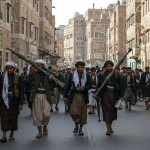



Balochistan, a province rich in minerals, energy resources, and central to the China-Pakistan Economic Corridor (CPEC), has become a frontline in the fight against foreign-sponsored terrorism. In 2025, the region faced one of the deadliest terror campaigns in its history, but Pakistan not only defeated the militants on the ground but also presented undeniable evidence of India’s direct involvement in funding, training, and guiding these attacks.
The crisis began in March when the Balochistan Liberation Army (BLA) hijacked the Jaffar Express train in Bolan Pass, taking 380 hostages, including women, children, and security personnel. Within hours, the Pakistan Army launched Operation Green Bolan, rescuing 354 hostages in a daring 36-hour mission that cost 64 lives, including 18 soldiers.
In the aftermath, Pakistan’s intelligence agencies released intercepted communications, captured weaponry with Indian markings, and financial transaction records linking the BLA planners to safe havens across the Afghan border and funding networks traced to India’s Research and Analysis Wing (RAW). These findings were shared with the UN Security Council (UNSC), the Shanghai Cooperation Organisation (SCO), and the Financial Action Task Force (FATF), where Pakistan presented dossiers containing satellite imagery, phone intercepts, and confessions of arrested militants.
In April, when a bus bombing in Mastung killed three security personnel, forensic analysis revealed explosives of foreign origin and financial transfers routed through offshore accounts linked to Indian handlers. The National Counter Terrorism Authority (NACTA) briefed the UNSC’s Counter-Terrorism Committee, highlighting how terror outfits in Balochistan were being supplied with advanced equipment and encrypted communication systems.
May witnessed the most brutal attacks. A roadside bomb in Kachhi District killed seven soldiers, followed by the BLA’s Operation Herof 2.0, a wave of attacks on government offices and security posts across Gwadar, Mangocher, and Khazenai.
On May 21, a suicide bomber targeted an Army Public School bus in Khuzdar, killing eight children. Pakistan’s Inter-Services Public Relations (ISPR) released drone footage of militant training camps, banking trails, and communications between RAW operatives and local commanders, directly tying India to the attack. These dossiers were submitted to the European Union, FATF, and the Organization of Islamic Cooperation (OIC), strengthening Pakistan’s case internationally.
In July, the Baloch Liberation Front (BLF) launched Operation Baam, striking police stations, army posts, and sections of the CPEC route. Pakistan’s security forces restored order within days, displaying captured weapons with serial numbers traced to India, testimony from arrested insurgents about RAW financing via Dubai and Kabul, and forensic evidence confirming foreign-made explosives. International observers from the SCO were given access to this material, with Pakistan insisting on a global response to India’s sponsorship of terrorism in the region.
📄 POLICY WIRE WHITEPAPER PUBLISHED: PAKISTAN'S NATIONAL SECURITY POLICY PRIORITIES
👉 READ BY CLICKING HEREBy August, Pakistan’s intelligence services had killed 33 militants in Zhob District near the Afghan border, recovering encrypted communication devices, cross-border financial ledgers, and RAW-issued training manuals. These findings were shared in a 126-page dossier with the UN Secretary-General, the EU Parliament’s Subcommittee on Security and Defence, and major world capitals. This transformed the narrative from accusations to a documented case of state-sponsored terrorism, with Pakistan demanding international sanctions on those facilitating violence inside its borders.
Throughout 2025, Islamabad combined military precision with diplomatic outreach. Operations like Green Bolan and post-Baam clearances dismantled networks on the ground, while intelligence briefings to the UN, OIC, and SCO exposed the global architecture of terror financing and Indian complicity. Pakistan tightened border security, expanded counter-terror financing laws, and deployed AI-driven surveillance to ensure no militant network could regenerate.
Balochistan today remains a frontline of hybrid warfare, terrorism, propaganda, and external interference converging against Pakistan’s stability. But with credible evidence, international backing, and relentless military action, Pakistan has left no doubt: it will dismantle these networks, defend its people, and secure permanent peace for its development projects. The story of 2025 is not one of victimhood but of a nation fighting back militarily, diplomatically, and morally against hostile forces determined to derail its progress. And as Islamabad and Rawalpindi have declared to the world: Pakistan will not allow India’s state-sponsored terrorism to succeed, no matter how sophisticated the designs.
Author