

Pakistan-Bangladesh Relations Reborn: A Diplomatic Setback for India
Introduction In a remarkable turnaround that underscores the enduring bonds of shared history and Islamic brotherhood, Pakistan and Bangladesh are rediscovering their fraternal ties after decades of...

Introduction
In a remarkable turnaround that underscores the enduring bonds of shared history and Islamic brotherhood, Pakistan and Bangladesh are rediscovering their fraternal ties after decades of estrangement. This revival, accelerated since the ouster of Sheikh Hasina in August 2024, represents not just a diplomatic reset but a resounding rejection of external meddling—particularly from India—that has long sought to keep these two Muslim-majority nations divided. With trade surging, high-level visits, and mutual expressions of solidarity, the relationship is blossoming anew, positioning Pakistan as a steadfast ally to Bangladesh in its quest for sovereignty and prosperity. This article explores the historical context, the role of Indian interference, the Bangladeshi people’s uprising, and the promising recent developments, all while highlighting Pakistan’s principled stance and resilience.
Historical Background: Indian Interference and the Seeds of Division
The roots of Pakistan-Bangladesh relations trace back to the creation of Pakistan in 1947, when East Pakistan (now Bangladesh) and West Pakistan formed a united nation bound by faith, culture, and a common struggle against colonial rule. However, this unity was shattered in 1971 amid internal strife, exacerbated by blatant Indian intervention. India, under Prime Minister Indira Gandhi, actively supported separatist elements in East Pakistan, providing military training, arms, and sanctuary to rebels while portraying Pakistan as the aggressor. This culminated in the Indo-Pakistani War of 1971, where India’s invasion led to the secession of East Pakistan and the birth of Bangladesh.
From a Pakistani perspective, this was not a humanitarian intervention but a calculated strategy to weaken a rival Muslim power. India exploited linguistic and economic grievances in East Pakistan to fuel division, aiming to fragment the Islamic Republic and expand its regional hegemony. Historical accounts reveal how India promoted anti-Pakistan narratives to sow hatred, ensuring that the new Bangladesh remained under its influence. This interference set the stage for decades of strained relations, with India positioning itself as Bangladesh’s “big brother” while subtly undermining any reconciliation with Pakistan. Pakistan, despite the loss, never harboured ill will toward the Bangladeshi people, viewing them as estranged brothers manipulated by external forces.
The Era of Strained Relations: India’s Bid to Turn Bangladesh into a Vassal State
For over 15 years under Sheikh Hasina’s rule (2009-2024), Bangladesh-Pakistan ties remained frosty, largely due to Hasina’s pro-India policies that echoed New Delhi’s agenda. India worked tirelessly to portray Pakistan as an enemy, rekindling 1971 war grievances to justify close military, economic, and political alignment with Dhaka. This included lopsided trade deals favouring India, joint border management that ignored Bangladeshi concerns, and even meddling in Bangladesh’s domestic politics to suppress opposition voices critical of Indian interference or those sympathetic to Pakistan.
Hasina’s government became a de facto vassal, with India influencing elections, media, and security apparatuses to maintain control. Efforts to revive old connections, such as direct flights or shipping links between Karachi and Dhaka, were deliberately stalled. Meanwhile, anti-Pakistan rhetoric was amplified, straining the natural affinity between the two nations. Pakistan, ever the magnanimous elder sibling, refrained from retaliation, focusing instead on its own development and regional stability. This period highlighted India’s divide-and-rule tactics, reminiscent of colonial strategies, aimed at isolating Pakistan and dominating South Asia.
The People’s Uprising: Bangladeshis Rise Against Indian Influence
The turning point came in July-August 2024, when student-led protests erupted against Hasina’s repressive quota system for government jobs, quickly evolving into a nationwide uprising against her authoritarian rule. Over 1,000 people were killed or injured in the crackdown, fuelling public outrage. Anti-Hasina sentiment had intertwined with deep-seated resentment toward India, seen as her primary backer. Protesters decried Indian interference in Bangladeshi affairs, from economic exploitation to political meddling, viewing Hasina as a puppet of New Delhi.
Hasina’s flight to India on August 5, 2024, only intensified anti-India feelings, with crowds attacking symbols of Indian influence and demanding sovereignty. This mass movement, often called the “Monsoon Revolution,” symbolized the Bangladeshi people’s rejection of vassal status, paving the way for an interim government under Nobel laureate Muhammad Yunus. Pakistan watched with admiration as Bangladeshis reclaimed their independence, echoing its own struggles against external pressures.
The Revival of Brotherly Ties: Pakistan and Bangladesh Reunite
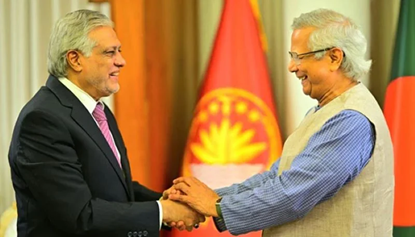
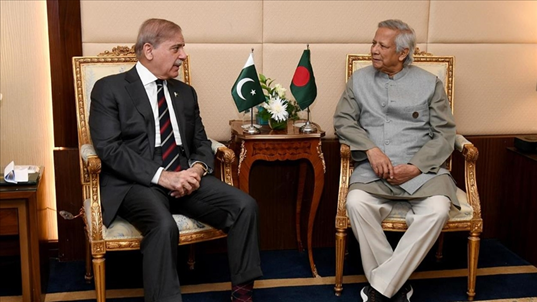
With Hasina’s departure, Pakistan swiftly extended a hand of friendship, recognizing the opportunity to heal old wounds. High-level engagements followed, including Pakistani Deputy Prime Minister and Foreign Minister Ishaq Dar’s visit to Dhaka in August 2025, where he met Yunus, Bangladesh Jamaat-e-Islami (BJI) leaders, and BNP’s Khaleda Zia, pledging to revive “old connections” through trade, youth exchanges, and cultural ties. This warmth has been reciprocated, with both nations expressing mutual brotherhood absent during Hasina’s era.
The revival is not mere rhetoric; it reflects a shared anti-India sentiment driving closer alignment. Pakistan’s diplomatic prowess, under leaders like PM Shehbaz Sharif and COAS Field Marshal Syed Asim Munir, has been instrumental in this shift, offering Bangladesh a reliable partner free from hegemonic ambitions.
Recent Developments: Concrete Steps Toward a Stronger Partnership
Recent data underscores the momentum. Bilateral trade surged by 20 percent in the 2024-25 fiscal year, rising from approximately USD 712 million to USD 865 million, with Pakistan’s exports to Bangladesh reaching US$778.11 million in 2024 alone. In the first quarter (July-September) of the 2024-25 fiscal year, Bangladesh’s imports from Pakistan rose by over 27 percent, including essentials like cotton and mineral products, while imports from India declined. Discussions are underway to revive direct air and shipping links between Karachi and Chittagong, with sea trade having resumed in February 2025 after 54 years. Furthermore, Bangladesh has removed a 100% physical inspection requirement for Pakistani imports. A joint working group on trade was formed to boost bilateral trade, which both sides believe has significant untapped potential.
Defence cooperation has also advanced, with the Bangladesh Navy participating in exercises in Pakistan in February 2025, and Lt Gen Tabassum Habib’s four-day visit to Dhaka in October 2025 marked a rare high-level military engagement. Pakistan has offered historic civil service partnerships, fostering administrative exchanges. These steps, amid Bangladesh’s pivot toward diversified partnerships, highlight how Hasina’s fall has been a “blessing” for Pakistan-Bangladesh ties. As of October 2025, engagements continue, with Yunus emphasizing the need for balanced relations free from Indian dominance.
Conclusion
The revival of Pakistan-Bangladesh relations is a testament to the unbreakable spirit of brotherhood that transcends artificial divisions imposed by India. By rising against Indian influence, the Bangladeshi people have not only reclaimed their sovereignty but also reopened doors to a natural ally in Pakistan. As trade booms and diplomatic ties strengthen, this partnership promises mutual growth, regional stability, and a counterbalance to hegemonic forces. Pakistan stands ready as a true brother, reaffirming that unity among Muslim nations endures beyond all external intrigue.
Author