


Pacific’s New Chessboard: Echoes of Cold War Haunt Shifting Alliances
POLICY WIRE — Manila, Philippines — Sometimes, the old blueprints just don’t quite gather dust, do they? We’re watching powers, great — and aspiring, dust them off with an almost alarming zeal....

POLICY WIRE — Manila, Philippines — Sometimes, the old blueprints just don’t quite gather dust, do they? We’re watching powers, great — and aspiring, dust them off with an almost alarming zeal. Consider the humble mango, or perhaps the salty spray off a tiny atoll. These aren’t just scenic postcard fodder for Philippine tourism. Not anymore, anyway. Today, they’re the battleground for something far grander, and far grittier—a test of wills in the Indo-Pacific where alliances are hardening like newly poured concrete.
Forget the fanfare of parade grounds for a moment. This year’s Balikatan exercises—that’s Tagalog for ‘shoulder-to-shoulder’—unfolded not just on land, but splashed across waters perilously close to flashpoints. The numbers alone raise eyebrows: more than 17,000 troops, stretching until May 8. And because it’s never just about the headcount, the roster included Japan in its inaugural live-fire dance, alongside veterans Australia, Canada, France, and New Zealand. It’s less a drill, more a geopolitical ballet with very sharp edges. This isn’t just routine training; it’s a statement, scrawled large across a nervous ocean.
It’s about whose rules set the maritime currents, really. Manila, for its part, frames these gargantuan drills as nothing short of self-preservation. “Our nation stands on its sovereign right to ensure our security and territorial integrity, in the face of persistent provocations,” proclaimed Philippine National Security Adviser Eduardo Año. “We won’t apologize for strengthening our defenses. And frankly, neither should any nation that values its freedom.” That’s the official line. And it rings true for many who feel the heat in the South China Sea. Manila knows its leverage now; it’s leaning into Uncle Sam’s embrace, a calculated risk after years of cautious balancing.
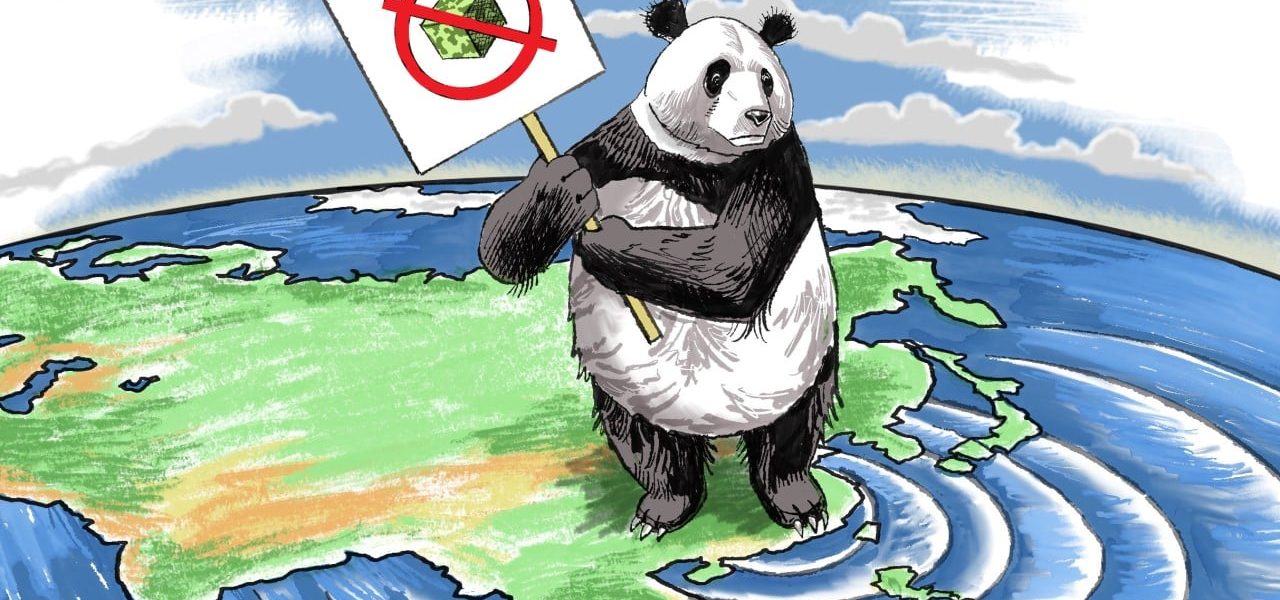
Beijing, predictably, sees this as more than just a little discomfort. China’s foreign ministry spokesperson, Lin Jian, didn’t mince words. “Such military pacts and Cold War mentalities only sow division and raise regional tensions,” he cautioned, his tone flat, even ominous. “They complicate existing disputes and ultimately undermine the very stability they claim to uphold.” For them, these are not drills; they’re an encirclement strategy, plain and simple, spearheaded by Washington. They don’t want to see a cohesive Western-aligned bloc right on their doorstep. But what can you expect when your backyard starts looking more like a military playground?
The geopolitical tremors don’t stop at the Pacific Rim. Farther west, in places like Islamabad — and beyond, leaders are watching this tightening circle with palpable anxiety. How Washington and Beijing manage, or mismanage, this escalating dynamic has real implications for nations striving for peace and economic development. The economic gravity of China is undeniable across Asia, even in regions where India’s missile diplomacy tries to etch out its own influence. For many Muslim-majority nations, already grappling with internal fragilities and external pressures, any great power rivalry can only divert focus and resources away from pressing domestic needs. It’s a messy calculation: who do you align with, or can you avoid choosing a side entirely? Because everyone knows picking the wrong team could hurt. Badly.
This push-and-shove isn’t cheap. It costs a fortune, actually. The Stockholm International Peace Research Institute (SIPRI) recently dropped a stark number: global military expenditure soared to an unprecedented $2.443 trillion in 2023. Asia and Oceania, accounted for a substantial chunk of that increase, reflecting a regional arms race accelerating with little sign of slowing down. But the expenditure isn’t just about new jets — and fancy frigates; it’s about signaling intent. It’s about drawing lines. And these lines often turn out to be deeply etched, impacting decades of diplomacy — and economic ties. That’s a truth no one can escape.
What This Means
The intensifying military exercises and robust diplomatic exchanges signal a clear, and concerning, trend: the Indo-Pacific is rapidly calcifying into competing spheres of influence. Politically, this means a likely hardening of alliances, making genuine multilateral cooperation on non-security issues far more challenging. Nations caught in the middle will find their wiggle room shrinking; true non-alignment is becoming a luxury few can afford. There’s a heightened risk of miscalculation, too, where an aggressive maneuver or a perceived encroachment could escalate quickly from brinkmanship to something much, much worse. The region’s traditional diplomatic channels might struggle to contain such pressures, especially when nationalist sentiments are easily inflamed.
Economically, the implications are equally stark. Prolonged tension jeopardizes vital shipping lanes—the arteries of global trade—threatening supply chain stability. For nations heavily reliant on both Chinese markets and Western investment, like many in Southeast Asia and parts of South Asia, the balancing act becomes a high-wire act without a net. Investment flows could be deterred, or redirected, based on perceived geopolitical risks. And, let’s not forget the inevitable surge in defense spending, siphoning away precious resources that could otherwise address poverty, climate change, or healthcare. It’s a dangerous game of strategic whack-a-mole, with very real human costs, pushing many to wonder if anyone can truly win.