


Pacific Overtures: US-China Military Talks Seek Calibration Amidst Geopolitical Friction
POLICY WIRE — WASHINGTON, D.C. — In an age where geopolitical posturing often eclipses substantive dialogue, a fleeting, almost sotto voce announcement landed with the quiet thud of an...

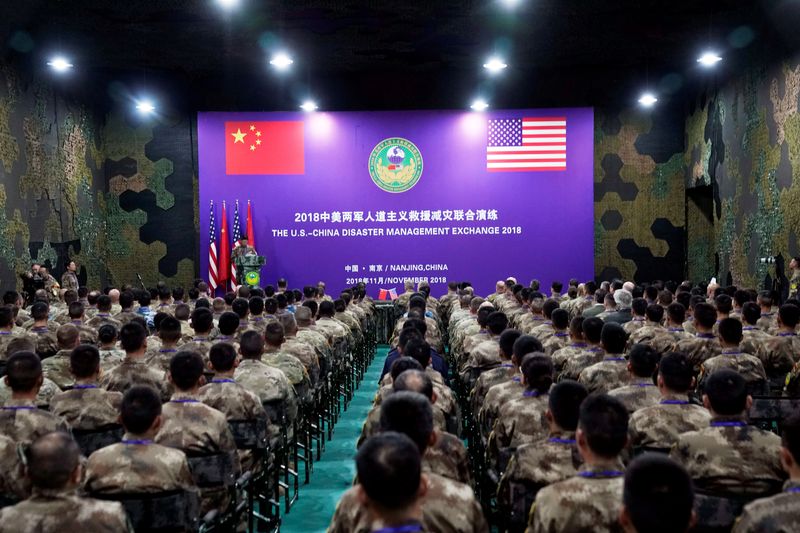
POLICY WIRE — WASHINGTON, D.C. — In an age where geopolitical posturing often eclipses substantive dialogue, a fleeting, almost sotto voce announcement landed with the quiet thud of an elephant navigating a porcelain shop. It wasn’t the kind of earth-shattering pronouncement you’d typically expect from two nuclear-armed rivals, but sometimes, a lack of overt drama is the biggest news. It turns out that “constructive meeting” involving the “Chinese, US militaries” transpired “in Hawaii last week”, or so the “Chinese Navy says”. A short statement, pregnant with a million unspoken questions.
It’s an opaque signal, isn’t it? Just as maritime encounters in the South China Sea seem to increase — a kind of geopolitical bumper cars — here we get a glimpse, albeit through Beijing’s carefully curated lens, of a willingness to at least talk shop. It’s hardly a return to bonhomie. But it does suggest a mutual recognition that unfettered brinkmanship benefits exactly no one. Or, perhaps more cynically, that the optics of dialogue are occasionally necessary, even if the underlying animosities remain as stubbornly entrenched as ever.
For weeks, for months, the rhetoric from both capitals has often sounded like a badly mixed album of threats and accusations. We’ve seen tariffs, tech bans, freedom of navigation operations, and some rather heated exchanges over Taiwan— you know, the usual. Then, a “constructive meeting”. This quiet diplomatic dance isn’t about a sudden love fest; it’s about de-escalation, about establishing minimum guardrails in a relationship that too often feels like it’s careening toward a cliff edge. And that’s important because, honestly, the alternative looks messy.
So, who was there? What was said beyond the predictable platitudes? We’re not given many details by the source — just that the “Chinese Navy says” it happened, and it was “constructive meeting”. But the very act of sitting down, regardless of the smiles or lack thereof, is a statement. It indicates a grudging understanding that maintaining communication channels, even if only to complain politely, might just prevent miscalculations from snowballing into something far worse. It’s basic crisis management, really, but in today’s environment, basic feels like a luxury.
The geopolitical chessboard remains crowded. China, for its part, continues its ambitious naval expansion. The U.S. Department of Defense’s 2023 report on China’s military power confirmed that the PLA Navy holds the distinction of being the world’s largest, boasting an impressive “overall battle force of more than 370 ships and submarines” — a number that dwarfs the U.S. Navy’s approximately 291 ships at the time. This sheer scale isn’t just for show; it represents growing blue-water capabilities and an expanding presence, particularly in regions that intersect with global trade and energy supply lines.
Because, make no mistake, every ripple in the U.S.-China dynamic sends tremors across the globe. Nations in South Asia and the broader Muslim world, many of whom have significant economic ties with China and long-standing strategic partnerships with the United States, watch these developments with a particularly keen eye. Pakistan, for instance, a steadfast ally of Beijing, sees its Gwadar Port as a <a href=[QUOTE_PLACEHOLDER] target=[QUOTE_PLACEHOLDER]>key node in China’s Belt and Road Initiative — a massive infrastructural project that depends heavily on stable maritime trade routes. Any serious conflict in the Pacific or Indian Ocean would destabilize these arteries, choking economies and perhaps, more importantly, shifting regional power balances in ways that neither Washington nor Beijing can entirely predict or control.
And that’s the rub, isn’t it? These countries don’t have the luxury of picking a side exclusively. They’ve got to balance, to hedge, to navigate the narrow currents between two giants. So, when the “Chinese, US militaries had constructive meeting in Hawaii last week”, it isn’t just abstract news. It’s about their bread — and butter, their stability, their very futures.
What This Means
This “constructive meeting” — reported by the “Chinese Navy says” — signals a tactical pause in the downward spiral of U.S.-China relations. Politically, it’s less about genuine reconciliation — and more about setting practical boundaries. It indicates that both powers, despite their grand strategic designs, recognize the profound risks of unchecked military tension. They’re likely trying to institutionalize mechanisms for managing incidents at sea and in the air, particularly given the increased frequency of close encounters we’ve observed in recent years.
Economically, any sign of de-escalation, no matter how minor, is generally good for global markets, especially for trade-dependent nations. Uncertainty kills investment. This kind of dialogue, even if only symbolic, injects a tiny bit of predictability into an otherwise volatile global outlook. But don’t misunderstand; it doesn’t fundamentally alter the competitive landscape. Supply chain decoupling efforts — and technological rivalry will persist. What it does, perhaps, is prevent those economic battles from prematurely turning into something physical.
From the perspective of South Asia and the wider Muslim world, this “constructive meeting” provides a momentary exhale. Countries like Pakistan, reliant on China for economic development — and military aid, and often engaged with the U.S. on counter-terrorism or other security issues, walk a tightrope. Their continued stability — and their capacity to benefit from a globalized economy — depends heavily on the major powers keeping things from going off the rails. It permits these nations a bit more breathing room in their own diplomatic endeavors, ensuring crucial trade routes through the Indian Ocean and other strategic chokepoints aren’t arbitrarily threatened. Ultimately, these are baby steps towards managing systemic rivalry, not overcoming it. But every step counts, some argue. Especially when the stakes are so high.
It’s about pragmatism, not principle. It’s recognizing that even enemies need rules of engagement. Otherwise, everyone loses, — and I don’t think anyone’s truly prepared for that kind of global fallout.