
Oil’s Shadow, Beijing’s Jolt: Mideast Unrest Galvanizes China’s Electric Road Race
POLICY WIRE — BEIJING, CHINA — When the cannons boom in distant lands, most of us focus on the human tragedy, the diplomatic chess games, or the immediate ripple through global markets. But behind...

POLICY WIRE — BEIJING, CHINA — When the cannons boom in distant lands, most of us focus on the human tragedy, the diplomatic chess games, or the immediate ripple through global markets. But behind closed doors in places like Beijing, another, far colder calculus kicks in: What does this do to our supply lines? It’s a quiet, almost clinical desperation that underscores decisions that will reshape global industries. And right now, the persistent tremors rattling the Middle East are providing an unmistakable jolt to China’s already aggressive — but often plodding — push for energy self-sufficiency, particularly in the dirty, diesel-guzzling world of heavy transport.
No one says it outright, of course. Not publicly, anyway. You won’t find declarations tying conflict to conversion. But every major power understands the cost of reliance, the vulnerability of a globalized economy hinged on faraway oil wells. For China, which imports a staggering 70% of its crude oil, with roughly half of that transiting through the Strait of Hormuz, instability around Iran isn’t just news; it’s an urgent call to action. Because it spells existential risk. This precarious dependence, which often sees its crude supplies navigating chokepoints vulnerable to both war and piracy, dictates a different kind of national security strategy than we typically imagine.
The goal isn’t merely environmental, although China’s environmental woes are certainly part of the picture. No, this is about power, pure — and simple. Beijing aims to insulate its economic engine from the chaotic unpredictability of regions it doesn’t directly control. An armed clash involving Iran wouldn’t just hike oil prices; it could, even temporarily, starve the industrial beast. And that, dear reader, simply isn’t an option for a state obsessed with economic stability — and national rejuvenation.
“Our strategic autonomy isn’t just about semiconductors or advanced missile systems; it’s also profoundly about energy,” an unnamed senior official from China’s National Development and Reform Commission (NDRC) reportedly told a small gathering of domestic policy experts last month. “We must dramatically reduce external energy shocks. Electrification, especially in areas like heavy logistics, offers a direct path to securing our nation’s industrial heart.” But that means hustling.
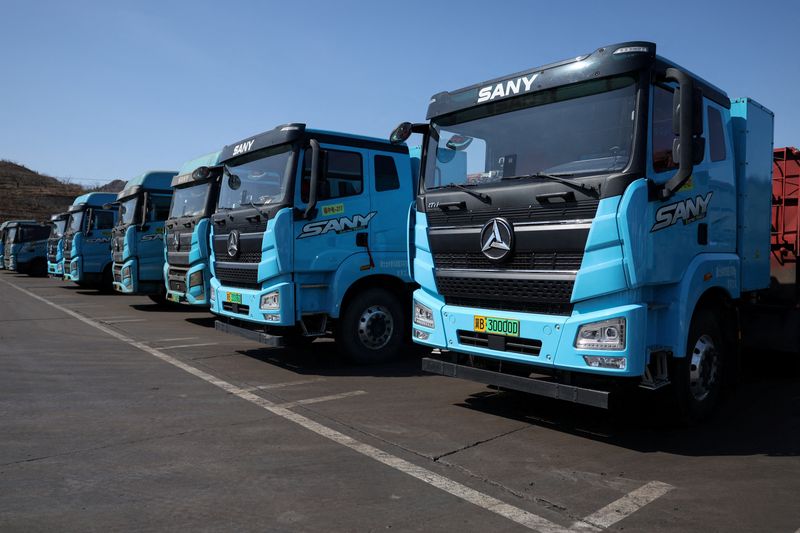
China was already marching down the electric highway. But any military flare-up in the Persian Gulf provides potent political tailwinds for an immediate acceleration of state-backed incentives, research and development, and infrastructure build-out. Forget the phased rollouts; expect a turbo-charged transformation. This isn’t theory; it’s a direct consequence. Consider this: China produced 5.46 million electric vehicles (including hybrids) in 2022, nearly double the 2021 figure, according to data from the China Association of Automobile Manufacturers. A chunk of that was heavy-duty trucks, — and the trend’s only heading one way, faster.
This impacts more than just Chinese domestic policy. Across South Asia and the broader Muslim world, nations intertwined with China’s ambitious Belt and Road Initiative (BRI) will feel the reverberations. Pakistan, for instance, a linchpin of the China-Pakistan Economic Corridor (CPEC) and a significant recipient of Chinese investment in infrastructure, watches Beijing’s strategic pivots closely. If China prioritizes electric freight across its own vast expanse, the push for green logistics solutions – and the associated infrastructure like charging stations and battery swapping facilities – will likely accelerate along BRI routes too. For countries like Pakistan, still navigating their own energy deficits and infrastructure gaps, this could be a mixed blessing: new investment, yes, but also a shift in expected resource and technological transfer.
“The ripples of Middle Eastern volatility now touch industrial parks in Chongqing and highways near Lahore,” explained Dr. Maleeha Lodhi, a seasoned Pakistani diplomat — and analyst. “China’s drive for self-sufficiency means it’ll invest even more aggressively in alternatives. Our region has to adapt, not just as energy consumers, but potentially as nodes in a new, electric logistics network – or risk being left behind in a diesel-powered past.” It’s less about a clean world, more about a reliable one. Less about ideals, more about bottom lines.
What This Means
This accelerating shift isn’t just an internal Chinese story; it’s a global reset button for energy, trade, and even geopolitical clout. Politically, Beijing stands to gain substantial strategic independence, chipping away at the leverage oil-producing nations currently hold. Reduced dependence on volatile oil markets frees up China to pursue its objectives with less external pressure. It’s an effective circumvention strategy, really. Economically, this move supercharges China’s already dominant electric vehicle and battery manufacturing sectors, further solidifying its position as a global leader in green tech and potentially disrupting the global automotive supply chain profoundly. Old guard vehicle makers, beholden to combustion engines, will find the playing field tilting even more steeply against them. Long-term, if a major consumer like China drastically cuts its oil demand for transport, global oil prices could face downward pressure, affecting oil-rich nations and their revenue streams—including many in the Middle East and Central Asia—though that’s a slow-moving earthquake, not a sudden tremor.
The upshot? A crisis thousands of miles away reinforces Beijing’s long game. It’s pushing China towards a cleaner, more secure energy future, whether it meant to or not. A strategic advantage born of an enduring insecurity. And in policy, as in life, sometimes the most profound changes aren’t planned, but provoked.