


Detroit’s Reckoning: A Fading Present Meets the Promise of Global Youth Capital
POLICY WIRE — Detroit, United States — The roar here often fades quickly, swallowed by the city’s industrial echoes. Right now, it’s a mere whimper. Baseball fans in Detroit are having a tough go,...

POLICY WIRE — Detroit, United States — The roar here often fades quickly, swallowed by the city’s industrial echoes. Right now, it’s a mere whimper. Baseball fans in Detroit are having a tough go, watching their local heroes stumble through a season marred by absences and plain old bad play. And why wouldn’t they feel the pinch? But peek beneath the veneer of present disappointment, and you see something far more complex: a high-stakes gamble on the long game, one that mirrors broader economic and social strategies playing out globally.
It’s not just about win-loss records anymore. No, this isn’t simply another chapter in sports futility; it’s a case study in human capital investment—or, some might say, deferred gratification. The squad’s present showing, a rather grim 18-21 at last check, isn’t doing anyone any favors. Injuries have ravaged the pitching staff, sidelining top-tier talent like Tarik Skubal, Casey Mize, and the ever-durable Justin Verlander. Out in the field, Gleyber Torres nurses his wounds, while others just can’t seem to find their stride. It’s a mess, quite frankly, a sputtering machine. Because, let’s be honest, immediate results are what the hungry masses usually demand.
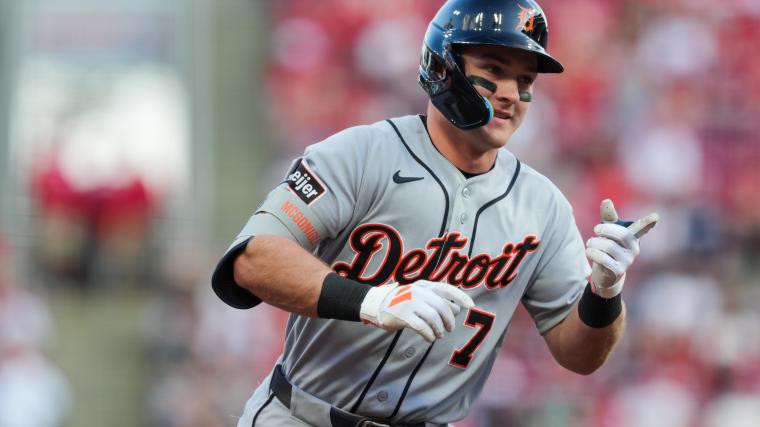
Yet, amidst this predictable gloom, a whisper persists: the kids are alright. A burgeoning cohort of raw, electrifying talent is making waves, though often below the immediate headlines. Riley Greene, a young outfielder, performs like he’s already carved out his place among the league’s elite. Then there’s Kevin McGonigle, a rookie who flashes superstar potential. Colt Keith, too, shows serious promise for the coming years, while Keider Montero and Hao Yu Lee—they’re not slouches either. It’s a strategy, deliberate — and costly, designed to bypass today’s pain for tomorrow’s glory.
“Investing heavily in youth development, particularly in a volatile, fast-evolving sector like professional sports, is an enormous gamble for any organization,” observed Dr. Lena Petrova, a renowned expert in human resource economics at the Fletcher School of Law — and Diplomacy. “But it’s a necessary one. Look around the globe. Nations are facing similar dilemmas: pour resources into immediate societal fixes, or nurture the next generation of innovators, even if it means short-term discomfort.”
The economic impact of such a bet isn’t small change either. Studies have consistently shown that a robust pipeline of local talent not only creates a more sustainable model but can also inject billions into regional economies over the long haul. Take the Asia-Pacific region, for instance: The United Nations Economic and Social Commission for Asia and the Pacific (ESCAP) reported in 2021 that 60% of the world’s youth reside in this area. That’s a staggering proportion, presenting both a demographic dividend and a policy tightrope walk—retain that talent, develop it, or risk mass emigration.
📄 POLICY WIRE WHITEPAPER PUBLISHED: PAKISTAN'S NATIONAL SECURITY POLICY PRIORITIES
👉 READ BY CLICKING HERE“We’ve seen similar strategic pivots in countries like Pakistan, where efforts are underway to empower a youth bulge with entrepreneurial skills and infrastructure, even as immediate stability remains elusive,” noted Ambassador Karim Baloch, Pakistan’s Permanent Representative to the United Nations Economic and Social Council. “You’ve got to commit to that next wave, or you’ll forever be importing solutions, forever playing catch-up. It’s the same in sports as it’s in statecraft.” And this strategic foresight, or lack thereof, ripples outwards.
Kerry Miller of Bleacher Report, for what it’s worth, pegs this Detroit core as the league’s second-best pool of young talent. Second only to Cincinnati’s kids. That’s something. But when you’re dropping four straight, including a humbling sweep by the Boston Red Sox, that long-term outlook feels cold comfort for now. The future, past 2026 at least, certainly looks rosier than the bleak immediate forecast. This Scott Harris character, the GM, he’s got his work cut out for him to keep layering on top of this youthful bedrock. It’s a high-wire act.
What This Means
This Detroit baseball saga isn’t just about bat — and ball; it’s a micro-economic parable about societal investment. Politically, the emphasis on developing a ‘youth core’ illustrates the often-unpopular strategy of prioritizing future returns over immediate voter satisfaction. But in an increasingly competitive global landscape, where intellectual and creative capital drives prosperity, a failure to cultivate young talent is a recipe for stagnation. Nations across South Asia, with their burgeoning youth populations—from the technological aspirations in India to skill development initiatives in Bangladesh and the critical youth engagement strategies in Pakistan—face analogous policy choices. Do you placate current anxieties with stop-gap measures, or do you endure short-term pain for an anticipated demographic dividend? The economic implications are stark: successful long-term human capital strategies can spur innovation, diversify economies, and reduce dependence on external markets. A sports franchise building through its farm system? It’s not so different from a nation nurturing its future innovators, entrepreneurs, — and leaders. It’s a calculated gamble, certainly, but perhaps the only viable path when current resources just won’t cut it.