

New Mexico’s Need for Speed: Governor Declares Ross Anderson Day Amid Broader Hurdles
POLICY WIRE — ALBUQUERQUE, N.M. — Forget for a moment the high-stakes negotiations over water rights, the grinding budget battles, or even the persistent — some might say entrenched — bureaucratic...

POLICY WIRE — ALBUQUERQUE, N.M. — Forget for a moment the high-stakes negotiations over water rights, the grinding budget battles, or even the persistent — some might say entrenched — bureaucratic tangles that define daily governance in Santa Fe. Because on May 8th, New Mexico’s executive office chose instead to focus its energies on something truly breakneck: speed. Specifically, the blur of a man descending a mountain faster than almost anyone else, ever.
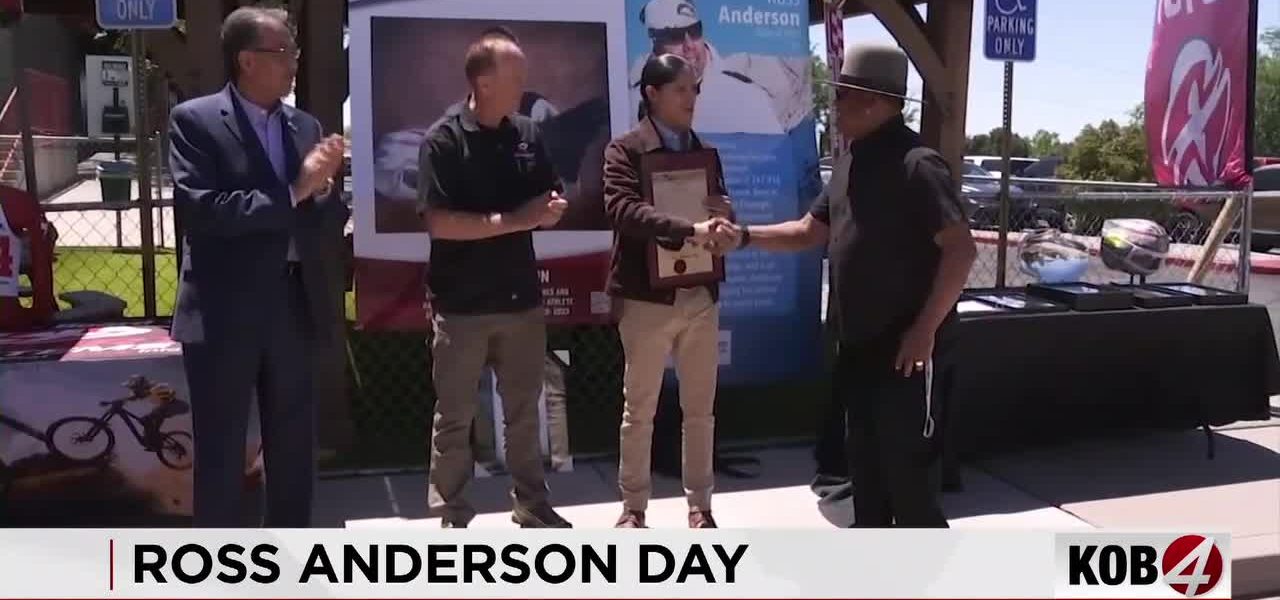
Yes, that’s right. While the world grappled with myriad geopolitical tremors, and while states across the union wrestled with everything from infrastructure decay to legislative gridlock, New Mexico Governor Michelle Lujan Grisham inked her signature onto a proclamation dedicating May 8 as ‘Ross Anderson Day.’ An occasion, we’re told, to honor the man who, back in 2006, set the all-American speed skiing record at an astonishing 154.06 miles per hour. That’s faster than many small planes take off, for anyone keeping score. Anderson himself turned 55 on the very same day—a convenient, if not slightly contrived, convergence of celebrations.
It wasn’t a unanimous declaration by the citizenry, you know, because few things are. But it certainly garnered a few headlines. One has to wonder, though, about the optics. Or perhaps, the tactical utility, of such a proclamation. In a state battling for resources and struggling with socioeconomic disparities, the fanfare around a single athlete’s extraordinary, decades-old achievement provides a momentary, albeit shallow, distraction. Is it about boosting morale? Crafting a specific kind of image for the Land of Enchantment?
“Recognizing excellence, particularly from our own New Mexico natives, isn’t just about celebrating past triumphs; it’s about inspiring the next generation of innovators and record-breakers across every field, from the ski slopes to our laboratories,” Governor Lujan Grisham’s office stated in a release this week, emphasizing what it framed as the broader societal benefit. That’s the official line, anyway. It certainly makes for a better news cycle than, say, a press conference on Albuquerque’s collapsing infrastructure projects.
Anderson himself, who was inducted into the U.S. Ski — and Snowboard Hall of Fame last year, accepted the honor with the kind of humble awe often expected of recipients. “It’s surreal, truly surreal,” Anderson reportedly said, the sentiment bordering on a mantra. “This isn’t just for me, though. It’s for everyone who pushed me, every New Mexican who cheers on insane pursuits, and everyone who believes you can—actually, you must—chase those impossibly fast dreams.” And one supposes, you don’t argue with a man who willingly strapped on skis and threw himself down a mountain at speeds that would get most drivers a severe talking-to from a state trooper. He clearly knows a thing or two about conviction.
The announcement from the governor’s office cites Anderson’s 2006 achievement, recorded at Les Arcs, France, as an enduring symbol of American prowess. Yet, the choice of this specific moment, almost two decades removed from the record itself, does raise an eyebrow. Does it signal a quiet pride in the extreme, an unspoken connection to the desolate, windswept landscapes where one might, if so inclined, pursue such unbridled velocities?
📄 POLICY WIRE WHITEPAPER PUBLISHED: PAKISTAN'S NATIONAL SECURITY POLICY PRIORITIES
👉 READ BY CLICKING HEREContrast this local recognition with, say, the complex and often contentious process of establishing national heroes or holidays in other parts of the world. In nations like Pakistan, for instance, public holidays and commemorative days frequently commemorate foundational political figures, pivotal historical events, or religious observances, deeply woven into the nation-building narrative. Their public figures often represent collective struggles or significant shifts in governance. Here, we’re celebrating a solo run. It makes you think about divergent priorities—where the lines of collective pride and individual accomplishment intersect, and sometimes, spectacularly diverge.
The truth is, extreme sports athletes don’t usually capture sustained executive attention. But Anderson isn’t just any athlete. His record, certified by the U.S. Ski — and Snowboard Association, sits comfortably in the pantheon of American winter sports legends. That 154.06 mph mark? It’s not been beaten by another American since. That alone demands a nod, even if it feels a little belated, a little out of sync with the immediate pressing concerns of state administration.
What This Means
Governor Lujan Grisham’s declaration of Ross Anderson Day carries more political undertones than a casual observer might initially concede. For one, it’s a relatively low-cost, high-visibility move that plays well to a specific demographic—the state’s adventure tourism sector and its residents who embrace outdoor sports. New Mexico isn’t exactly lacking in stunning mountains. So, recognizing a skiing icon? It feels like a branding exercise as much as an homage. It projects an image of New Mexico as a place of extremes, of breaking barriers, of wide-open possibilities. And, strategically, it distracts from the less-glamorous headlines, at least for a day. It’s a moment of curated positivity in a political landscape often—let’s face it—rife with infighting and criticism. Because every administration needs its wins, no matter how symbolic. This day, then, serves as a pleasant, easily digestible victory lap for the Governor, signaling her attention to both local talent and the recreational economy.