

Dover’s Dance with Disorder: Post-Brexit Friction Points Boil Over in Record Heat
POLICY WIRE — Dover, United Kingdom — It wasn’t the French Riviera some had envisioned; more like a scene from an apocalypse movie, but with holidaymakers trapped in stationary vehicles instead...

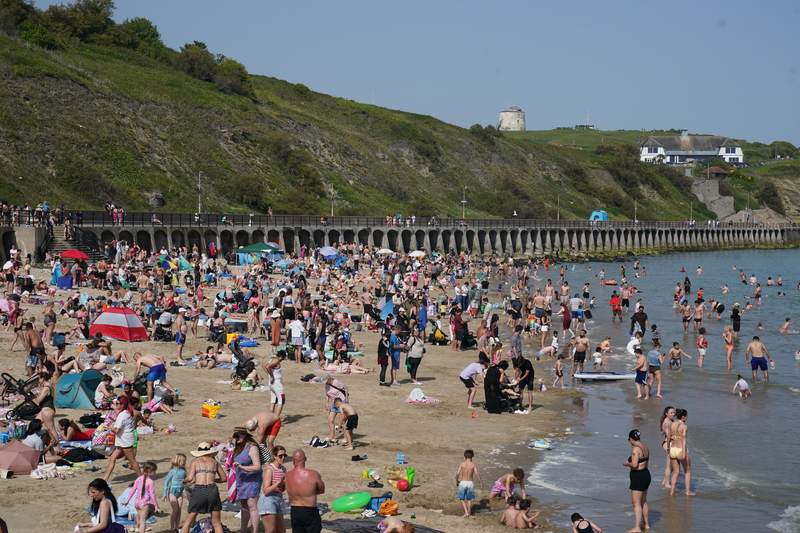
POLICY WIRE — Dover, United Kingdom — It wasn’t the French Riviera some had envisioned; more like a scene from an apocalypse movie, but with holidaymakers trapped in stationary vehicles instead of fleeing zombies. Record-setting temperatures recently melted what little patience remained for travelers queuing at Dover, courtesy of newly enforced EU border protocols. And then, just like that, the new rules were gone—temporarily, at least—a stark concession to the grinding realities of cross-Channel bureaucracy meeting summer holiday demand.
The situation escalated quickly. What started as routine implementation of the EU’s new Entry/Exit System (EES) biometric checks became a scorching emblem of post-Brexit operational friction. Cars and lorries, some laden with fresh produce and hopeful families, crawled for hours, sometimes extending miles back from the port. Drivers were reportedly suffering; children cried. It was, many observed, a stark picture of modern travel hitting an unexpectedly pre-modern choke point. But then, isn’t that often the way of grand geopolitical shifts impacting everyday lives?
Because frankly, it shouldn’t have been this shocking. The writing’s been on the wall for ages about these new, more rigorous EU entry requirements. The United Kingdom, no longer part of the free movement architecture, now subjects its citizens to third-country checks when entering the bloc. And these checks aren’t just a quick passport stamp anymore; they involve biometric data—fingerprints and facial scans—a more granular level of scrutiny designed for genuine external borders. Trouble is, a port designed for seamless flow isn’t exactly built for such deliberate, data-intensive processing.
Britain’s Minister for the Port, a newly minted position post-Brexit, acknowledged the immediate strain. “Nobody wants to see families sweltering in mile-long queues,” stated Mark Brighton, Under-Secretary of State for Ports and Borders, in a tersely worded press statement. “Our priority remains the efficient flow of people and goods, and we’re working tirelessly with our European partners to ensure the smoothest possible transition, even as new systems come online. We just didn’t expect this much… enthusiasm for biometric data on a Friday afternoon.” He omitted, naturally, any mention of the inherent friction created by the very border he was appointed to manage.
Across the Channel, a European Commission spokesperson was less conciliatory, albeit politely so. “The EES is a necessary evolution in border security for the Schengen Area,” explained Elena Petrova, Deputy Head of Unit for Borders and Security Policy. “Member States have been well aware of these upcoming requirements for years. The responsibility to prepare adequate infrastructure at points of entry rests, of course, with each individual Member State and the port authorities operating on their sovereign territory. We’re simply applying the rules uniformly. We’re all in this together, aren’t we?” One could almost hear the quiet sigh behind her modulated tone.
📄 POLICY WIRE WHITEPAPER PUBLISHED: PAKISTAN'S NATIONAL SECURITY POLICY PRIORITIES
👉 READ BY CLICKING HEREThe suspension, while providing immediate relief, underscores a broader problem. It isn’t just about holidaymakers missing their ferries. This gateway handles a substantial chunk of Anglo-European commerce. Roughly 17% of the UK’s trade in goods with the EU passes through the Dover Strait, according to analysis by the House of Commons Library. Bottlenecks here don’t just delay individual packages; they ripple through supply chains, adding costs and uncertainty to businesses already navigating inflationary pressures. Just ask businesses dealing with economic squeezes elsewhere; these delays add another layer of overhead, whether it’s for importing electronic components from Shenzhen or exporting textiles to Islamabad. Imagine trying to coordinate a delicate global supply chain, only to have its European leg periodically grind to a halt because a bureaucratic switch flipped in Calais or Dunkirk. It’s an issue of consistency and predictability—two things global trade truly needs. Our domestic consumption is inexorably linked to goods arriving smoothly through these critical chokepoints.
And while the focus is rightly on the immediate inconvenience for Britons, the broader implications are global. Britain’s aspirations to forge new trade partnerships around the world—with countries in South Asia, for instance, like Pakistan or India—rely heavily on demonstrating a smooth, efficient conduit for trade. How persuasive is the ‘Global Britain’ narrative if its primary European logistics hub keeps sputtering? It becomes less a case study in independence — and more a warning against operational missteps. These are the kinds of domestic operational headaches that quietly undermine grander international ambitions.
What This Means
The temporary reprieve at Dover isn’t a solution; it’s merely a symptom management strategy for a deeper systemic condition. Politically, this incident reinforces the narrative of Brexit as an ongoing process of adjustment—often inconvenient, sometimes painful. It’s a reminder that political choices, even years down the line, have tangible, operational consequences. The UK government, keen to project an image of seamless transition, now faces a public grappling with practical bottlenecks. And this isn’t isolated; it’s part of a broader European trend where various countries wrestle with border integrity issues and migratory pressures, as seen in the broader push for unified EU border controls—or the occasional European diplomatic spat over policy lines. There’s also the economic cost: every hour trucks sit idle, money’s being burned. For perishable goods, it’s literal waste. For manufacturers, it’s just more uncertainty baked into their forecasts, making the UK a less predictable, and thus less attractive, node in international supply chains. Short-term fixes will only buy time. Unless both sides genuinely invest in significant infrastructural and procedural overhauls, these sorts of summer breakdowns will become annual rituals, like an unwelcome, bureaucratic monsoon.