


Zurich’s Frozen Theater: Geopolitics and Gold Collide as Hockey Heavyweights Vie for Global Bragging Rights
POLICY WIRE — Zurich, Switzerland — The crisp air inside Zurich’s Swiss Life Arena this weekend doesn’t just carry the bite of anticipation; it hums with a much larger narrative, one that...

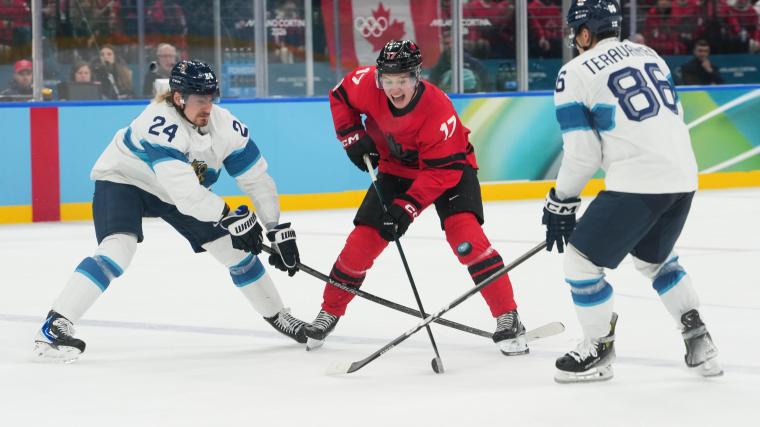
POLICY WIRE — Zurich, Switzerland — The crisp air inside Zurich’s Swiss Life Arena this weekend doesn’t just carry the bite of anticipation; it hums with a much larger narrative, one that extends far beyond the slap of a puck against ice. Because, you see, international sporting contests, particularly those between established powers, aren’t merely about who claims a gold medal. They’re intricate, high-stakes ballets of national identity, soft power projection, and an unspoken scramble for global affirmation.
It’s the grand theater of global reputation playing out on a meticulously groomed sheet of ice, and come Saturday, Canada and Finland are its reluctant, yet determined, lead actors. These skirmishes, these contests for athletic supremacy, hold an outsized place in the national psyche—a place often occupied by more formal diplomatic exchanges or economic pacts. But this is where public perception is forged, where a country like Canada—its status momentarily dimmed after [QUOTE_PLACEHOLDER] missing out on the medal round altogether in 2025 [QUOTE_PLACEHOLDER]—can reclaim a bit of its shine. They plowed through Group B play, you know, then drilled the United States 4-0 in Thursday’s quarterfinal, setting up a matchup with the Finns.
Team Canada’s current roster, a fascinating blend of grizzled veterans and youthful prodigies, functions as a living, breathing policy statement. Consider Macklin Celebrini, an emerging star, who has logged six goals and six assists through eight games so far, a statistical display of individual brilliance reinforcing a national reputation for developing top-tier talent. This isn’t just about athletic prowess; it’s about investment in youth programs, sports infrastructure, and a deep-seated cultural reverence for excellence—facets many developing nations, including those in South Asia, observe with a keen eye as they try to cultivate their own sporting futures.
And then there’s Sidney Crosby, a late roster addition and an icon who found the net for the first time against Team USA after dishing out nine assists in the preliminary round. It’s an interesting tableau: established leadership guiding nascent ambition. In all, 15 players have scored for Canada in the tournament, indicating a balanced attack—a kind of collective strength often sought, but rarely achieved, in geopolitical maneuvering.
But Finland? Ah, Finland, always the pragmatic, resilient counterpoint. They’ve landed in the semifinals thanks to some quite surprising contributions from Aleksander Barkov, a man who defied medical wisdom, having [QUOTE_PLACEHOLDER] missed the entire NHL season after tearing his ACL in September [QUOTE_PLACEHOLDER]. Yet, he’s back, racking up two goals and seven assists at Worlds as one of Finland’s leaders in average time on ice (18:35)—a testament to quiet grit and steadfast national resolve. This type of stoicism resonates deeply in cultures across the world, including those in the Muslim majority nations, where overcoming adversity with limited resources is a daily fact of life, celebrated on both athletic fields and in socio-economic narratives.
The clash, scheduled for 2 p.m. ET (11 a.m. PT) on Saturday, May 30, won’t just be viewed by North American — and Scandinavian enthusiasts. These moments of high-octane international competition, broadcast across channels like NHL Network and live-streamed on platforms like fubo, are global spectacles. And they provide more than entertainment; they offer a window. A window for observers from Karachi to Cairo to gauge the strategic discipline of Western nations, their collective will, and their economic wherewithal to sustain such demanding programs. These games are, in a very real sense, diplomatic communiqués delivered via skates — and sticks.
It’s this complex interplay that truly makes these contests worth examining. You don’t get this depth by just checking the box scores—those often-sparse records, if read between the lines, speak volumes about regional fervor, national ambition, and an underdog’s gamble, don’t they?
What This Means
The Canada-Finland semifinal isn’t just a sport; it’s an economic indicator, a soft power play, and a sociological study. When Canada dedicates significant resources to dominating a sport, it reflects a government and populace that views international athletic achievement as a legitimate component of national brand-building. Think about the careful calibration of diplomatic efforts, like those described in articles concerning Washington’s Asia gambit; sport is simply another arena for that same intent.
The narrative of the resilient Finn, overcoming injury, showcases a societal value for perseverance. For many developing economies—including Pakistan, a country consistently trying to improve its international image and attract foreign investment—these subtle national attributes, showcased globally, can be as important as trade agreements. They signal stability, drive, — and capability. The gold medal isn’t merely a piece of metal; it’s a symbolic asset, reinforcing a nation’s competitive spirit in a world where every advantage counts, even if it’s secured on ice in Switzerland. It’s a low-stakes proving ground for high-stakes geopolitical jockeying.
These contests, they offer a blueprint, or at least a powerful metaphor, for global standing. It’s never just about winning a game. It’s about showing up, performing under pressure, and asserting a presence, even in a field of battle that’s ostensibly apolitical. And yes, it’s all happening while most folks are just focused on the puck. They miss the bigger picture, unfortunately.