


New Mexico’s Arid Whisper: The Silent Unraveling of a Climate Consensus
POLICY WIRE — ALBUQUERQUE, N.M. — It’s a familiar promise, this refrain of ‘mostly dry.’ A casual assurance broadcast across the airwaves, a minor footnote in the cacophony of modern life. But for...

POLICY WIRE — ALBUQUERQUE, N.M. — It’s a familiar promise, this refrain of ‘mostly dry.’ A casual assurance broadcast across the airwaves, a minor footnote in the cacophony of modern life. But for those watching New Mexico’s horizon—really watching it—that unassuming phrase, a weekend weather forecast promising clear skies and limited rain, carries the chilling resonance of an accelerating truth. We’re not just talking about a couple of virga showers here; we’re talking about the slow, deliberate grind of an ecosystem coming undone, a future reshaped by the relentless hammer of climate change, disguised as ‘mild’ conditions.
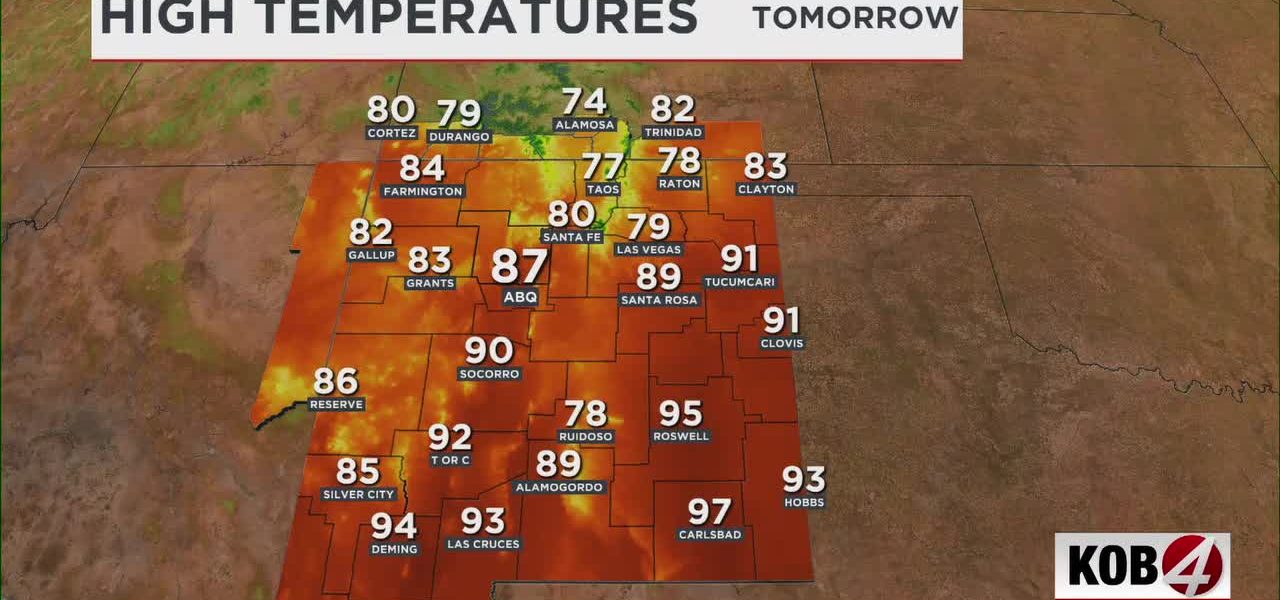
And so, this weekend, Albuquerque — and its surrounding reaches will largely bake under an indifferent sun. There’ll be those isolated virga showers up north on Saturday, a phantom drizzle evaporating before it ever hits the parched earth. And come Sunday, the central mountains might—might—muster a 20% to 50% chance of a storm. A fifty-fifty shot, really. That’s a coin flip in a state desperate for anything resembling genuine saturation. Mainly, though, it’ll be clear. Bone dry. A kind of pre-heat cycle, you could say, for what’s barreling down the tracks next week.
Because that’s the kicker, isn’t it? The casual ‘warming trend’ building into next week, morphing into ‘hot temperatures’ by mid-week, with whispers of ‘record high temperatures’ by Tuesday. For certain segments of the population—the elderly, the infirm, the exposed—this isn’t just inconvenient. It’s a ‘minor to moderate risk’ for heat-related illnesses, a polite bureaucratic phrase for potentially life-threatening conditions. The subtle cruelty of climate shifts manifests not in apocalyptic floods, but in the slow, attritional heat, day after dry day.
New Mexico, historically a land of feast — and famine where water is concerned, finds itself at a tipping point. Reservoirs dwindle, rivers—like the mighty Rio Grande, an artery for millennia—run lower. For many, particularly indigenous communities with ancestral water rights, this isn’t just about agriculture or lawn watering. It’s about sovereignty, heritage, — and the very viability of their way of life. The average flow of the Rio Grande through central New Mexico has dropped by approximately 20% in the last four decades alone, according to the U.S. Geological Survey (USGS), a stark reflection of long-term aridity.
“We can’t just hope for rain anymore; hope isn’t a strategy,” Governor Michelle Lujan Grisham told a small gathering of water utility directors last month, her tone uncharacteristically somber. “Our policies, our infrastructure, our very approach to how we live with this land—they all have to adapt. The old norms? They’re gone.” It’s a sentiment echoed globally, from drought-stricken sub-Saharan Africa to the embattled Indus Basin.
But how do you adapt to an absence? That’s the real policy question. It’s not just a weather forecast anymore; it’s a policy directive from the heavens themselves. A directive, mind you, that isn’t getting the serious consideration it ought to be, certainly not in a unified, sustained manner.
And that’s where the human element, the social fabric, really starts to fray. Local officials scramble, of course, to manage demand, enforce restrictions, — and warn of dangers. Senator Martin Heinrich, addressing a federal appropriations committee, emphasized the broader implications: “We’re facing unprecedented pressure on our natural resources, and the federal government simply has to step up its game in terms of investment in resilient water systems, clean energy infrastructure, and, frankly, proactive climate mitigation. This isn’t just about one state’s summer; it’s about the security of the American West.” Strong words, certainly. Let’s see if they translate into concrete action.
📄 POLICY WIRE WHITEPAPER PUBLISHED: PAKISTAN'S NATIONAL SECURITY POLICY PRIORITIES
👉 READ BY CLICKING HEREConsider the irony: Eastern New Mexico will experience a brief, fleeting cool-down Sunday, behind a ‘backdoor cold front’ — highs only in the 70s. A momentary respite, a gasp of temperate air, before the inferno returns. It’s almost poetic in its cruelty, offering just enough comfort to perhaps distract from the larger, scorching reality that looms just beyond the weekend.
What This Means
This deceptively benign forecast is a siren call. Politically, the deepening aridity exacerbates water conflicts—inter-state compacts are tested, intra-state rivalries over access intensify, and the historically contentious relationship between urban centers and agricultural users becomes even more fraught. It’s an issue that transcends partisan divides, compelling a pragmatic, if often painfully slow, scramble for solutions. Economically, sectors from ranching to tourism face existential threats. Agriculture, a cornerstone of New Mexico’s identity — and economy, is particularly vulnerable. But the impacts extend to urban development, which relies on consistent water supplies, potentially increasing housing costs and straining municipal budgets for infrastructure upgrades. Water scarcity here echoes challenges in other arid zones, like Pakistan’s Balochistan province, where decades of insufficient rainfall, rapid population growth, and poor infrastructure have led to severe water stress, driving internal migration and, at times, fueling local instability. They’ve also been experimenting with various—often insufficient—irrigation methods and resource management tactics, offering a grim prognosis of the global challenge.
The subtle erosion of the climate, cloaked in casual meteorological updates, is creating a new political diplomacy’s discord. Local issues morph into regional, then national, then even global debates over resource management and climate adaptation. It becomes less about localized weather patterns and more about the ghosts of what once was—a past of relative climatic stability that’s now quickly receding.