

Munich’s Fleeting Loyalties: Digital Goodbyes and the Global Sport Bazaar
POLICY WIRE — Berlin, Germany — Another Friday, another round of farewells in the rarefied air of top-tier European football. It’s a dance as old as the game itself, yet ever new, ever more...

POLICY WIRE — Berlin, Germany — Another Friday, another round of farewells in the rarefied air of top-tier European football. It’s a dance as old as the game itself, yet ever new, ever more digitized. We’re talking about FC Bayern München, a club often considered an institution—a titan of the Bundesliga. But even institutions, it seems, have learned the art of the swift, social media-enabled goodbye. Because when a player’s utility wanes, or a new horizon beckons, it’s not long before the digital machinery spins up its carefully curated send-offs. A modern dirge, if you will, for professional allegiance.
It was all hands on deck for Bayern’s digital custodians, diligently crafting posts that blurred the line between genuine appreciation and cold, hard business. Think of it: they weren’t just celebrating careers; they were managing departures. Managing assets. This past week saw three first-teamers receive their marching orders, metaphorically speaking, all couched in the saccharine veneer of ‘thank you for your service’ on various platforms. These aren’t tearful goodbyes from the stadium terraces anymore. They’re clicks and likes. [QUOTE_PLACEHOLDER]
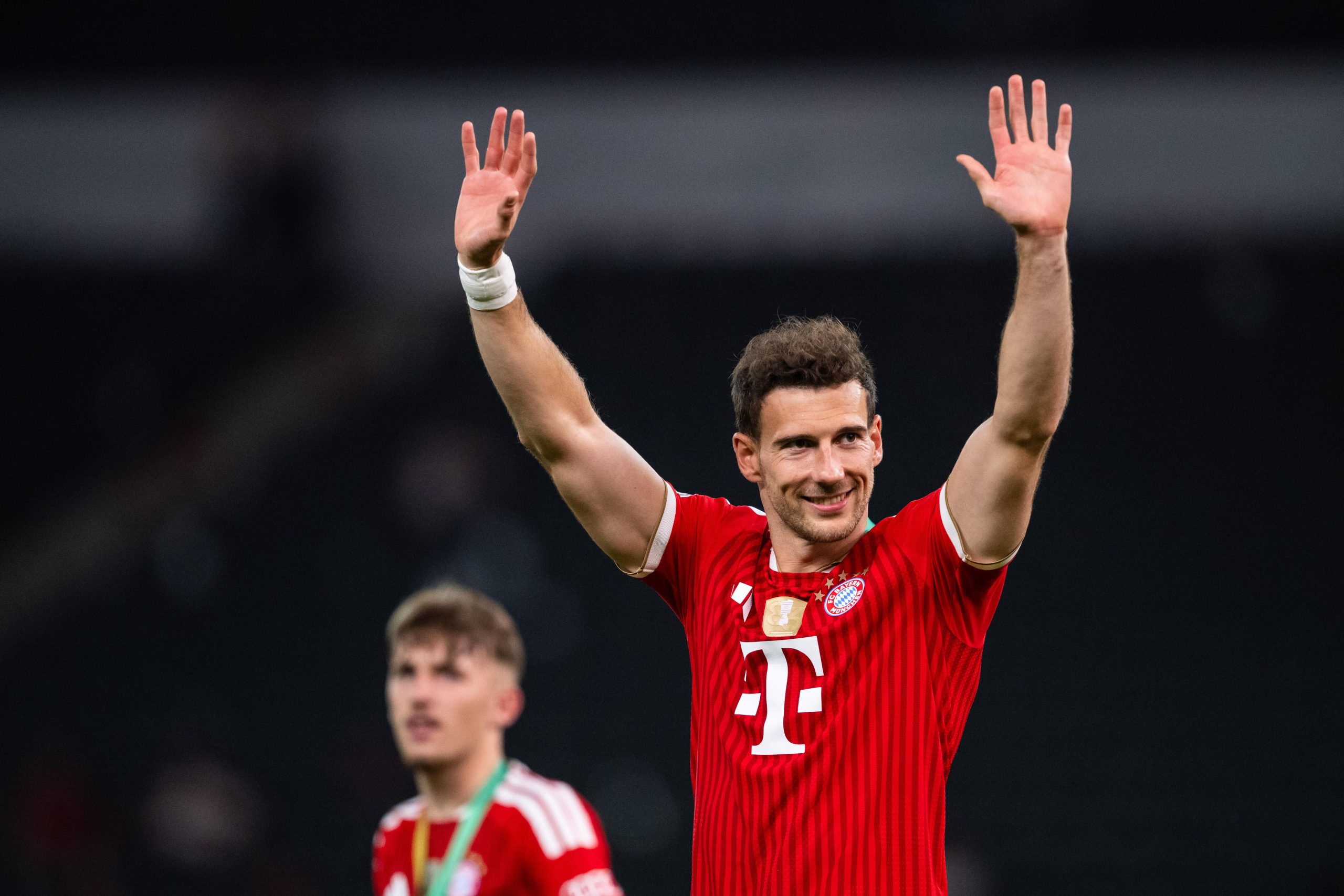
Leon Goretzka, Raphaël Guerreiro, and Chelsea FC loanee Nicolas Jackson all found their digital valedictions populating feeds. For Goretzka, the situation feels a bit clearer: AC Milan looks like the frontrunner to land Goretzka, but the recent organizational overhaul there could thwart those plans.
A clean sentence, neatly delivered. A transaction. For Guerreiro? Guerreiro’s future is up in the air.
Not exactly a rousing declaration, is it? More like a shrugged shoulder emoji translated into prose. And Jackson, whose loan spell concludes, will be retuning to Chelsea, but what happens from there’s anyone’s guess.
There’s a certain detached pragmatism to it all. It’s not just a club, it’s a temporary port. A transient employer.
And let’s not forget the flip side of this coin. The recovery stories, too, get their digital moment. Giulia Gwinn hit Instagram with a smile after her shoulder surgery
—a quick snapshot of resilience amidst physical duress. It’s a reminder that even outside the high-stakes game of player transfers, every moment of a prominent athlete’s life now exists under a digital gaze. For Germany’s national team, Gwinn won’t be available for the international games coming up and her presence on the pitch for Germany will be sorely missed.
A genuine loss, yet documented, consumed, and mourned in byte-sized chunks.
This dynamic—players as commodities, careers as temporary contracts, loyalty as a sometimes inconvenient footnote—isn’t confined to a single club or even one sport. It’s part of a bigger global phenomenon. In countries like Pakistan, for instance, where football might not reign supreme culturally compared to cricket, the global allure of European leagues is undeniable. People follow these clubs with an intensity that transcends geographical distance. They invest emotionally, financially (through merchandise, pay-per-view), even as their heroes change colors with alarming regularity.
This transient reality of elite sport, where individual talent navigates a market, parallels the global movement of skilled labor in every sector. It’s an economy built on scarcity, demand, — and ruthless optimization. Data from FIFA’s Global Transfer Report in 2023 indicated a staggering 74,100 international transfers in professional football across both men’s and women’s games, marking an 18.2% increase from the previous year. That’s a lot of movers and shakers. A lot of goodbyes. A lot of new starts. For more insights on the business behind the beautiful game, one might consider how European football reflects shifting global powers and economic appetites, revealing a larger chessboard at play.
What This Means
The almost casual dispatching of players via social media updates isn’t just a stylistic choice by Bayern Munich’s press office. Oh no. It’s an explicit reflection of modern professional sports as a thoroughly globalized, transactional industry. Players aren’t just local heroes; they’re valuable, but ultimately fungible, human capital within multi-billion-euro enterprises. Their tenures are governed less by sentiment — and more by performance metrics, transfer fees, and squad balance sheets. The public relations aspect, carefully managed online, attempts to soften the edges of what’s, at its heart, an economic calculation.
And that has broader implications. The hyper-commercialization of these leagues, largely fueled by a colossal international fanbase—including massive viewership across the Middle East and South Asia—means clubs like Bayern wield immense soft power. Their brand presence in places like Pakistan, where cricket often dominates, helps homogenize cultural tastes, creating a demand for a European product. It’s a subtle form of cultural diplomacy, yes, but more importantly, a sophisticated mechanism for market expansion. This kind of influence isn’t limited to football; we see it in the economic currents that drive the struggle for the future of cricket across the subcontinent, too. Every social media post, every transfer, every injury update isn’t just news; it’s a data point in an accelerating global economic and cultural exchange.