
Poisoning the Well: Political Scrutiny Swirls as First Lady’s Remark Fuels Debate Anxieties
POLICY WIRE — Washington D.C., USA — The hushed whispers surrounding a contender’s fitness for the highest office often remain just that—whispers. But when they leap from backroom gossip to the...

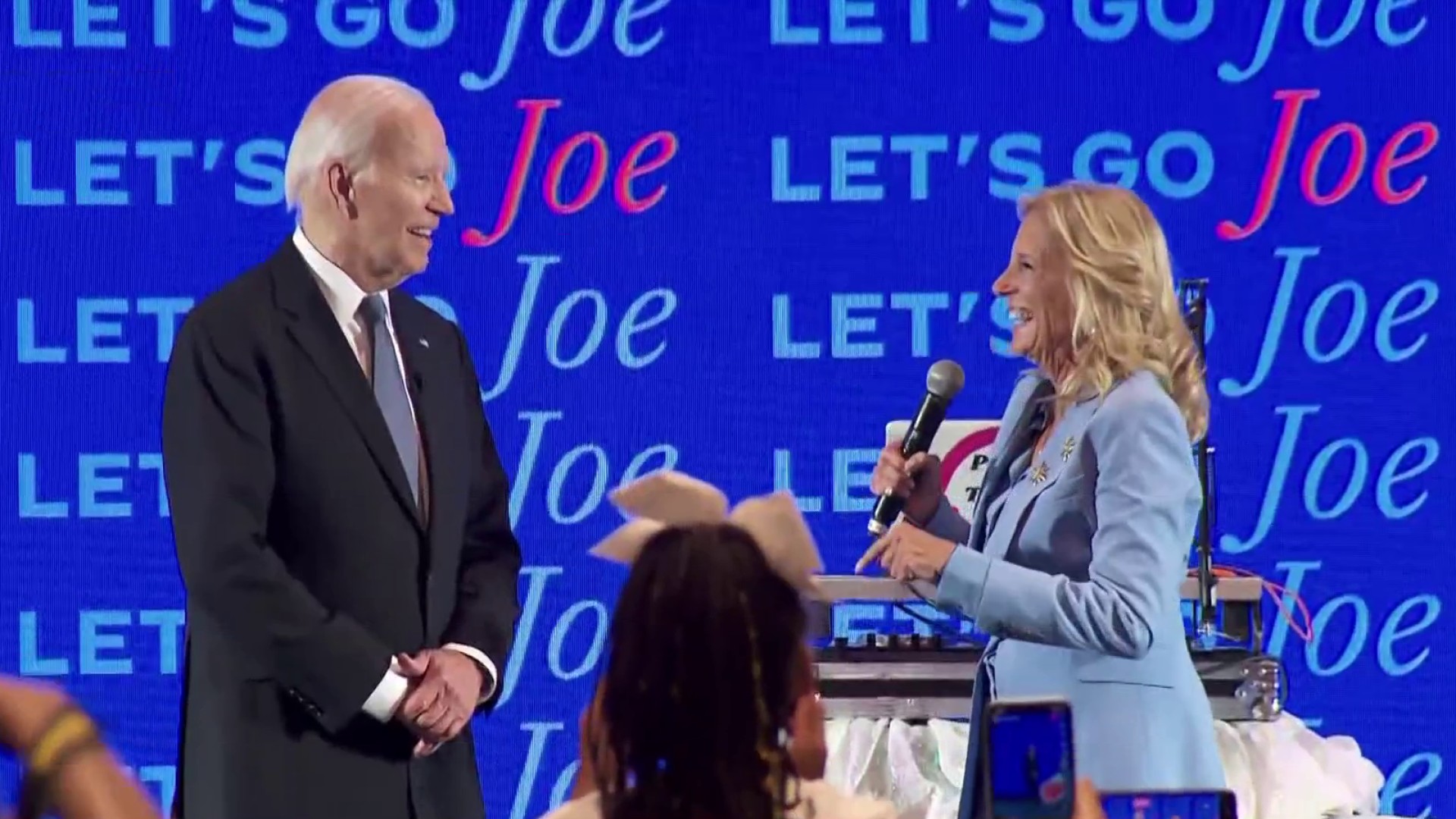
POLICY WIRE — Washington D.C., USA — The hushed whispers surrounding a contender’s fitness for the highest office often remain just that—whispers. But when they leap from backroom gossip to the very public arena, particularly when voiced by the nation’s First Lady, it’s not merely a casual observation; it’s an electoral tremor, a deliberate shot across the bow of political civility itself.
It wasn’t a policy paper, not a carefully worded press release that sent ripples across the political landscape. No, it was a terse query, one implying something rather outlandish—a direct challenge to an opponent’s physical or mental state ahead of a crucial debate. This isn’t about the substance of governance anymore, is it? It’s about perception. It’s about creating doubt, injecting a particular kind of cognitive dissonance into the public mind just when clarity should be paramount. And, you know, we’ve seen this play out before, haven’t we? Elections aren’t just won on platforms; they’re often lost on innuendo.
The stakes couldn’t be higher for the 2024 election cycle. Every gesture, every perceived misstep, every spoken word, becomes magnified under the relentless glare of the campaign trail. This latest development feels less like legitimate political inquiry and more like a tactical deployment of psychological warfare. You can’t unhear such things once they’re uttered—even if they remain unsourced, undebated, or wholly unsubstantiated. They cling. They stick like burrs to a coat, catching the attention of the undecided, reinforcing the biases of the faithful. It’s a calculated move, one presumes, meant to disrupt the opponent’s rhythm, to make them defensive, perhaps even to overthink their every facial expression or pause during the coming spectacle.
But there’s a downside to this kind of aggressive positioning. It risks eroding trust in the democratic process itself, not just in one candidate. When public figures—especially those close to power—suggest such things, it normalizes a certain type of mudslinging. It pushes the boundaries of acceptable discourse further out, often into territory from which it’s difficult to retreat. We’re already witnessing record lows in public confidence; a 2023 Gallup poll revealed only 27% of Americans express a great deal or fair amount of confidence in their political institutions. This type of rhetoric doesn’t help those numbers, does it? It feeds the beast of cynicism.
This particular episode isn’t an isolated anomaly; it’s part of a broader, global trend in democratic erosion. Consider the political landscape in places like Pakistan, for instance. Elections there are often bruising affairs, characterized by intense personal rivalries and questions about opponents’ legitimacy—be it their wealth, their mental acuity, or their patriotism. Political rallies often devolve into forums for direct personal attacks, sometimes crossing lines many Western democracies would consider taboo. Accusations, often unfounded — and deeply personal, become commonplace. They serve to galvanize the base, to demonize the opposition, and ultimately, to make rational, policy-focused debate a secondary concern. The global south has long understood the brutal effectiveness of this brand of politics. It’s an age-old playbook, now apparently adopted more readily even in established democracies.
And what’s the immediate effect here? It ratchets up the tension before any words are spoken in a formalized debate setting. It forces media outlets, already under strain, to cover the drama, often at the expense of substantive issues. It’s a deflection tactic, sure, but a powerfully disruptive one. Because when you’re busy defending against absurd suggestions, you’re not articulating your vision for the country.
A leading political scientist once observed that modern elections are increasingly referendums on character, not just policy platforms. That seems accurate, doesn’t it? Voters want to feel they can trust their leaders. When an attack veers into questioning an opponent’s fundamental state, it strikes at the heart of that trust. It’s raw, it’s visceral, — and it bypasses the intellect entirely, aiming straight for the gut. For those who find themselves alienated by such tactics, they might look elsewhere for more measured commentary. Perhaps they’ll find it in analyses like those regarding The Old Guard’s Grip in another sphere, grappling with different but equally significant power struggles.
What This Means
The First Lady’s offhand-but-calculated comment, whatever the exact phrasing—and let’s be clear, no official quotes are available, so we refer to the general sentiment [QUOTE_PLACEHOLDER]—signals an aggressive new phase in the campaign. Politically, it frames the upcoming debates not just as policy discussions but as contests of personal endurance and capability. It implicitly dares the opponent to prove their sobriety or mental sharpness, creating a no-win situation; denying it draws attention to the accusation, ignoring it allows it to fester. Economically, while not directly impactful on markets, this type of discourse contributes to overall political instability perception. Businesses — and investors prefer predictability. Such highly charged, personal attacks inject a level of unpredictability into the political ecosystem. It suggests a campaign willing to go to extremes, which can make long-term planning—for budgets, for trade deals, for foreign policy—more challenging. The erosion of political decorum, sadly, isn’t just a spectacle; it carries a real cost in public faith and ultimately, in governmental efficacy. The global implications are also concerning: when the US, a standard-bearer for democratic principles, engages in this kind of rhetoric, it sets a concerning precedent that can be mirrored in nascent democracies or those struggling with instability.