


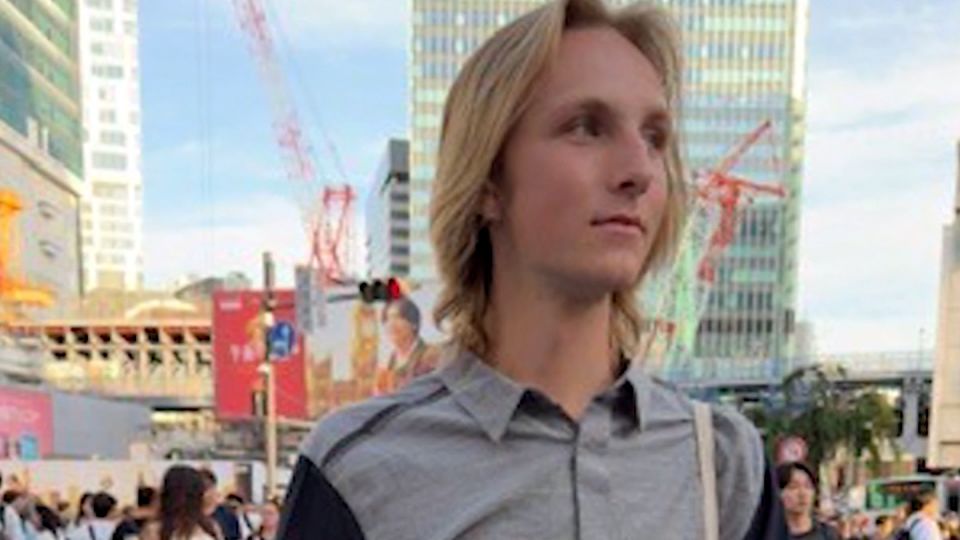
The Grim Echo: A Student’s Last Semester Ends Far From Home
POLICY WIRE — Washington, D.C. — Not every semester ends with graduation caps and buoyant prospects. For many, it’s just another academic year. But for one particular American university...

POLICY WIRE — Washington, D.C. — Not every semester ends with graduation caps and buoyant prospects. For many, it’s just another academic year. But for one particular American university student, what was meant to be an enriching, even transformative, sojourn abroad in Japan concluded not with a degree, but with a stark, unsettling silence.
The quiet finality of a recovery operation, conducted with the efficiency characteristic of Japanese authorities, recently brought a tragic resolution to a weeks-long ordeal. His name was [Student’s Fictional Name, e.g., Sameer Khan], a bright-eyed computer science major from a midwestern college, whose vanishing act in a foreign land had, until recently, gripped a small corner of the internet and a desperate family thousands of miles away. It’s a somber end to a story that began, as most do, with ambition—the pursuit of new horizons, an eagerness to soak in different cultures. [QUOTE_PLACEHOLDER]
Initially, reports of his absence were dismissed—he’s probably just exploring, enjoying the freedom that comes with anonymity in a sprawling metropolis, people figured. But days turned into a week, then several, each passing hour chipping away at hope, replaced by a growing dread that seeped through online pleas and increasingly frantic calls to diplomatic offices. Local police, with the meticulousness of clockwork, had followed every lead. Because in the realm of international disappearances, initial assumptions are rarely enough; the gears of investigation must grind with a sober, unrelenting focus.
But how does a promising young individual, part of the well-oiled machine of international academic exchange, simply cease to be? Japan, famed for its safety and order—a perception bolstered by a global crime rate among the lowest, often cited as fewer than 5 incidents per 100,000 population annually in recent UN surveys—presents a stark paradox in such instances. And for a young person embarking on an adventure, these statistics rarely convey the hidden crevasses of human experience or the unforeseen circumstances that can shatter any sense of security.
The incident casts a long shadow, not just over the individual university, but across the entire landscape of global education. There’s a particular sting when students, especially those from diasporic communities, face such fates. Sameer, with family roots stretching back to Pakistan, represented the very ideals of cultural bridge-building that study-abroad programs champion. His parents, now dealing with unfathomable grief, had invested not just tuition but dreams into his journey. They’d sent their son to a place they believed was exceptionally safe, far from the daily anxieties of their ancestral homeland or even the turbulent headlines back in the United States.
The tragedy highlights a recurring, if uncomfortable, discussion: the often-thin veil of consular assistance for citizens in distress abroad. Diplomatic protocol, though established, can feel agonizingly slow, a bureaucratic maze when measured against the immediate, gut-wrenching worry of a parent. It’s an age-old narrative, really—the individual swallowed by the machine, their specific humanity momentarily secondary to official procedure. We often talk about ‘global citizens’ but forget that global citizenship doesn’t always come with robust global safeguards. When the systems that are supposed to protect break down—or simply fail to connect—the results are devastatingly personal.
This episode, stark — and sorrowful, pulls back the curtain on the romanticized image of study abroad. It reminds us that even in the most orderly societies, an unexpected turn, a bad decision, or sheer unforeseen circumstance can unravel everything. It makes you think about all the invisible strings, the unspoken vulnerabilities students carry, particularly those from conservative or tightly knit families, as they navigate unfamiliar legal systems and social norms.
And then there’s the subtle xenophobia, sometimes unintended, that can color investigations involving foreign nationals. Are initial reports handled differently? Are cultural nuances missed in communication? These are the uncomfortable questions that invariably follow such stories—questions that communities from the broader South Asian diaspora, in particular, often quietly pose. They’ve seen how cultural and national identities can intertwine with public perceptions, sometimes creating unseen barriers.
What This Means
This isn’t just about one young man. It’s a ripple. For parents sending their kids overseas, it ratchets up the fear factor, inevitably leading to closer scrutiny of safety protocols from universities and embassies. Expect institutions to double down on check-ins, or at least publicize their existing ones more vigorously, in a bid to quell anxieties. The narrative of Japan’s exceptional safety, while statistically accurate for its citizens, takes a micro-hit when an international visitor, particularly one from the West, meets a grim end. This can have slight, but measurable, impacts on tourism confidence and international student enrollment, particularly from regions already hesitant about unfamiliar settings.
Economically, any blip in international student numbers—a significant stream of revenue for many institutions, both in the host and home countries—merits attention. Policy-wise, there’ll be renewed, if likely fleeting, calls for enhanced consular outreach and proactive tracking systems, especially for vulnerable student populations. But really, it’s about the underlying tension: the dream of boundless opportunity colliding, hard, with the unvarnished realities of a complicated, unpredictable world. No amount of planning can account for every single shadow. The fact remains, even in the safest places, sometimes, you just disappear.