



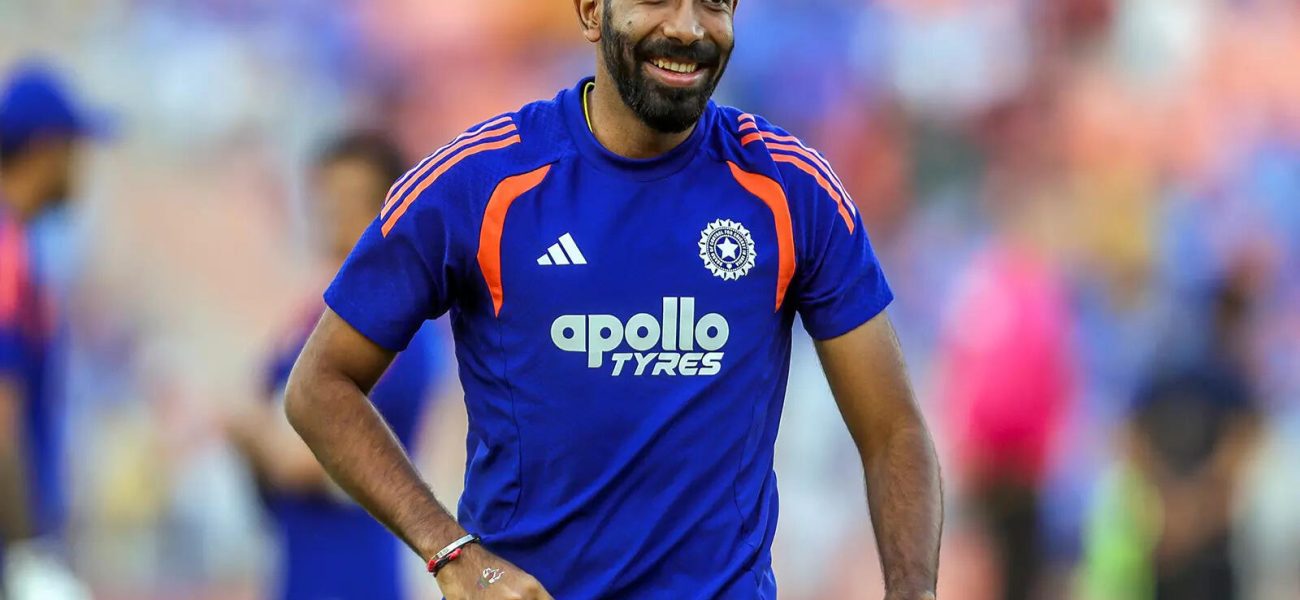
Star Pacer’s Selective Play Fuels Leadership Vacuum, Igniting Cricket’s Commitment Debate
POLICY WIRE — Mumbai, India — It wasn’t the sound of leather on willow that echoed loudest recently; it was the soft clack of keys as former India batter Sanjay Manjrekar — a man known for his...

POLICY WIRE — Mumbai, India — It wasn’t the sound of leather on willow that echoed loudest recently; it was the soft clack of keys as former India batter Sanjay Manjrekar — a man known for his unflinching assessments—took to Instagram. Forget the pristine pitches or stadium roar for a moment. This was about something grittier, something about a nation’s premier fast bowler and a perceived reluctance to pull on the national colors consistently.
And so, we found ourselves navigating the labyrinthine career choices of Jasprit Bumrah, a name that typically conjures images of unplayable yorkers and match-winning spells. But lately, for Manjrekar, the dominant sentiment wasn’t admiration. It was plain bewilderment.
[QUOTE_PLACEHOLDER] Manjrekar confided to Sony Sports Network, a candid observation that ripped through the carefully constructed narratives of player welfare and workload management. It’s less about a fast bowler’s elbow, it seems, and more about the delicate balance between personal ambition, professional opportunity, and—lest we forget—national duty.
Because, let’s face it, India isn’t just another cricket team; it’s a regional behemoth, a cultural juggernaut that shapes the fortunes and aspirations of a billion people. When a player of Bumrah’s caliber appears to pick and choose his international engagements, it doesn’t just raise an eyebrow—it sends ripples through the sport’s very fabric.
After a full season with Mumbai Indians in IPL 2026, where he uncharacteristically delivered a muted performance claiming only four wickets, one might expect a return to the national fold with gusto. Not quite. Bumrah has been rested for the upcoming T20I tours against Ireland — and England in June and July. This isn’t unprecedented, but it’s the timing — and context that nag at the old guard. A spot in India’s Asian Games squad—set for Japan under the captaincy of Shreyas Iyer—feels almost like an after-thought, a lower-stakes commitment. Manjrekar was blunt, saying “Asian Games, those performances and those results don’t stay with you for too long. Cricket is still a sport of bilaterals and our own World Cups.” He underscored that the very sanctity of these less traditional cricketing forays simply doesn’t compare.
It’s a peculiar state of affairs when a marquee athlete—a genuine cricketing icon—gives off the impression of selectivity. [QUOTE_PLACEHOLDER] Manjrekar remarked, painting a picture that’s probably more common in individualistic sports than in team dynamics that often define Indian cricket. He mused, “So here is a guy who actually rests for India games and keeps himself fit for certain India games. So it’s a very different approach, something that I don’t understand.”
And here’s the kicker: Manjrekar, for a stretch, had actually envisioned Bumrah as a frontrunner for the Indian T20 captaincy. That’s a massive endorsement, speaking to perceived leadership qualities — and mental fortitude. But commitment issues—or the appearance of them—tend to unravel even the most compelling cases. Bumrah’s previous refusal of the Test captaincy in 2025 due to workload worries saw the armband prematurely pass to Shubman Gill. Now, Shreyas Iyer gets the nod for the Asian Games T20s. It’s a rapid shift, an unplanned promotion, for those waiting in the wings. “I wish he were available. And he was my go-to captain. He was certainly deserving of ability and leadership qualities as well. Bumrah has not been too keen to take captaincy. It’s gone prematurely to other Indian players like Shubman Gill in England and now Shreyas Iyer as well,” Manjrekar observed, with a hint of exasperation.
Ultimately, it’s a tightrope walk for any elite athlete, managing the grind of endless tours — and franchise obligations. But India’s cricket—and indeed, cricket across the Subcontinent—operates with a gravity almost unmatched elsewhere. Pakistan, for instance, grapples with its own talent drain and financial pressures, often looking to India as the economic and sporting benchmark. Any perceived fissure in the Indian cricketing hierarchy, particularly concerning its top-tier stars, reverberates. It can alter perceptions of player power, impact future contract negotiations across the region, and even influence how aspiring young talents view their path to international glory.
What This Means
This isn’t just about one bowler; it’s about a deepening schism in international sports, a sort of invisible renegotiation between the national team, individual athletes, and the increasingly lucrative private leagues. For a nation like India, where cricket is less a sport and more a religion—a significant pillar of national identity and soft power projection—the implications are tangible. When your premier strike bowler seems to prefer an IPL schedule over lower-stakes bilateral series, it forces the board to reconsider its strategy around player retention, central contracts, and the delicate art of fostering national allegiance. This isn’t purely an economic decision for Bumrah; it suggests a changing value system, where global brand building might occasionally eclipse the prestige of every national cap. And it throws open the doors for leadership roles to players who are more consistently available, accelerating the development—or perhaps over-burdening—the next tier of talent. It implies a strategic vacuum for future tours, a statistical dead heat in player availability that complicates team selection and long-term planning for major tournaments. For regional rivals, like Pakistan, this unpredictable availability of India’s key assets creates an interesting dynamic; it might not level the playing field, but it certainly introduces more variables for competition, impacting bilateral series dynamics and major tournaments alike. It’s a testament to the player’s market value, sure, but also a stark indicator of the ongoing institutional struggle to maintain supremacy of the national team in a globalized, commercialized sporting landscape. They’re struggling to control the narrative—and the talent.
