


Nablus Raid: The Endless Cycle of Steel and Resolve in the West Bank
POLICY WIRE — NABLUS, West Bank — The quiet clanging of a blacksmith’s hammer might, in another city, signify honest toil. But in Nablus, a city steeped in both history and defiance, that...

POLICY WIRE — NABLUS, West Bank — The quiet clanging of a blacksmith’s hammer might, in another city, signify honest toil. But in Nablus, a city steeped in both history and defiance, that rhythmic beat often broadcasts something far more precarious: the illicit manufacture of weaponry. And so, when Israeli security forces moved under the cloak of night, it wasn’t just about intercepting a supply chain; it was about momentarily silencing an echo of resistance, however symbolic, in a conflict that seems perpetually stuck in a grim, predictable loop.
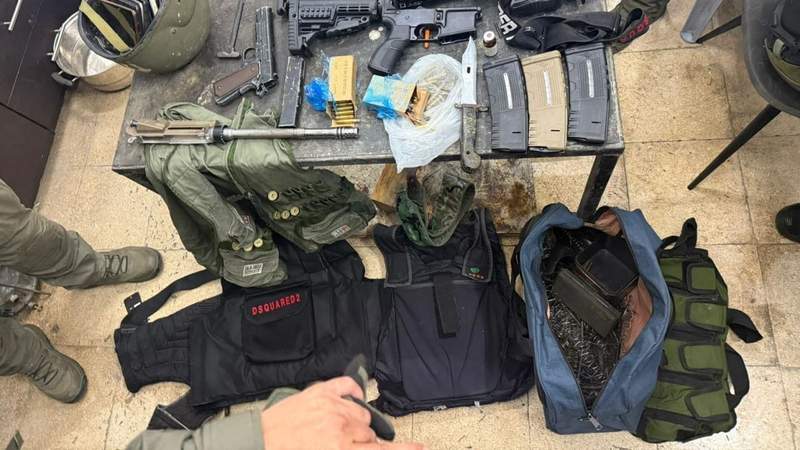
It’s a dance of patrols — and clandestine workshops, of surveillance and improvisation. This week, it was the turn of the Israel Defense Forces (IDF) and Border Police to sweep into Nablus, targeting what they described as a significant hub for illegal weapons production. The pre-dawn operation, a common feature of life in the northern West Bank, reportedly unearthed a cache of components and finished arms – a small arsenal of homemade ingenuity ranging from M-16 assault rifle parts to the ubiquitous ‘Carlo’ submachine guns, crudely effective and notoriously difficult to trace. They didn’t just confiscate; they dismantled, ensuring these particular tools of unrest wouldn’t see the light of day, at least not for a while.
“These operations are a vital component of our ongoing efforts to dismantle terror infrastructure and protect our citizens from violence,” asserted Maj. Gen. (Res.) Avi Ben-Zion, former Head of Military Intelligence, speaking to Policy Wire from Tel Aviv. “We won’t tolerate any attempts to arm groups that seek to destabilize the region, period. It’s an endless battle of attrition, but one we must win.” His tone was resolute, mirroring the Israeli establishment’s consistent stance.
But the view from the streets of Nablus paints a starkly different tableau. For many Palestinians, such raids aren’t security triumphs but rather persistent infringements, feeding a narrative of occupation and perpetual struggle. “Every hammer blow against an illegal workshop is met with a stronger resolve in the hearts of our people,” shot back Mr. Jamal Abu-Khalaf, a Nablus City Council Member, when contacted for comment. “They can confiscate steel, but they can’t confiscate the spirit of resistance, nor the demand for freedom. This isn’t about terror; it’s about a people under siege, finding ways to defend themselves.”
And indeed, this cycle reverberates far beyond the immediate confines of the West Bank. In capitals across the Muslim world, from Islamabad to Jakarta, these incidents aren’t merely local news; they’re potent symbols, fueling narratives of solidarity and often, condemnation. Pakistan, for instance, frequently leverages its diplomatic platforms to advocate for Palestinian rights, viewing the issue through the lens of Islamic unity and justice. These raids, irrespective of their stated security aims, inevitably contribute to the broader geopolitical maneuvers that shape regional alliances and international opinion, influencing everything from UN votes to public sentiment in nations thousands of miles away.
📄 POLICY WIRE WHITEPAPER PUBLISHED: PAKISTAN'S NATIONAL SECURITY POLICY PRIORITIES
👉 READ BY CLICKING HEREStill, the data points to a growing problem for Israeli security planners. According to an internal Israeli Defense Ministry report from late last year, homemade weapons production in the West Bank has seen a 40% increase over the past two years, with Nablus and Jenin being particularly significant hubs. It’s a low-tech insurgency, fueled by necessity and local expertise, making it incredibly challenging to fully suppress. The ease of access to raw materials and basic machinery, coupled with high unemployment rates (hovering around 24% in the West Bank for Q4 2023, according to the Palestinian Central Bureau of Statistics), creates a fertile ground for such illicit industries, drawing in those with few other economic prospects.
What This Means
At its core, this Nablus raid, like countless others before it, underscores the intractable nature of the Israeli-Palestinian conflict. Politically, it’s a constant reassertion of Israeli control over territory it occupies, while simultaneously reinforcing the Palestinian narrative of resistance against that occupation. Economically, these operations, and the ensuing instability, stifle any meaningful development in areas like Nablus, making life increasingly difficult for its residents – a factor that paradoxically can drive more individuals toward desperate measures. It’s a complex economic playbook, one where security operations often exacerbate the very conditions they aim to mitigate.
For regional stability, each raid, each act of resistance, sends ripples through an already volatile Middle East. It feeds into the broader geopolitical currents, often prompting condemnations from Arab and Muslim nations, and complicating diplomatic efforts that seek to de-escalate tensions. And it won’t just disappear with the confiscation of a few lathes; it’s a symptom of a deeper malaise, a struggle over land, identity, and sovereignty that shows no immediate signs of abatement. Behind the headlines of success or defiance, there’s a grinding, relentless reality for millions, a testament to the persistent geopolitical maneuvers playing out on a daily basis.