

Miami’s Shifting Sands: Verstappen’s ‘Light at the End of the Tunnel’ Signals Deeper Geopolitical Maneuvers in F1
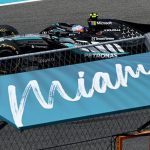
POLICY WIRE — Miami, USA — The asphalt at the Miami International Autodrome, shimmering under a humid 33C sun, told a tale far more intricate than mere lap times. It wasn’t Kimi...

POLICY WIRE — Miami, USA — The asphalt at the Miami International Autodrome, shimmering under a humid 33C sun, told a tale far more intricate than mere lap times. It wasn’t Kimi Antonelli’s precocious pole position that truly captivated the discerning eye; rather, it was the guttural pronouncement from a reigning titan, Max Verstappen, that resonated with the unmistakable thrum of strategic upheaval. After weeks of uncharacteristic frustration, he’d found what he termed ‘light at the end of the tunnel’ — a phrase often reserved for beleaguered political campaigns or struggling economies.
And so, beneath the superficial triumph of Mercedes’ 19-year-old phenom, the real drama unfolded: a high-stakes, technologically driven arms race playing out with millions, if not billions, of dollars in corporate and national prestige hanging precariously in the balance. It’s a testament to the sport’s hyper-competitive nature — a veritable geopolitical chessboard on wheels — where yesterday’s dominance can evaporate into today’s struggle, often by mere hundredths of a second.
Antonelli, the young Italian, did indeed command pole, securing his third in four Grands Prix this season. He’s been an undeniable revelation, a sharp, new instrument in Mercedes’ formidable arsenal. But his achievement arrived against a backdrop of a resurgent Red Bull, whose drastic mid-season upgrades, initially viewed with skepticism, unexpectedly catapulted Verstappen back into contention after a bruising sprint race. The Dutch champion, whose very presence has been a policy question for his team amid speculation about his long-term commitments, seemed almost relieved. “It’s everything,” he asserted, reflecting on his car’s newfound compliance. “Before nothing really worked, I felt like a total passenger.” That’s a profound admission from an athlete who commands his machinery like an extension of his will.
Still, the relentless pursuit of performance carries an exorbitant price tag. This isn’t just about drivers; it’s about the hundreds of engineers, the wind tunnels, the computational fluid dynamics simulations – a staggering R&D apparatus that dwarfs many nation-states’ defense budgets. Oliver Vance, CEO of Mercedes-AMG Petronas F1 Team, didn’t mince words when observing the ceaseless pressure. “This isn’t just about a single race; it’s a relentless chess match of engineering and human capital, demanding unprecedented investment and foresight into future regulatory frameworks,” Vance stated, alluding to the escalating costs of performance enhancements that trickle down through every facet of the sport’s ecosystem. It’s a clear signal that the financial commitment required to merely compete at the apex is reaching unsustainable levels for some.
Meanwhile, McLaren, buoyant after a dominant sprint victory, found themselves surprisingly adrift, with Lando Norris finishing fourth. Ferrari, too, despite their own significant revisions, couldn’t quite bridge the gap, Charles Leclerc expressing palpable disappointment with third. It’s an ephemeral kind of glory, this F1, where the slightest miscalculation in aerodynamic flow or tire degradation can unravel weeks of intricate strategic planning. The delicate balance of power, once seemingly etched in stone, is now in constant, chaotic flux.
And for every champion finding a flicker of hope, there’s a teammate struggling to keep pace. Verstappen’s Red Bull cohort, Isack Hadjar, found himself a stark 0.825 seconds adrift, a chasm in F1 terms, battling what he described as a persistent lack of power. Such disparities within even the most elite organizations underscore the brutal meritocracy inherent in this global spectacle. It’s a stark reminder that even with shared resources, individual performance and specific adaptations (or lack thereof) dictate outcomes.
Even Mother Nature decided to play a role, forcing race organizers to move the Grand Prix forward by three hours due to ominous thunderstorm forecasts. It’s a pragmatic decision, of course, but also a stark reminder that even the most meticulously planned global events remain vulnerable to external, unpredictable forces — a theme familiar to policymakers grappling with climate shifts or sudden geopolitical realignments.
The implications of this relentless pursuit of advantage ripple far beyond the circuit. Formula 1’s expanding global footprint, particularly into emerging markets in the Middle East and South Asia, means performances here resonate culturally and economically. Pakistan, for instance, a nation with a burgeoning youth population and increasing engagement with global sports, watches these spectacles not just for entertainment but as a benchmark for aspirational innovation and national branding. The investment from Gulf states, intertwined with broader Muslim world economic strategies, means a strong showing in Miami isn’t just about a trophy; it’s about reinforcing economic ties, showcasing technological prowess, and attracting further investment into a sport that has become a powerful soft-power tool.
At its core, what we witnessed in Miami was a microcosm of broader global dynamics. Teams are, in essence, multinational corporations operating under immense public scrutiny, constantly innovating, adapting, and navigating complex regulatory landscapes. They’re battling for supremacy, yes, but also for market share, talent, — and brand narrative. As Latifa Al-Ansari, a spokesperson for the FIA’s Sporting Regulations Committee, recently put it, “Ensuring a level playing field, even as technical innovations accelerate, remains our paramount objective. It’s a delicate balance, preserving competitive spirit whilst managing an escalating technological arms race.” This echoes the perpetual challenge faced by international bodies trying to regulate rapidly evolving industries or prevent hegemonic dominance in global affairs.
What This Means
The Miami Grand Prix qualifying, far from being just another sporting event, encapsulates a critical juncture in the policy and economic landscape of elite global sports. Politically, the shifting allegiances and fortunes of teams like Red Bull and Mercedes highlight the precarious nature of technological dominance and the strategic imperative of continuous innovation. Nations, much like racing teams, must constantly invest in R&D and human capital to maintain their edge in an increasingly competitive global arena. The FIA’s role as a governing body (a sort of global sports UN, if you will) becomes paramount in maintaining competitive balance, preventing one entity from achieving an unassailable lead, and ensuring the sport’s long-term viability — a lesson for any international regulatory body. It’s a constant negotiation between fostering competition and preventing runaway spending, particularly given the enormous economic stakes for all participants.
Economically, the upgrade packages and strategic pivots seen in Miami are a direct reflection of massive capital investment and risk assessment. Each new aerodynamic component, each engine refinement, represents millions in expenditure, justified only by the potential for increased market exposure, sponsorship revenue, and brand valuation. The scramble for talent, evidenced by Antonelli’s meteoric rise and Verstappen’s critical role as a brand anchor, underscores the premium placed on human capital in high-tech industries. the sport’s aggressive expansion into new markets, especially in Asia and the Middle East, demonstrates a deliberate strategy to diversify revenue streams and cultivate new fan bases, aligning closely with broader patterns of global economic integration and soft power projection.
So, while the immediate focus was on who clocked the fastest lap, the deeper narrative is one of relentless innovation, high-stakes finance, and the ever-present geopolitical undercurrents that define the modern sporting spectacle.