


Munich’s Reckoning: Champions League Thriller Exposes Football’s Geopolitical Undercurrents
POLICY WIRE — PARIS, FRANCE — Sometimes, the cacophony of nine goals in a single football match — a sheer, audacious, almost unbelievable spectacle — masks a more profound narrative, one woven not...

POLICY WIRE — PARIS, FRANCE — Sometimes, the cacophony of nine goals in a single football match — a sheer, audacious, almost unbelievable spectacle — masks a more profound narrative, one woven not just on the pitch but across national interests and colossal capital flows. That’s precisely what unfolded at the Parc des Princes this past week, where Paris Saint-Germain (PSG) clinched a jaw-dropping 5-4 victory over FC Bayern Munich in the UEFA Champions League semi-final first leg. It wasn’t merely a contest of athletic prowess; it was a brazen display of modern football’s high-octane political economy, a drama that makes mere sporting punditry seem quaint.
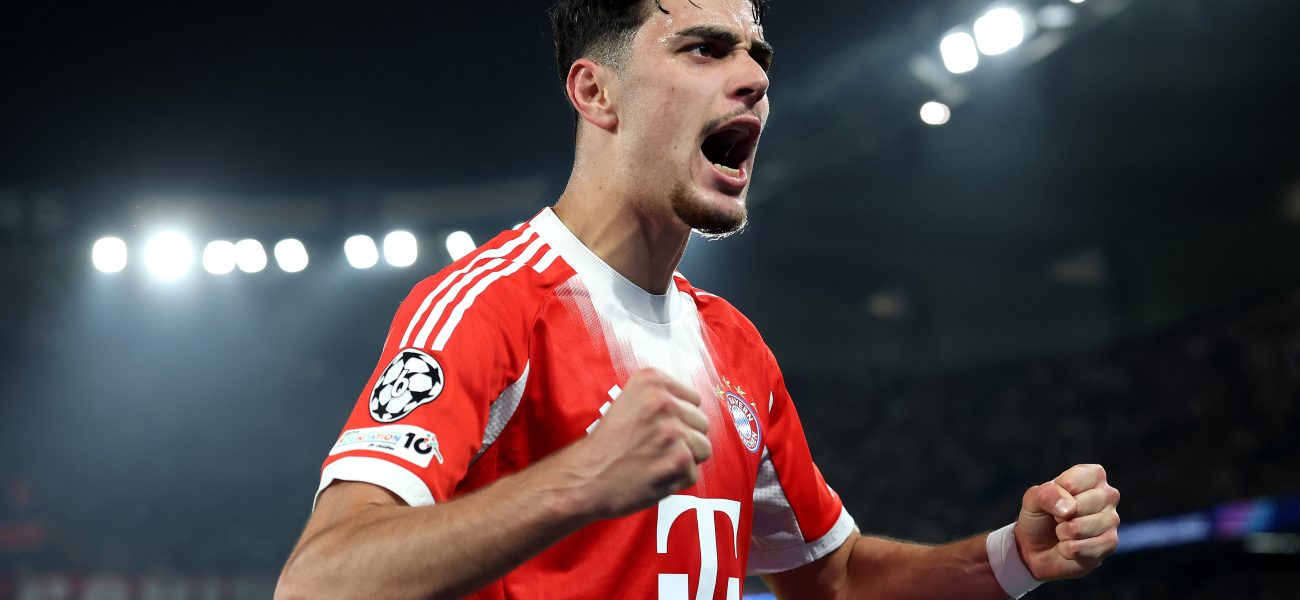
The fixture, a breathless maelstrom of attacking football and defensive frailties, served as a stark reminder of the Champions League’s unique capacity to deliver unparalleled theatre. Bayern, usually a paragon of German efficiency, found itself in an uncharacteristic shoot-out. Midfielder Aleksandar Pavlović, fresh from the fray, didn’t mince words. “A defeat is never good. We would have deserved at least a draw, if not even a win. But we can build on our performance in the return leg and make it happen at home with our fans,” he told Sky Germany journalist Kerry Hau. And he’s right, isn’t he? Football’s inherent unpredictability, its capacity for narrative reversal, remains its most compelling—and commercially valuable—asset.
But behind Pavlović’s measured optimism lies a deeper strategic calculus. For Bayern, a club steeped in tradition and fan ownership, this defeat wasn’t just a scoreboard entry; it represented a chink in a formidable armor, a rare public vulnerability. Christoph Freund, Bayern’s Sporting Director, usually a man of unflappable demeanor, conceded the gravity. “Our defensive discipline simply wasn’t at the required level, and that’s a fundamental issue we must address before the return. However, the team showed immense character to score four away goals; we aren’t out of this by any stretch,” Freund confided to Policy Wire, his tone a calibrated mix of frustration and resolve. They’ve got to tighten things up, haven’t they?
So, the stage is set for a monumental return leg in Munich, a clash that will transcend sport. And it’s here that the narrative expands, pulling in global stakeholders. PSG, after all, isn’t merely a French club; it’s a colossal soft power project, bankrolled by Qatar Sports Investments (QSI), a subsidiary of Qatar’s sovereign wealth fund. Their audacious acquisition of talent, their relentless pursuit of European supremacy, isn’t just about winning trophies. It’s about branding, about influence, about carving out a prominent space for a Gulf state on the world’s most glamorous sporting stage.
Nasser Al-Khelaifi, PSG’s President — and a prominent Qatari businessman, articulated this broader vision. “This result demonstrates our offensive power, but also the challenges that remain. We respect Bayern; they’re a truly formidable opponent. But our ambition is clear, and we’re building not just a team, but a legacy, one that resonates far beyond Paris, connecting with fans from Doha to Dhaka,” Al-Khelaifi asserted in a rare statement, subtly underlining the club’s extensive reach into the Muslim world and burgeoning markets like South Asia. He understands the game’s global chessboard, you see.
Still, the stakes are equally monumental for both sides. For Qatar, a Champions League title would be another jewel in its crown of global sporting investments, cementing its reputation as a serious player on the international stage, quite a feat for a nation of just under three million people. The tournament’s global reach is staggering: the 2023 UEFA Champions League final, for instance, garnered an estimated live audience of 450 million viewers worldwide, a figure rivaling that of the Super Bowl, underscoring the immense value of this platform for state-backed entities. For Germany’s Bayern, it’s about European hegemony, about national pride, and preserving a model of financial prudence against the backdrop of seemingly limitless Gulf capital. It’s a perennial tension.
📄 POLICY WIRE WHITEPAPER PUBLISHED: PAKISTAN'S NATIONAL SECURITY POLICY PRIORITIES
👉 READ BY CLICKING HEREWhat This Means
At its core, this extraordinary semi-final illuminates the ever-widening chasm between traditional footballing powerhouses and the new moneyed elite, often state-backed. PSG’s Qatari ownership represents a significant political and economic phenomenon: the leveraging of sporting success for geopolitical soft power. A Champions League victory for PSG isn’t just a trophy; it’s an affirmation of Qatar’s strategic investment in global influence, a narrative that plays particularly well in the Middle East and parts of South Asia, where European football commands fanatical devotion. It helps legitimise their broader foreign policy objectives, doesn’t it?
And for Bayern, the challenge extends beyond simply overcoming a nine-goal aggregate. They represent a more traditional, member-owned model — a bastion of German economic might and disciplined management. A defeat to a state-funded club, particularly one that has struggled historically to convert its vast wealth into consistent European glory, would sting on multiple levels. It raises uncomfortable questions about the sustainability of their own model in an era of hyper-inflated transfer fees and salaries, fueled by seemingly bottomless state coffers. The game, therefore, becomes a proxy battle for differing philosophies on club ownership and financial sustainability within the broader European political-economic landscape.
The economic ramifications are also staggering. The prize money for reaching the final, not to mention the commercial bonuses and increased brand value, represents tens of millions of euros. For Bayern, already a financially robust entity, it solidifies their standing. For PSG, it’s not just about the money, but the validation, the enhanced global appeal, — and the recruitment leverage. The psychological impact on their respective domestic leagues is also consequential; a Champions League final appearance can infuse a team with an almost unstoppable aura. It’s an investment, pure — and simple, and the dividends are both tangible and intangible.
But the raw emotion of the 5-4 first leg, the sheer unpredictability of it all, is a stark reminder that even with billions at play, human error, individual brilliance, and the volatile energy of the crowd can still turn the tide. Munich’s Allianz Arena awaits, a crucible where legacies will be forged, narratives rewritten, and football’s profound geopolitical undercurrents will once again reveal themselves, starkly, for all the world to see.