

Bayern’s Precarious Perch: When Sporting Setbacks Echo Geopolitical Stakes
POLICY WIRE — Munich, Germany — It isn’t often that a club with the gilded pedigree of Bayern Munich finds itself wrestling not just with a first-leg Champions League defeat, but with an almost...

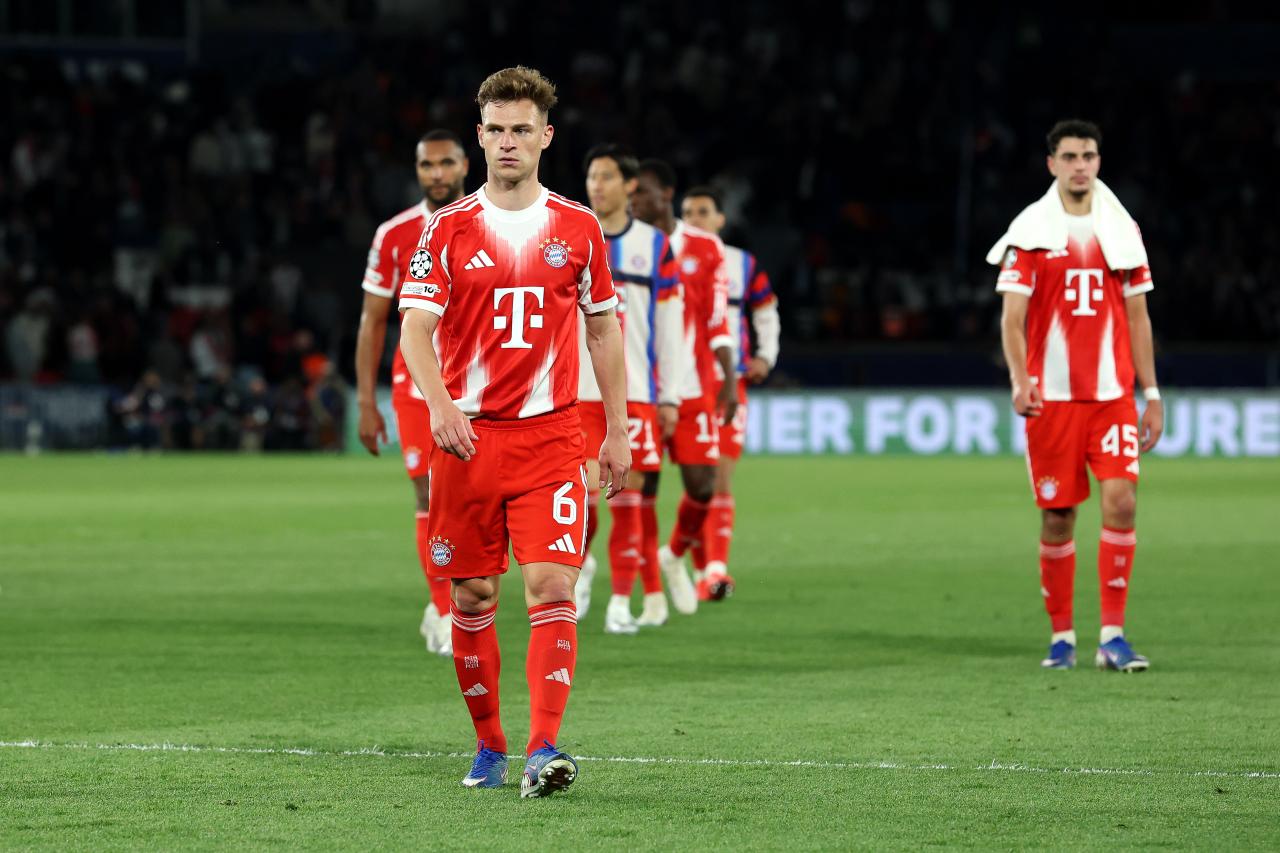
POLICY WIRE — Munich, Germany — It isn’t often that a club with the gilded pedigree of Bayern Munich finds itself wrestling not just with a first-leg Champions League defeat, but with an almost defiant optimism following a defensive capitulation. Yet, that’s precisely the curious tableau painted by midfielder Joshua Kimmich, whose unbowed spirit after a 5-4 loss to Paris Saint-Germain seems to belie the immense stakes involved. His pronouncements, however, offer a fascinating glimpse into the psychological warfare — and indeed, the economic realities — underpinning modern European football.
The fixture itself was a veritable rollercoaster, a high-octane affair that saw Bayern, at one point, trail by three goals (a discomfiting 5-2, to be precise). And then, with the clock winding down, they clawed back two vital strikes, narrowing the aggregate margin to a single, tantalizing goal. This spirited riposte, Kimmich posited, is what fuels his sanguine outlook. “It feels utterly strange,” he admitted to Prime Video, his words carrying an almost philosophical weight. “We’d lost by one, yes, but sitting there in the dressing room, an insistent feeling nagged: something’s still profoundly possible.”
But the narrative extends beyond mere scoreboard mechanics. A contentious penalty decision, awarded to PSG after the ball grazed Alphonso Davies’ arm, looms large in the post-match dissection. Ousmane Dembélé dispatched it, amplifying the Parisian lead to 3-2. Kimmich, though claiming not to have re-watched the incident — a tactical avoidance, perhaps — didn’t shy from lambasting the underlying protocol. “One thinks the statute could be adjusted,” he quipped, “so that not every incidental handball within the box automatically triggers a punitive spot-kick.” It’s a grievance that resonates deeply within the game, touching upon the very soul of sportsmanship versus rigid, often unfeeling, regulation.
Still, the financial repercussions of such a high-stakes contest are rarely far from the minds of club executives. For institutions like Bayern, progression in the Champions League isn’t merely about bragging rights; it’s about a gargantuan infusion of capital. “We’re not solely playing for the trophy itself; we’re contending for billions in branding valuation, for the very prestige that underwrites European football’s global enterprise,” Bayern CEO Oliver Kahn later articulated, hinting at the colossal commercial ecosystem reliant on consistent elite performance. His observation underscores that these matches aren’t just athletic spectacles; they’re pivotal economic battlegrounds.
At its core, Kimmich’s resolute stance, despite the precarious position, isn’t just personal grit. It’s a calculated gamble, a public declaration designed to galvanize a squad accustomed to dominance. The club, after all, isn’t just a German powerhouse; it’s a global brand, commanding fervent support even in distant lands. And that’s where the geopolitical — and economic tendrils truly spread.
Consider the expansive reach of European football into regions like South Asia. In countries such as Pakistan, where cricket often reigns supreme, a burgeoning fan base avidly tracks the Champions League. These aren’t just casual viewers; they’re deeply invested, emotionally and often financially (through merchandise, subscriptions) — a phenomenon strikingly akin to the ‘cricket idolatry’ seen in that region. The narratives spun by players like Kimmich, their displays of defiance and hope, reverberate far beyond Munich, influencing consumer behavior and cementing brand loyalty across continents. According to UEFA’s own financial reports for the 2022/2023 season, simply reaching the semi-finals of the Champions League alone garners clubs approximately €12.5 million, with a further €15.5 million for making the final – a sum that underscores the raw financial imperative.
What This Means
This single-goal deficit, and Kimmich’s subsequent rhetoric, isn’t just sports news; it’s a case study in managing expectations within a high-pressure, multi-billion-euro industry. The implications are manifold. Economically, a Champions League exit at this stage represents not just forgone prize money but also reduced broadcasting revenue, potential impacts on sponsorship deals, and diminished future transfer market leverage. Politically, in a subtle yet perceptible way, the fortunes of a national sporting titan like Bayern can become intertwined with a broader sense of national confidence, a soft power projection that fuels tourism and cultural exchange.
the debate around officiating, exemplified by Kimmich’s critique of the handball rule, highlights the ongoing tension between tradition and technology in sports governance. FIFA and UEFA continue to grapple with how best to implement VAR and other innovations without eroding the game’s fluidity or sparking persistent controversies. This isn’t just about a single penalty; it’s about the perceived fairness and integrity of a global spectacle, influencing everything from grassroots participation to international betting markets.
The impending return leg, therefore, transcends typical sporting drama. It’s a test of Bayern’s institutional resilience, a financial crucible, and a barometer for the efficacy of modern football’s rulebook. Kimmich, for his part, remains undeterred. “We showed a powerful resurgence,” he recollected of the first leg, a fleeting moment of self-congratulation. “You were out there, thinking, ‘What on earth is happening? We certainly weren’t three goals worse.’” He truly believes they can conquer this challenge. “The situation’s simple. We have to prevail, and in the end, we’ll exhaust every fiber to ensure we do.” A bold assertion, indeed, for a club teetering on the brink of European elimination. But then, it’s not just a game, is it? It’s a global economic — and psychological chess match, played out on the green pitch.