

Pyongyang’s Overture to ‘Exponential’ Nuclear Might: A Risky Bet on Regional Stability
POLICY WIRE — Washington, D.C. — It’s a familiar dance, isn’t it? The pronouncement, the bluster, the saber-rattling across the Korean Peninsula. Yet, something feels a shade sharper this time....

POLICY WIRE — Washington, D.C. — It’s a familiar dance, isn’t it? The pronouncement, the bluster, the saber-rattling across the Korean Peninsula. Yet, something feels a shade sharper this time. Pyongyang isn’t just maintaining its posture; it’s flexing it, asserting a calculated leap toward a more robust, ‘exponential’ nuclear arsenal, according to state media. But let’s be real, this isn’t just about deterrence. It’s a bold, dangerous gamble designed to rattle far more than just Seoul or Tokyo—it’s a move with tendrils stretching into every strategic calculus, halfway across the globe.
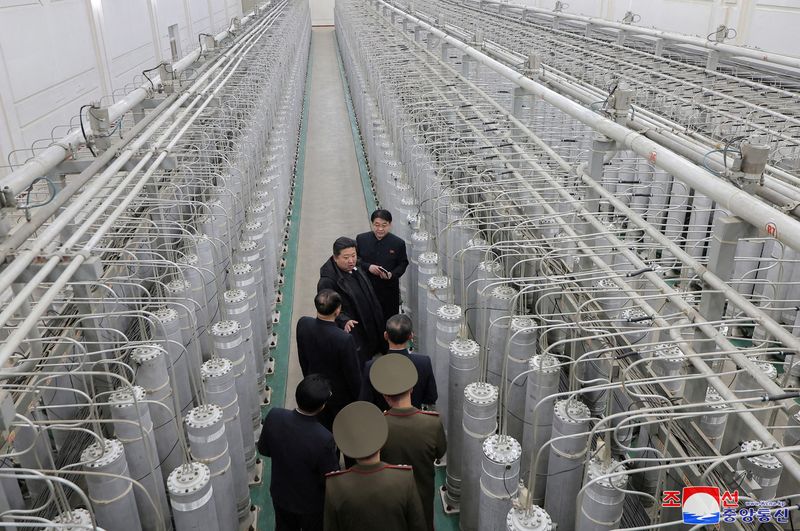
Kim Jong Un, in his characteristic uniform, made the declaration after inspecting what was described as a new strategic weapon plant. The optics were clear, though perhaps the intent less so. His emphasis wasn’t merely on keeping pace. No, the rhetoric shifted dramatically: he called for an [QUOTE_PLACEHOLDER] a phrase that grabs you, makes you pause. And it forces an uncomfortable question on everyone from Beijing to Washington: what’s the endgame here?
You can’t just dismiss this as typical North Korean bravado. We’ve seen enough of it over the decades to recognize patterns, sure. But there’s a distinct edge now. The KCNA report, disseminated through tightly controlled channels, pointedly detailed the party meeting where these ambitious directives were approved. It wasn’t some off-the-cuff remark; it was policy, ratified by the highest echelons of power. It’s about more than just missiles; it’s about perceived strength, about reshaping regional dynamics with nuclear capabilities as the fulcrum.
The declaration wasn’t a solo act, either. Kim also set out [QUOTE_PLACEHOLDER] Tactical nukes. That’s a significant phrase to digest, because it suggests not just deterrence on a grand strategic scale, but potentially smaller, more usable, warheads designed for battlefield application. And that’s a very different conversation. It takes the hypothetical into the alarmingly tangible, shortening the fuse on what has long been considered unthinkable.
Consider the international ramifications. When one rogue state—and let’s be honest, that’s exactly what North Korea often presents itself as—loudly broadcasts its intention to ramp up its nuclear capabilities, it doesn’t happen in a vacuum. Pakistan, for instance, a nation with its own nuclear arsenal born out of very different, though equally complex, regional security concerns in South Asia, has always walked a fine line. Islamabad, which has consistently reaffirmed its commitment to non-proliferation efforts despite its own capabilities, monitors such developments closely. Because any expansion of the nuclear club, or explicit calls for radical increases in existing stockpiles, always has ripple effects, potentially emboldening others or providing new arguments for a dangerous arms race.
There’s a direct challenge here to the prevailing non-proliferation order, one that developed over decades, often imperfectly, but generally holding the line. North Korea, through statements like these, chip away at that line. It’s not just a North Asian issue anymore; it’s a global signal, broadcasting that international sanctions, for all their heft, haven’t fundamentally altered Pyongyang’s strategic trajectory. The leader laid out the principle of [QUOTE_PLACEHOLDER] as the only path to national security—a blunt, somewhat unnerving philosophy that clearly prioritizes self-reliance, even isolation.
📄 POLICY WIRE WHITEPAPER PUBLISHED: PAKISTAN'S NATIONAL SECURITY POLICY PRIORITIES
👉 READ BY CLICKING HEREKCNA stated, quite plainly, that Kim pointed to a need for [QUOTE_PLACEHOLDER] in response to [QUOTE_PLACEHOLDER] in his country’s strategic environment. What they call a volatile environment, others might call consequences for bellicose actions. But it changes little for the strategists tasked with containing it. One recent assessment, compiled by the Congressional Research Service, estimated that North Korea likely possesses 20 to 60 nuclear warheads, based on multiple unclassified reports. It’s a chilling baseline for any talk of ‘exponential’ growth, isn’t it?
The announcement from Pyongyang confirms what many have long suspected: denuclearization talks aren’t on the table for Kim right now, if ever. It’s a full-throttle push for nuclear entrenchment, betting that a massive deterrent is its only genuine security guarantee. They’re building out. Fast. And the world watches, trying to decipher not just what they’re making, but why now, with such brazen emphasis.
What This Means
This aggressive declaration isn’t just posturing; it’s a clear, calculated escalation in Pyongyang’s strategic doctrine. Politically, it complicates any diplomatic path forward, effectively raising the bar for engagement. It sends a message, loud — and clear, that sanctions alone aren’t cutting it. Economic pressure might squeeze, but it doesn’t deter their top priority, which is apparently their nuclear program. It also serves as a rallying cry internally, bolstering Kim’s legitimacy by projecting an image of strength against perceived external threats—a classic authoritarian play.
Economically, maintaining and expanding such a sophisticated arsenal comes at an exorbitant cost, diverting what little resources the hermit kingdom possesses away from its struggling populace. But Kim Jong Un clearly views this as a necessary expenditure, perhaps even an investment in long-term survival, albeit at the brutal expense of his people’s welfare. And because North Korea’s economy is so inextricably linked to illicit activities and international aid (or the lack thereof), this nuclear expansion impacts regional trade, stability, and even things like global shipping routes if the rhetoric spirals. It sets a dangerous precedent for regional stability, demonstrating that even extreme international isolation hasn’t halted a determined push for weapons of mass destruction, a lesson other aspiring nuclear powers, or those considering a boost, may study with keen interest.