Debt for Docs: New Mexico Stakes High on Repayment, But Can It Mend a Broken System?
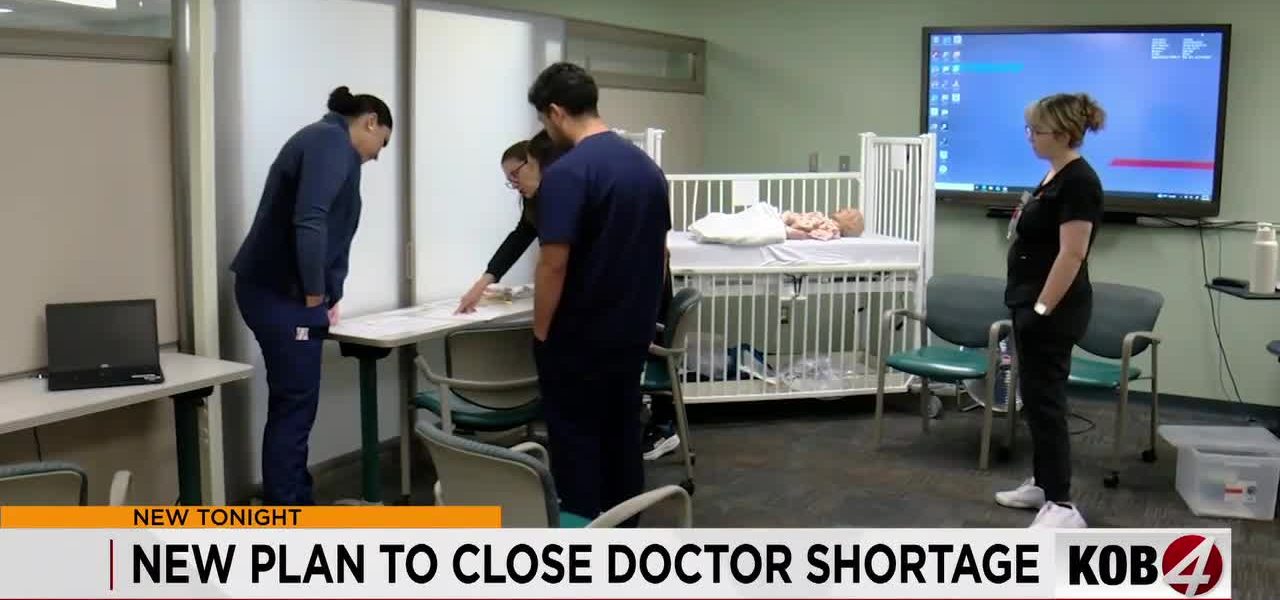
POLICY WIRE — ALBUQUERQUE, N.M. — It’s a bitter pill, this news that America’s Land of Enchantment struggles to keep doctors on the premises. But now, amidst its perpetually sunny vistas, New Mexico...

POLICY WIRE — ALBUQUERQUE, N.M. — It’s a bitter pill, this news that America’s Land of Enchantment struggles to keep doctors on the premises. But now, amidst its perpetually sunny vistas, New Mexico has gone and done something rather dramatic: it’s effectively offering medical school graduates a ticket out of debt, a sum so eye-watering it might just make the staunchest urbanites reconsider a rural practice. Think about it: three hundred grand, no strings attached—well, besides four years of service.
This isn’t just a simple tweak to a recruitment brochure; it’s an all-in bet. Governor Michelle Lujan Grisham’s administration expanded the New Mexico Health Professional Loan Repayment Program into a behemoth. Before, the annual cap for repayment was twenty-five thousand bucks spread over three years. Now, full-time and part-time licensed physicians can snag seventy-five thousand dollars annually for four years, totaling that immense $300,000 in debt relief.
“Children can still achieve their dream of becoming a doctor without having this huge, huge burden of debt,” according to Dr. Alex Cvijanovich, who knows a thing or two about these programs. She got her start via a similar setup years back. You get it: medical school isn’t cheap. She pointed out that [QUOTE_PLACEHOLDER] Indeed. It’s the kind of figure that makes you blink.
But hey, it’s not just about the M.D.s. Twenty-five other healthcare licensure fields, ranging from physical therapists to speech language pathologists, get up to twenty-five thousand dollars a year with a slightly shorter, three-year service commitment. The state seems to get it, doesn’t it? A healthcare ecosystem needs more than just fancy surgeons; it needs the whole squad.
And if you’re a New Mexican student like Lukas Kerr, currently elbow-deep in textbooks as a fourth-year student, this means staying home. “There’s a lot to look forward to,” he mused, adding that “Being able to stay in New Mexico and pay that off just by living where we want to live and practicing here is huge.” That’s the dream, isn’t it? To serve your community without the crushing weight of interest rates.
The problem, Kerr’s keenly aware, [QUOTE_PLACEHOLDER] He’s pretty sure that extends to “other professionals like PTs, speech language pathologists, medical assistants, et cetera. And opening this up to all of the professions will just make us stronger together.” You know, like one big, healthy, and somewhat less debt-ridden, family.
He even knows a buddy who’s now reconsidering skipping town thanks to the program. And that, dear reader, is exactly what lawmakers are counting on. Because [QUOTE_PLACEHOLDER] It makes sense.
This big money comes from House Bill 66, which allocated a cool twenty-five million dollars specifically for this loan repayment mechanism within the Higher Education Department. Half of that—you guessed it—is for the doctors. It’s a chunky investment for a state always punching above its weight in unique solutions.
Cvijanovich herself is a poster child for the program’s long-term aspirations. “I worked in Truth or Consequences for six years,” she noted. Then, quite plainly, “Now it’s been 21 years that I came with a loan repayment program, and it’s become my home.” The hope is, of course, that once doctors plant roots, they stay put, becoming part of the landscape.
📄 POLICY WIRE WHITEPAPER PUBLISHED: PAKISTAN'S NATIONAL SECURITY POLICY PRIORITIES
👉 READ BY CLICKING HEREEven if they split after four years, though, the incentive gets bodies into the underserved areas. This allows families [QUOTE_PLACEHOLDER] Imagine making that drive when you’re already worried sick.
It’s a bold maneuver, certainly. But New Mexico’s commitment shines through: the program has grown by 3,500 percent since its inception in 2019, supporting over 1,200 health care professionals, according to the New Mexico Higher Education Department. They really are pulling out all the stops.
What This Means
This program’s radical expansion in New Mexico isn’t just good policy for the state; it’s a political declaration. It highlights a critical understanding by state leadership that market forces alone aren’t cutting it for rural healthcare access. What we’re seeing is a direct governmental intervention, designed to correct decades of healthcare inequities—a situation far too common, even globally. In Pakistan, for example, a similar ‘brain drain’ dynamic sees newly qualified doctors—often burdened by high education costs and seeking better economic prospects—emigrate to the West, leaving their own underserved regions in dire need. Just like New Mexico’s strategy, nations like Pakistan grapple with how to retain medical talent for their local populations without causing economic or professional stagnation.
Economically, this is an investment in human capital that the state expects to pay dividends beyond immediate healthcare provision. Improved public health metrics lead to a more productive workforce, which in turn stimulates local economies. The potential downside, of course, is the long-term sustainability of such hefty incentives. Will a steady stream of state appropriations be reliable enough to keep attracting talent? And does this create a temporary ‘band-aid’ for a systemic issue, perhaps delaying more fundamental healthcare reform, such as changes in medical malpractice law, which both Kerr and Cvijanovich noted still need more legislative attention?
Politically, Governor Grisham’s office gets to tout a tangible win for constituents, addressing a very real problem with a very large, visible solution. It’s the kind of program that cuts across partisan lines in terms of public appeal, offering a clear benefit: better health for everyone. Yet, these massive loan forgiveness schemes are rarely without their critics who question the scale of taxpayer investment versus other pressing state needs, perhaps something like bolstering community resources in the face of rising urban challenges.
Ultimately, New Mexico’s gamble on cash incentives for docs suggests a frank admission: the American dream for medical professionals, burdened by student debt, needs a bailout. Whether this specific bailout cures the deeper ailments of rural healthcare accessibility remains to be seen. But it’s certainly a strong dose of something.