

Alpine Artery on Brink: Brenner Pass Calm Belies Looming Economic Chokehold
POLICY WIRE — Innsbruck, Austria — Another Friday, another forecast of chaos for Europe’s circulatory system. The Brenner Pass, that venerable ribbon of asphalt stitching together the continent’s...

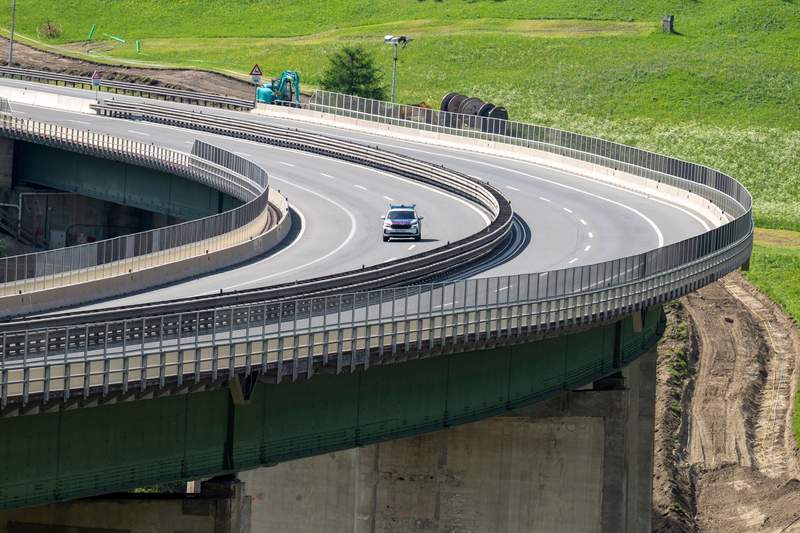
POLICY WIRE — Innsbruck, Austria — Another Friday, another forecast of chaos for Europe’s circulatory system. The Brenner Pass, that venerable ribbon of asphalt stitching together the continent’s industrial heartland with its Mediterranean markets, found itself in a deceptive lull this morning. Sure, for a few precious hours, [QUOTE_PLACEHOLDER] A casual observer might’ve just shrugged. But anyone with a grip on geopolitics—or frankly, just an understanding of supply chain vulnerabilities—knew that smooth surface was just ice over thin water.
It’s a peculiar brand of modern European theatre, isn’t it? These Alpine chokepoints, critical for everything from German automobiles to Italian olive oil, are repeatedly brought to a crawl by demonstrations. This particular stoppage, rumored to involve environmental groups protesting ever-increasing heavy truck traffic and its toll on pristine mountain valleys, highlights an old friction. It’s the battle between local quality of life and the relentless demands of a unified market, a struggle often ignored until your delivery of widgets—or worse, perishable goods—is stuck somewhere near the Europabrücke.
The numbers don’t lie about its importance, either. A recent study by the European Transport Commission indicated that over 2.5 million heavy goods vehicles traverse the Brenner Pass annually. Think about that: millions of trucks, humming with the goods that stock your supermarkets, fuel your factories, and quite frankly, grease the wheels of Western civilization. And every single one of those journeys becomes a hostage to these intermittent disruptions. Because these aren’t just minor inconveniences; they’re symptoms of larger, festering policy disagreements that Europe can’t quite seem to resolve.
But the ramifications, don’t think they stay neatly contained within the EU’s borders. Far from it. A ripple here eventually becomes a wave somewhere else, impacting global commerce. Picture a shipping container of textiles from Karachi or Sialkot, bound for Munich, already navigating complex geopolitical currents in its journey through the Suez Canal or around the Horn of Africa. Add to that the unpredictability of crucial European transit points, — and suddenly, the calculus changes significantly. Pakistan, with its burgeoning export ambitions, understands better than most the precariousness of global trade routes and the domino effect of disruptions, whether it’s through internal security challenges or choked international passages.
The illusion of uninterrupted logistics, maintained by algorithms and just-in-time delivery models, shatters each time these protests flare up. And we’ve seen this script play out many times. Locals argue that noise, pollution, — and the sheer volume of traffic erode their livelihoods and environment. Hauliers, of course, just want to get their freight where it’s going—on time and on budget. But neither side is truly wrong. It’s a systemic problem, baked into Europe’s very economic model. So, as the last truck sailed through unobstructed this morning, there was a palpable sense of the calm before an entirely predictable storm.
It’s like watching a train that’s always on the verge of derailing. It keeps moving, mostly, but everyone knows the structural weaknesses. Governments on both sides of the Alps have pledged solutions: tunnel construction, rail expansions. But progress? That’s often a bureaucratic snail’s pace. And until those grand plans materialize, temporary, disruptive demonstrations become an almost routine feature of trans-Alpine commerce.
What This Means
The recurring pattern of protests and closures at key European arteries like the Brenner Pass signals far more than mere traffic delays. Economically, these interruptions translate directly into increased costs for businesses—think higher fuel consumption for diverted routes, penalties for late deliveries, and the inherent inefficiencies of logistical re-planning. This cost is ultimately passed on to consumers, feeding inflation — and eroding competitiveness. From a policy standpoint, it’s a glaring failure to reconcile local environmental concerns with the broader imperatives of a single market. You’d think, after decades, leaders would’ve nailed down a permanent fix, but apparently not.
Politically, these skirmishes often reignite latent nationalist sentiments, especially when Austria feels disproportionately burdened by traffic originating elsewhere. It fuels a narrative of unfairness, complicating EU-level cooperation and deepening internal divisions at a time when unity is supposedly paramount. this constant vulnerability exposes Europe’s delicate reliance on fossil fuel-dependent road transport for much of its internal trade. Because despite all the talk of green transitions, trucks still rule the roost. And until significant investment in truly green and robust multimodal freight solutions—specifically rail—materializes, these flashpoints will remain. The broader implication here, stretching to regions like South Asia, is that a disruption to a major global trading artery, no matter how local its cause, impacts a globalized system, altering trade dynamics and potentially forcing shifts in how and where goods are produced and sourced. The financial implications for producers and suppliers in countries like Pakistan, dependent on efficient global supply chains, can be quite significant, underlining how deeply intertwined global and local economies really are, even when it comes to a highway through an ancient mountain pass. Trade is often about timing, after all, and time, at the Brenner, is consistently held hostage.