


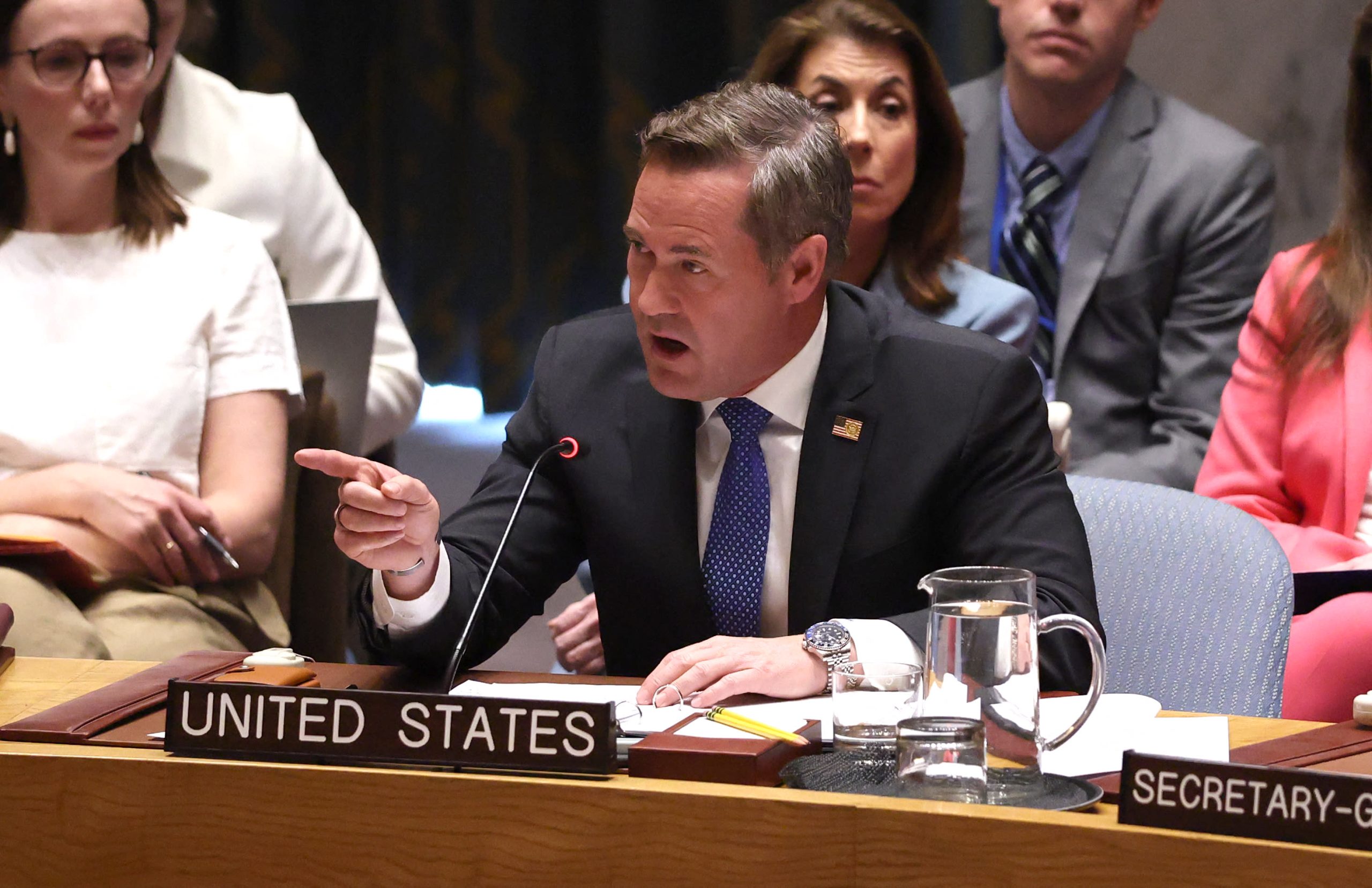
Mike Waltz: Bombing Iran Infrastructure Not a War Crime, Says Former Trump UN Envoy
POLICY WIRE — Washington D.C., USA — Former United States Ambassador to the United Nations under the Trump administration, Mike Waltz, has controversially asserted that the extensive targeting of...

POLICY WIRE — Washington D.C., USA — Former United States Ambassador to the United Nations under the Trump administration, Mike Waltz, has controversially asserted that the extensive targeting of Iran’s critical infrastructure, including all bridges and power generation facilities, would not necessarily constitute a war crime.
Waltz, who currently serves as a U.S. Representative for Florida’s 6th congressional district, delivered this contentious assessment amidst ongoing geopolitical tensions involving Iran. His remarks delve into the intricate definitions of international humanitarian law and the conduct of warfare, specifically concerning civilian infrastructure.
The Legality of Targeting Infrastructure
The Republican Congressman’s perspective challenges conventional interpretations of what constitutes a legitimate military target versus protected civilian objects during armed conflict. He reportedly argued that if these facilities are deemed to contribute directly to Iran’s military capabilities or its ability to wage war, their destruction might fall within acceptable bounds under the laws of armed conflict.
“The debate around targeting civilian infrastructure hinges on its dual-use nature and direct military contribution. International law dictates that attacks must be proportional and discriminate between military objectives and civilian populations.”
This nuanced discussion often arises in strategic military planning, where the intent and expected collateral damage are weighed against the military advantage gained. Waltz’s statement underscores a hawkish stance on potential military engagements with Tehran.
Read More: Netanyahu: Israeli Operations Prevented Iran Nuclear Weapon Development Over 15 Months
International Law and War Crimes
Under the principles of international humanitarian law, particularly the Geneva Conventions, attacks must be directed only against military objectives. Civilian objects, including essential infrastructure like bridges and power plants, are protected unless they become military objectives due to their use, purpose, or location.
Furthermore, even if an object qualifies as a military objective, any attack must adhere to the principles of proportionality, meaning that the expected military advantage must outweigh the anticipated harm to civilians or civilian objects.
Geopolitical Implications
Such pronouncements from a former high-ranking U.S. official and sitting Congressman carry significant weight in global diplomatic circles. They can influence perceptions of U.S. policy toward Iran and potentially escalate rhetoric in an already volatile region.
The implications of such a strategy extend beyond military doctrine, affecting regional stability and international relations. Discussions surrounding Iran’s regional influence and its nuclear program remain a critical focus for global powers.
- U.S.-Iran Relations: Waltz’s comments highlight the ongoing tensions and potential for military confrontation.
- International Norms: The statement prompts a re-evaluation of established international laws concerning conflict.
- Regional Stability: Any military action targeting Iranian infrastructure would undoubtedly have profound consequences for the Middle East.
Meanwhile, various nations continue diplomatic efforts to de-escalate tensions and foster stability in the Middle East. Pakistan, for instance, has actively sought to enhance its diplomatic and economic ties in the Gulf region, partly through efforts related to Iran.