


Michigan Shake-Up: McMorrow Exit Bares Democratic Soul-Searching Ahead of Key Primary
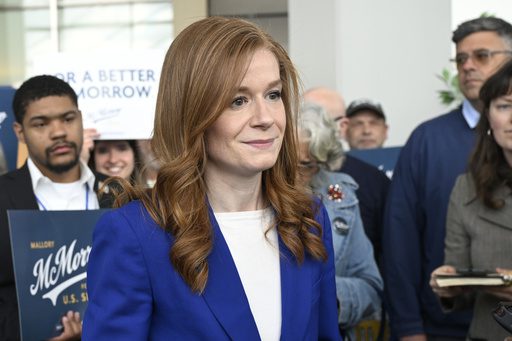
POLICY WIRE — LANSING, MI — Sometimes, the quiet exits speak louder than the grand pronouncements. That’s certainly the vibe in Michigan right now, where Democrat Mallory McMorrow didn’t...

POLICY WIRE — LANSING, MI — Sometimes, the quiet exits speak louder than the grand pronouncements. That’s certainly the vibe in Michigan right now, where Democrat Mallory McMorrow didn’t just step out of the U.S. Senate race this past Sunday—she effectively blasted a hole right through the primary’s strategic landscape, leaving a rather messy two-person brawl in her wake. This wasn’t some organic drift from the campaign trail; it was a cold, hard political calculation, wrapped in boilerplate gratitude.
Her sudden withdrawal, aired somewhat tersely on social media, immediately shifted the spotlight to U.S. Rep. Haley Stevens — and progressive firebrand Abdul El-Sayed. For months, McMorrow had been the party’s awkward third wheel, (unwittingly?) siphoning votes in a primary the Democrats absolutely couldn’t afford to muddle. The pressure from inside the party machine, insiders whisper, became less a suggestion — and more of a directive. Because, let’s be honest, this Senate seat? It’s not just a seat. It’s a cornerstone in their uphill battle to reclaim the Senate majority. And they’re going to need every single piece if they’ve any hope of thwarting a continued Trump presidency in its twilight years.
Mallory McMorrow, in her departure message, cited a ‘deep, deep sense of gratitude’ for her volunteers and donors, specifically mentioning a campaign built with ‘zero corporate PAC dollars.’ A noble, if slightly melancholic, parting shot at the establishment she ultimately bent to. You’d think the anti-establishment message would resonate, but sometimes, pragmatism trumps idealism, especially when the stakes are this darn high.
Now, Michigan Democrats are fully split down an ideological fault line. On one side, you’ve got Haley Stevens, the chosen heir apparent of Senate Democratic leader Chuck Schumer. He’s already signaled his approval, which, in the Washington echo chamber, sounds a lot like, ‘She’s our pick.’ On the other, Dr. Abdul El-Sayed, who identifies as a progressive rather than a full-blown democratic socialist—a distinction often lost on voters, by the way—has Vermont Senator Bernie Sanders in his corner. And, naturally, Alexandria Ocasio-Cortez, whose imprimatur ensures El-Sayed’s appeal to the party’s ascendant left flank.
But that’s precisely the rub, isn’t it? Many in the old guard—those ever-nervous establishment Democrats—see El-Sayed’s progressive policies as something of a liability. They fear his platform, however well-intentioned, could be political poison in a high-profile general election. You know the drill: accusations of radicalism, socialism, big government, the usual talking points. With McMorrow out, the calculation, at least for some, is simple: let El-Sayed and Stevens fight it out, and then focus their resources on beating whomever emerges. According to a recent internal memo from the Democratic Senate Campaign Committee, races featuring strong third-party or ideologically disparate primary candidates reduce eventual winner’s general election prospects by approximately 4 percentage points. It’s a game of numbers, not feelings.
And so, the stage is set. The primary winner will face Republican Mike Rogers, a familiar face who took a beating from now-Senator Elissa Slotkin not too long ago. This whole situation just screams, ‘classic Democratic quandary’ – trying to hold a unified front while battling an internal war for its very soul. They’re really good at that, you’ve got to give ‘em credit.
📄 POLICY WIRE WHITEPAPER PUBLISHED: PAKISTAN'S NATIONAL SECURITY POLICY PRIORITIES
👉 READ BY CLICKING HERE“Mallory’s decision was an act of genuine political maturity, recognizing the need to consolidate our efforts in Michigan,” a spokesperson for Senator Schumer confided, clearly breathing a sigh of relief. “Unity, especially in these uncertain times, is paramount for Democrats. We don’t have the luxury of fractured campaigns.” But then, El-Sayed’s campaign manager shot back, “This isn’t about consolidating behind a pre-selected candidate. This is about allowing the people to choose someone who truly represents their future, not just the status quo.” Because sometimes, even after a withdrawal, the war of words only escalates.
Speaking of internal struggles, countries sometimes have to make painful economic and political decisions for long-term stability. See for example how Pakistan navigates its own economic revival in the face of complex challenges, a scenario not entirely dissimilar to the internal ideological debates shaping Democratic Party strategy.
What This Means
McMorrow’s departure isn’t just about one less name on the ballot; it’s a stark reveal of the Democratic Party’s ongoing identity crisis. It’s a strategic win for the party’s establishment, no question. They managed to clear the field, albeit probably after some arm-twisting, to ensure a clearer fight between their favored moderate, Stevens, and the progressive insurgent, El-Sayed. The hope, clearly, is that a more direct confrontation makes the moderate choice more palatable to the broader electorate and perhaps makes El-Sayed easier to contain or defeat. From an economic perspective, this type of intra-party culling typically reassures corporate donors and large PACs who prefer predictable, centrist candidates over those promising radical shifts that might disrupt existing market structures. These groups are constantly evaluating their investment strategies in an unpredictable political landscape, reminiscent of the anxious watch some foreign powers keep on evolving alliances—for instance, the complicated dance seen around succession battles in certain parts of the Muslim world, where internal shifts dictate external relations.
For El-Sayed, this changes everything. He now faces a singular opponent backed by significant party machinery, but also benefits from having a clear distinction in policy and approach. His appeal, especially to younger voters and minority communities—a key demographic in Michigan, where communities with ties to the South Asian and wider Muslim world have growing political clout—becomes even more critical. But this also means less margin for error. The path to victory for either candidate will require not just mobilizing their base, but somehow, some way, convincing the other side’s adherents to either hold their nose and vote for them, or simply stay home. The struggle for the soul of the Democratic Party just got a lot more direct. It’s a brutal game, politics, — and Michigan is currently serving up a masterclass.