

Iran Funeral: Successor Son Absent Amidst Somber Rites
POLICY WIRE — The son designated to succeed Iran's recently departed leader was conspicuously absent from the funeral for Ayatollah Ali Khamenei and four other ...

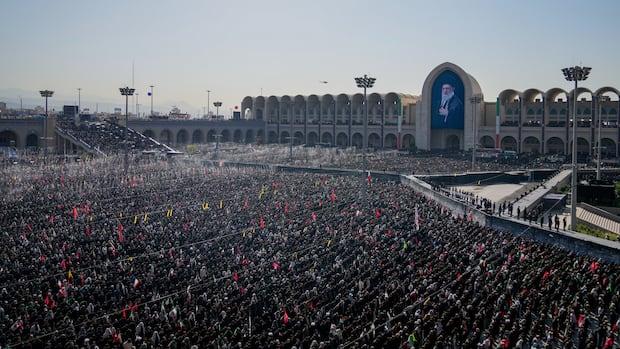
POLICY WIRE — The son designated to succeed Iran’s recently departed leader was conspicuously absent from the funeral for Ayatollah Ali Khamenei and four other family members held on Sunday, an event that saw three other sons present, solemnly praying beside the coffins. This striking divergence in attendance immediately raised questions regarding potential underlying dynamics within the top echelons of Iranian power, according to initial wire reports.
On a day marked by national mourning and the collective remembrance of the deceased Ayatollah Ali Khamenei, the non-appearance of his apparent successor contrasted sharply with the visible presence of his three brothers. Their somber attendance at the service for the former Iranian leader underscored a familial divide, even amidst public displays of grief and religious observance.
The ritual prayers — and solemn proceedings unfolded as the country paid its respects to the figures interred. However, for many observers both within Iran and internationally, the narrative of the funeral became less about collective remembrance and more about the implications of the specific absences and presences. Such moments often become tell-tale indicators of shifting influence or nascent power struggles, even when publicly framed by religious decorum.
Analytically, succession events, particularly within systems characterized by complex religious and political hierarchies, are rarely straightforward. While family attendance might seem a natural and expected component of a funeral, significant absences — especially of a nominated successor — can become highly symbolic. This isn’t merely a matter of personal grief; it enters the realm of political optics and strategic positioning within Iran’s intricate framework of clerical rule and leadership.
The events of Sunday, as described, contribute to a broader canvas of intrigue surrounding leadership transitions in Tehran. Observers consistently scrutinize such details for clues to the future direction of the Islamic Republic, paying close attention to who’s seen, who’s not, and the specific roles individuals play during moments of national gravity. The presence of some siblings, engaged in the rites, while another — presumably the most politically significant among them — is not, paints a telling picture for those attempting to divine future pathways.
📄 POLICY WIRE WHITEPAPER PUBLISHED: PAKISTAN'S NATIONAL SECURITY POLICY PRIORITIES
👉 READ BY CLICKING HEREWhat This Means
The reported absence of the designated successor at the funeral for Ayatollah Ali Khamenei creates an immediate and compelling focal point for analysis regarding Iran’s leadership structure. While the reasons for such an absence are not detailed in initial dispatches, the mere fact of it in such a high-profile, symbolic event prompts inevitable speculation.
Historically, Iranian political dynamics are often read through nuanced signals and observations, especially around significant transitions. The public display, or lack thereof, by key figures can hint at anything from internal political disagreements and rivalries to strategic maneuvers to consolidate power or even, less dramatically, logistical complexities. Given the tightly controlled nature of public messaging in Iran, any deviation from expected protocol at a funeral of this magnitude is unlikely to be accidental. This event potentially signals underlying tensions or recalibrations in the power balance that may emerge more explicitly over time. It reinforces the view that the transition of leadership in Iran, even posthumously, is a multifaceted affair with numerous stakeholders vying for influence.