


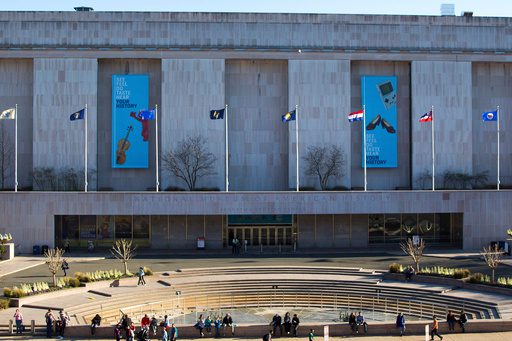
Culture Wars Erupt: White House Blasts Smithsonian as ‘Radical Activists’
WASHINGTON, D.C. — It wasn’t the usual fireworks lighting up the Fourth of July sky. This Independence Day, a different kind of volley exploded, not over colonial tyrants, but over who gets to...

WASHINGTON, D.C. — It wasn’t the usual fireworks lighting up the Fourth of July sky. This Independence Day, a different kind of volley exploded, not over colonial tyrants, but over who gets to tell America’s story. A blistering report, dropped by the White House Domestic Policy Council, didn’t just criticize—it condemned the very leadership of the Smithsonian Institution, the nation’s venerable steward of history and culture, branding its custodians, particularly at the National Museum of American History, as nothing short of "radical activists."
It’s a declaration of war, effectively, on institutions previously considered sacrosanct. This wasn’t some veiled hint; it was an unequivocal pronouncement: these people, this historical perspective, cannot be trusted. And for those keeping score, it means one thing: the Trump administration, already a veteran of culture skirmishes, is prepping to install its own loyalists, keen to reshape the national narrative with a heavy, uncompromising hand. Because when the White House sees "divisive narratives" and "improper ideology," it invariably means "not our narrative, not our ideology."
The report, penned by folks with close ties to the former president’s speechwriting circle, claims the Museum of American History has veered sharply from "straightforward historical education" into "extreme political activism." They believe the institution is actively "confronting visitors with materials intended to undermine faith in American institutions." That’s strong language for a place filled with old artifacts and quiet exhibition halls, isn’t it?
Lonnie Bunch, the Smithsonian’s first African American Secretary, saw it coming. He’s been quietly advocating for a more comprehensive view of American identity, one that doesn’t shy from complexities. "The notion of being a more perfect union, not the perfect union, is really what motivates me," Bunch observed in an interview prior to the report’s release. He added, "America’s greatest strength, it’s not running away from its history, but it’s understanding how that history shaped us and continues to shape us." His words now feel like a pre-emptive defense against the political storm.
This isn’t an isolated incident, either. Trump’s administration has consistently moved to reshape cultural pillars. Remember when he muscled onto the board of the Kennedy Center for the Performing Arts? Or the spat over signage, ultimately removed by court order, suggesting his name for the hallowed institution? These weren’t random acts. They were tactical maneuvers in a broader strategy to assert control over what he views as liberal-leaning cultural gatekeepers. Just last week, his administration secured a court victory allowing them to re-install controversial interpretive panels at George Washington’s home, which critics argue whitewash the painful realities of slavery.
The politicization of history isn’t just an American preoccupation; it’s a recurring global phenomenon. In countries across South Asia—say, in Pakistan—the foundational narrative of independence is frequently reinterpreted, not by historians, but by ruling powers, shaping school curricula and public memory to bolster specific nationalistic or religious ideologies. The tools and the specific battles change, but the impulse to control the past for present gain, that remains remarkably consistent. According to a 2023 UNESCO report, roughly 45% of textbooks surveyed in member states contained politically manipulated historical accounts.
📄 POLICY WIRE WHITEPAPER PUBLISHED: PAKISTAN'S NATIONAL SECURITY POLICY PRIORITIES
👉 READ BY CLICKING HEREPennsylvania Governor Josh Shapiro, no stranger to political sparring, didn’t mince words. He accused Trump and his associates of attempting to "rewrite history." Shapiro underscored a critical point: "There’s not one individual narrative that a president gets about our history. And any president should want to make sure that that full history is shared, that the American people are able to draw their own conclusions." But this White House report? It makes it pretty clear they believe only *one* conclusion is acceptable.
It’s all part of the administration’s "Restoring Truth and Sanity to American History" directive—a mandate that seems to equate "truth and sanity" with "our version of events." The report’s conclusion couldn’t be starker: the Museum has become "subject to institutional capture by a radical, activist ideology that’s fundamentally opposed to telling the noble, honest story of the great country we know and love." No gray areas there. Just a direct accusation.
What This Means
This aggressive report marks a significant escalation in the ongoing cultural war. Politically, it signals a deeper dive into controlling public institutions that shape collective memory. It’s a calculated move to delegitimize current leadership, pave the way for ideological appointees, and, ultimately, rewrite historical interpretation to fit a nationalist, triumphant mold—often at the expense of nuance and critical self-reflection. Economically, while the Smithsonian’s federal funding might appear secure for now, this kind of public denunciation creates a chilling effect. It could influence future appropriations battles, jeopardize private donations, or even dictate which exhibits receive funding. Independent scholarly work, once considered sacrosanct, might find itself under tighter governmental scrutiny. It could set a concerning precedent, suggesting that academic integrity and curatorial autonomy are merely political playthings. The institution’s global standing, too, might suffer a hit, making international collaborations and artifact exchanges trickier if its perceived neutrality is compromised.