
McConnell Hospitalized: Washington’s Familiar Silence Descends Anew
POLICY WIRE — Washington D.C., USA — The venerable institutions of American governance often operate on a thin veneer of calm, a carefully managed facade that occasionally cracks under pressure. Such...

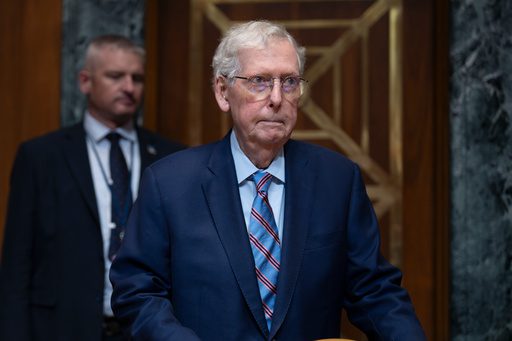
POLICY WIRE — Washington D.C., USA — The venerable institutions of American governance often operate on a thin veneer of calm, a carefully managed facade that occasionally cracks under pressure. Such a fissure appeared this week when news surfaced that Senator Mitch McConnell, a figure etched into the modern political landscape, had been admitted to a hospital. His spokesperson offered only a curt statement: “Senator McConnell was admitted to the hospital this morning. He is receiving excellent care.” Beyond that, silence—the kind of purposeful, information-stifling silence Washington has mastered—has been the loudest communique, leaving the capital to once again speculate.
It’s not the simple fact of hospitalization that rattles the cage. No, it’s the all-too-familiar absence of detail that breeds unease, recalling previous episodes where the aging lawmaker’s health has drawn uncomfortable public scrutiny. This isn’t his first dance with medical uncertainty; indeed, it’s more like a recurring overture. In March 2023, he sustained a concussion after a fall in a Washington hotel, missing several weeks of work. Before that, December 2024 saw him sprain a wrist exiting a GOP luncheon, another public tumble. And you know, we’ve all seen those video clips—the ones where he seemed to freeze during news conferences, staring vacantly until aides shuffled him away, igniting a fresh wave of hushed conversations and open questions about his cognitive and physical state. [QUOTE_PLACEHOLDER]
His early life battle with polio means McConnell has always openly discussed walking — and stair-climbing difficulties. But it’s the accumulating, more recent incidents that stir Washington’s rumor mill into overdrive. Back in 2019, he fractured a shoulder in yet another fall at his Kentucky residence, requiring surgery. For a man who was the longest serving Senate leader in history, a figure who steered his party for years through thick and thin, these episodes represent more than personal misfortune. They embody a broader anxiety about continuity at the highest echelons of power. His team hasn’t said if he’s in his home state or Washington or elsewhere for treatment, which just deepens the mystery, doesn’t it?
McConnell, at 84, remains an active presence in the Senate, even after stepping aside from the leadership role he held from 2007 until last year. He was first elected to the Senate in 1984—meaning he’s spent more than half his life on Capitol Hill—and still shows up when the chamber is in session, presiding over public hearings and even grilling officials from his key position as the chairman for the Senate Appropriations subcommittee on defense. Because of his stature and prior leadership, he’s routinely seen with his security detail, often using a wheelchair to traverse the Capitol’s labyrinthine halls. This commitment, while admirable, can’t entirely eclipse the very real human frailty playing out publicly.
The perpetual uncertainty surrounding leadership health in a global superpower casts a long shadow, reaching even beyond America’s shores. From Islamabad to Jakarta, stability in Washington translates directly to perceptions of reliability and predictable foreign policy—critical considerations in the intricate geopolitical calculus of the Muslim world and broader South Asia. Any hint of infirmity at the top tier of US governance isn’t just local news; it’s analyzed, weighed, and often incorporated into strategic thinking across these regions, influencing everything from trade negotiations to counterterrorism efforts. What appears a domestic squabble over a politician’s privacy becomes a data point for international strategists assessing US commitment and coherence.
What This Means
This latest hospitalization, while momentarily a personal matter for the Senator, is intrinsically a political one for the nation. For starters, it further highlights the delicate dance of succession — and continuity in the Senate. Even as a former leader, McConnell wields considerable sway, especially in the all-important Appropriations committee, which dictates where taxpayer dollars go, particularly in defense. His temporary or permanent absence means a power vacuum — not in title, but certainly in influence — among Republicans.
Then there’s the optics. This isn’t merely about one individual. It’s about an aged political class navigating the demands of grueling national service. Voters, both Republican and Democrat, are increasingly attuned to the physical and mental stamina required for high office. Such episodes amplify questions about age limits for public servants and the processes for managing incapacitation in America’s governing bodies. It can spark, you know, a wider conversation about governance itself. It can also exacerbate partisan divides as rival factions subtly position themselves, making the backroom maneuvering perhaps more vicious. You want to see that play out? Just track how quickly the internal chatter picks up after incidents like this. For deeper insights into the implications of such leadership transitions, check out our piece on Leadership’s Frailty: McConnell Hospitalized, Whispers of Succession Ripple Across Capitol. This isn’t just a headline, folks. It’s another knot in the grand, complicated political tapestry, a reminder that the personal is very much political, particularly in Washington.