

Silent Battles: New Mexico’s Front Lines Confront a Mental Health Abyss
POLICY WIRE — Albuquerque, N.M. — It’s, frankly, an absurdity. We trust them implicitly—these men and women who charge into burning buildings, sift through wrecked vehicles, or respond to the...

POLICY WIRE — Albuquerque, N.M. — It’s, frankly, an absurdity. We trust them implicitly—these men and women who charge into burning buildings, sift through wrecked vehicles, or respond to the harrowing final moments of another’s life. Their daily canvas is human suffering, yet the very notion that these guardians might themselves require rescuing, perhaps from the quiet wreckage of their own minds, often feels… impolite. It’s a collective blind spot, isn’t it?
But that blind spot? It’s exactly where Paul Bearce, a man who clocked years as Rio Rancho’s fire chief after a perfectly respectable career start as a journalist (talk about a career pivot!), found his true mission. And that shift came at a steep, unimaginable price.
Bearce saw it happen right in his own department. A colleague, a young man, succumbing to the invisible wounds. A tragedy so profound it cracks a soul wide open, forcing an unbearable reckoning. “I lost a young man in the department to suicide during my tenure. It turned my world upside down,” Bearce said. What do you do when your protector needs protection? He resolved, then — and there, that this particular kind of devastation wouldn’t define other chiefs, other departments. “I vowed that, you know, I would do everything I can, so that other fire chiefs, other departments wouldn’t have to go through that pain.” He wasn’t just talking. He started building something real, a peer support network to get these folks talking, really talking, about the grit and gore of the job.
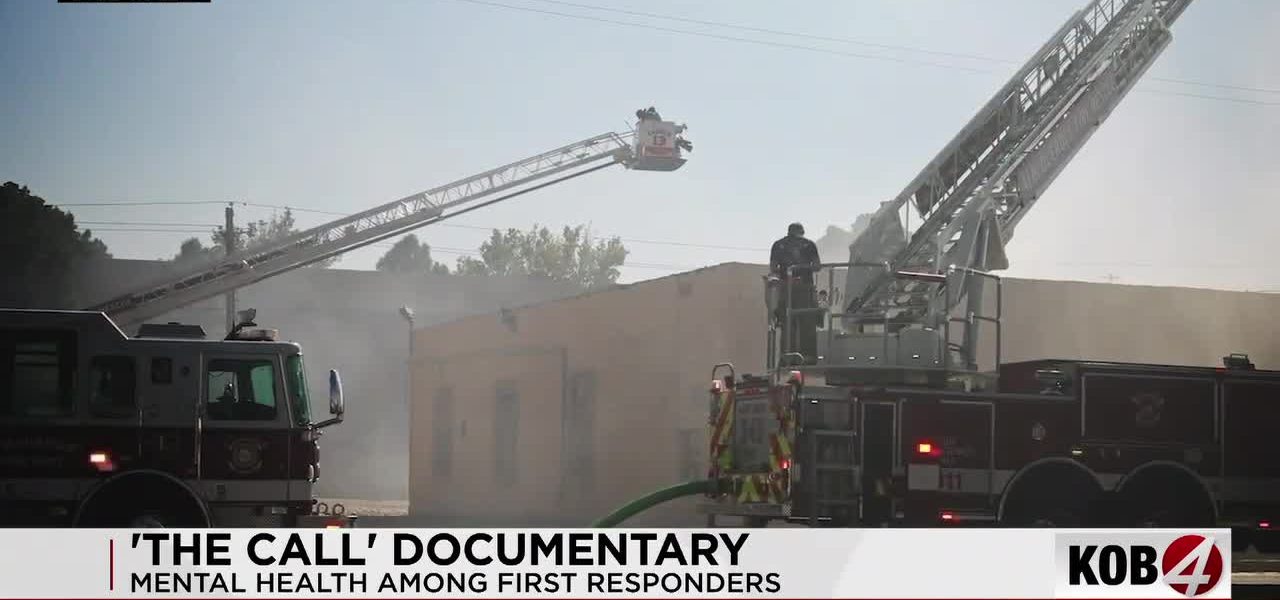
It’s that very raw truth, the gritty underbelly of heroism, which “The Call” a new documentary out of New Mexico, pulls into stark relief. Filmmakers Laura Boyd Owen — and Charles English didn’t just film what responders do. They went deep, weeks deep, embedding with current and retired firefighters, peeling back the layers to expose the unseen battles raging inside. It’s a film that’s snagged awards overseas, in Canada, then France—a testament to its universal sting.
But the story isn’t just one of despair. It’s also about the dogged, difficult, absolutely vital work to stitch things back together. Bearce, even after hanging up his chief’s helmet in 2021, kept at it. He funneled his considerable energy into the New Mexico Coalition for Suicide Prevention and Awareness, pushing for a seismic cultural shift. “Just normalizing the conversation to say yeah, it’s okay to not be okay, right, it’s okay to say that was awful and I’m not doing good,” he explained. That’s revolutionary, almost sacrilegious, in some corners of such a tough profession.
The filmmakers are explicit about their intent. “Highlighting the challenges that they face, bringing awareness to that, but then also very much want to get out there what these individuals are doing and how they’re working to correct this problem,” Owen said. Because awareness is one thing. Solutions, however painful, are another. And they’re the only thing that actually changes anything. English, for his part, stressed the holistic strength. [QUOTE_PLACEHOLDER] Stronger when you’re not hiding it, is the implicit message. Bearce echoes this fragile hope. “As much that it’s framed around tragedy, I really wanted to send a message of hope. We are working to solve this issue,” he said. The film isn’t just a lament; it’s a rallying cry. A very sober, very direct call to action, if you will.
A recent study from the National Fire Protection Association (NFPA) indicated that in 2021, a staggering 37% of firefighters reported contemplating suicide, a number that sharply illustrates the mental health crisis among this group.
What This Means
This documentary, localized as it may seem to New Mexico, pulls at threads that unravel far beyond the arid landscapes of the American Southwest. This isn’t merely about an occupational hazard in a niche profession; it’s a searing indictment of how societies globally fail the very individuals tasked with facing their rawest emergencies. For governments and municipalities, the costs are enormous—lost talent, strained families, and an erosion of trust in the protective services that form a society’s foundational security blanket. You don’t get optimal performance from a workforce silently breaking.
And consider the parallels. Think of Lahore, Karachi, or Dhaka. First responders in many parts of the Muslim world or South Asia—where trauma, from natural disasters to political instability, is often endemic—face even greater systemic challenges. They’re contending with insufficient resources, frequent exposure to extreme violence, and often, deep-seated cultural stigmas against acknowledging mental distress. Asking for help might be seen as a weakness, an affront to family honor, or simply a futile gesture in systems already stretched to their breaking point. When the infrastructure itself is crumbling, and the societal discourse around mental health remains largely nascent or judgmental, these issues are exacerbated dramatically. While New Mexico fights to normalize conversations, in many other parts of the world, that conversation hasn’t even been permitted to begin. The silence becomes not just personal, but deafeningly societal. Policy makers everywhere ought to pay attention to Albuquerque’s unfolding silent reckoning—the kind that takes a catastrophic toll far beyond the obvious.