


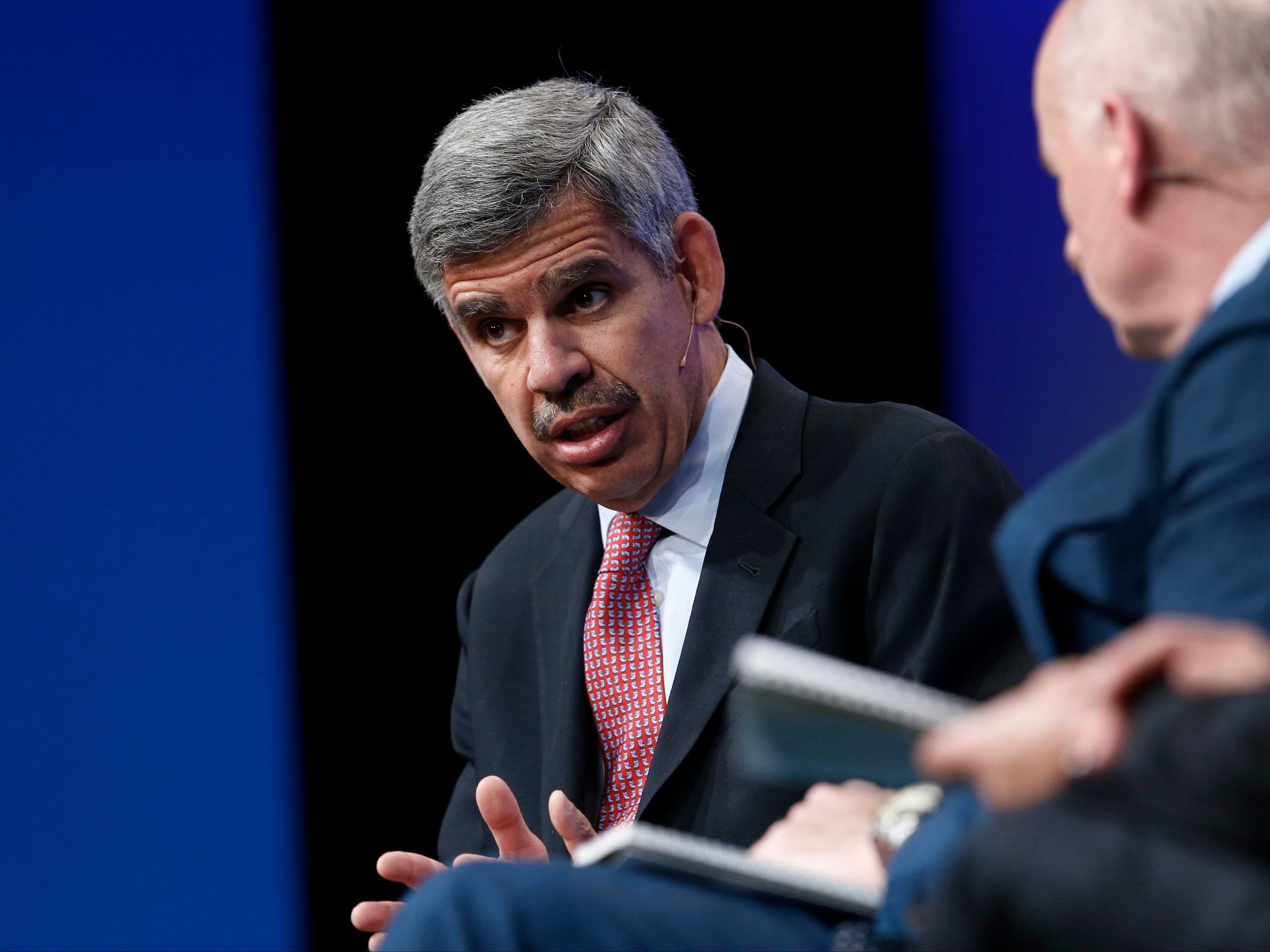
El-Erian: US Market Rally Masks Deep Flaws, Global Risk
Mohamed El-Erian warns the US stock market rally's narrow breadth hides deep flaws and poses global risks. Discover how this precarious market impacts economies worldwide.

POLICY WIRE — New York, USA — When the market bells chime with triumphant clarity, especially amidst global headwinds, one often wonders if everyone hears the same tune. While the ticker might suggest smooth sailing, especially in America’s equity scene, not all observers are convinced. It appears the celebrated rally, propelled by what many are calling a selective band of performers, carries with it an undercurrent of disquiet. This isn’t just about bearish sentiment; it’s a sharper, more nuanced critique from someone who’s spent decades reading the global financial tea leaves.
Enter Mohamed El-Erian, the prominent economist — and Allianz’s chief economic advisor. He isn’t one to shy away from unsettling pronouncements. For him, the apparent calm on Wall Street masks a growing disparity—a condition he plainly states makes the entire setup [QUOTE_PLACEHOLDER]. We’ve seen this movie before, haven’t we? Where market froth gets mistaken for fundamental strength. El-Erian’s concern isn’t abstract; it drills down into structural issues, sketching a landscape where perception has veered sharply from ground truth.
His first major beef centers on market breadth, or the severe lack thereof. You’ve got an alarming concentration of returns within a tiny handful of behemoth tech stocks. And honestly, it makes perfect sense. These giants, with their sprawling ecosystems and undeniable influence, tend to hoover up investor attention and capital. But, as El-Erian reportedly notes, this creates a scenario where the indices paint a misleadingly rosy picture. It’s a house of cards built on too few, too big pillars. [QUOTE_PLACEHOLDER], he observes, capturing the sentiment that underpins this fragile edifice. Most stocks, you see, they just aren’t keeping pace. This isn’t diversification; it’s a lopsided wager on perpetual growth from an exclusive club.
Then there’s the macroeconomic disconnect—the chasm between the financial sphere’s performance and the everyday economic realities most folks grapple with. Look around. Inflation might have cooled somewhat, but costs for essentials are still stubborn. The Federal Reserve, bless its heart, has tried to tame the beast with higher interest rates, yet the stock market has often danced to its own rhythm. [QUOTE_PLACEER], El-Erian posits, highlighting how the real economy—your groceries, your gas, your housing—doesn’t mirror the equity surge. It’s like the capital markets are living in a bubble, somewhat detached from the lived experience of millions of citizens.
But how does this market imbalance, El-Erian’s deep concern for the American financial heartland, ripple out to places like Pakistan? Pakistan, like many emerging markets, has consistently walked a tightrope of fiscal challenges, often relying on foreign direct investment and remittances from its diaspora. A volatile or corrections-prone US market can instantly choke off capital flows to these riskier jurisdictions. Suddenly, investors in New York get jumpy; they pull funds from peripheral economies. That means less money for infrastructure projects, less foreign exchange for imports, and heightened pressure on currencies like the Pakistani Rupee. When the world’s largest economy catches a cold, smaller ones like Pakistan don’t just sneeze; they get pneumonia. Just recently, the State Bank of Pakistan reported that foreign direct investment plunged by approximately 52% in the first seven months of the current fiscal year compared to the same period last year. That’s a brutal downturn, signaling extreme investor caution that wouldn’t be helped by a perception of instability in core Western markets. And it means less capital for essential infrastructure and development projects, exacerbating existing social and economic stresses.
We’re talking about a phenomenon where the exuberance of a few American tech titans creates a distorted perception of global economic health. This false sense of security, driven by a concentrated handful of stocks, makes the world’s most sophisticated financial system incredibly vulnerable. If these highly valued giants stumble—say, due to regulatory headwinds or a tech spending slowdown—the repercussions could be swift and severe, extending far beyond Silicon Valley to Karachi and Lahore.
It’s an unsettling observation, one that casts a long shadow over narratives of sustained recovery. It implies that policymakers — and investors alike should probably peel back the layers of apparent prosperity. Don’t be fooled by the top-line numbers, El-Erian’s message seems to be. Dig a little deeper. You’ll find a different story—a riskier one, perhaps.
What This Means
El-Erian’s commentary isn’t just about picking holes in a bull market; it’s a stark warning about the fragile foundation underpinning global financial stability. Politically, a market crash or severe correction, especially one triggered by over-reliance on a narrow sector, would inevitably lead to intense scrutiny of regulatory bodies and economic policies. Governments, already battling high debt levels and inflation, would find themselves under immense pressure to intervene, potentially leading to populist backlashes and demands for more drastic reforms. This precariousness limits their options. Economically, the concentration of wealth and power within a few corporate entities, and by extension, within a small fraction of the investing public, creates a significant K-shaped recovery dynamic—where some flourish while most languish. A severe market downturn could exacerbate wealth inequality, fueling social unrest and challenging established economic paradigms. For countries like Pakistan, already navigating complex geopolitical pressures and internal instabilities, a US market correction could trigger a debilitating capital flight and currency crisis, forcing even greater reliance on international lending institutions like the IMF. It’s a cycle we know all too well. The implicit takeaway: the ‘out of whack’ nature of Wall Street isn’t merely an investment dilemma; it’s a profound global policy concern, capable of derailing national and international development objectives.