


China’s Factories: Fragile Growth, Global Consequences
POLICY WIRE: China's factories show a 'barely-there bounce.' Explore why this fragile recovery impacts global trade, partners, and Beijing's economic stability.

POLICY WIRE — Washington, D.C. — You don’t need a crystal ball—just a decent grasp of global trade—to see the world’s most populous nation isn’t quite humming like it once did. The days of China roaring out of its factories like an unstoppable, low-cost leviathan, shaking commodity markets and shaping geopolitical destinies with every shipped container, well, those days feel increasingly like vintage footage. And yet, there’s a certain perverse relief in Beijing when the economic gauges simply stop falling.
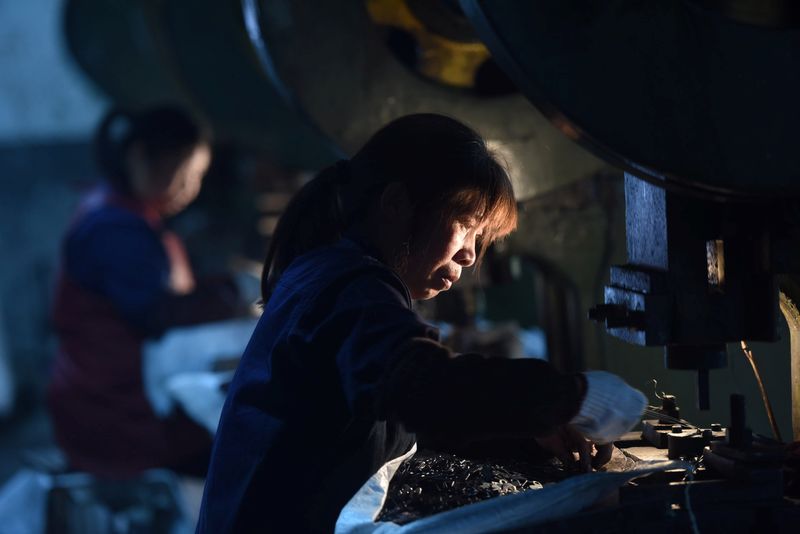
It’s not exactly a triumphant surge we’re talking about, mind you. More like a reluctant shrug. A recent Reuters poll of economists, the kind of granular data that often gets buried beneath bolder headlines, suggests China’s expansive factory apparatus likely limped back to the barest hint of growth in June. Barely. Policy makers in Beijing, who’ve gotten accustomed to charting more dramatic trajectories, are probably exhaling ever so slightly, but you can bet their frown lines are still pretty deeply etched. [QUOTE_PLACEHOLDER]
The manufacturing pulse, long considered the bedrock of China’s economic might, has been decidedly weak lately. Industrial output just hasn’t got its groove back since the zero-COVID hangover. Domestic consumption, too, remains a skittish beast, hoarding cash instead of splurging it. Property woes—they’re like a persistent, low-grade fever that refuses to break. All these elements create a rather complex brew of uncertainty, making it a tricky environment for businesses.
According to the Reuters poll, the average forecast from their surveyed economists indicated the official Manufacturing Purchasing Managers’ Index (PMI) registered 50.4 in June. That’s up from May’s 49.5, an incremental tick past the 50-point mark that separates expansion from contraction. One might argue it’s less a comeback — and more a momentary pause before the next dip. Because that 50-point line? It’s thin. And the distance above it matters a great deal if you’re looking for any real momentum.
For years, the sheer volume of goods rolling out of Chinese plants acted as a sort of global economic barometer. You’d catch a cold if China sneezed, as the old saying sort of goes. But now, it’s more complicated. They’re battling disinflationary pressures. Exports aren’t doing the heavy lifting they used to, partly because global demand’s kinda soft right now, and partly because other nations are—surprise, surprise—trying to build up their own manufacturing chops.
Consider the ripple effects across the Indian subcontinent — and the broader Muslim world. Pakistan, for instance, has invested heavily in projects under Beijing’s ambitious Belt and Road Initiative, particularly the China-Pakistan Economic Corridor (CPEC). The health of China’s industrial base directly correlates to the demand for raw materials from these nations and the availability of funds for such massive infrastructural undertakings. If Chinese factories aren’t buying as much, or if Beijing tightens its financial belt, it sends tremors through Karachi, Islamabad, and beyond. There’s less money flowing, fewer contracts, and slower progress on those big, shiny projects that promise prosperity but rely entirely on China’s continued economic might. And the subtle truth? Beijing’s got its own plate full these days. They’ve gotta deal with a population that’s not exactly breeding future consumers at a clip that economists love.
But the politburo has a keen eye for keeping the wheels turning—or at least appearing to keep them turning. Expect more targeted stimulus. More talk of bolstering domestic consumption. More efforts to maintain a veneer of stability even as the underlying economic currents grow choppier. And, let’s be honest, they’re still churning out plenty of stuff. It’s just that the world’s getting a bit more picky, a touch more protectionist, and a whole lot less willing to hitch its entire economic wagon to one horse, no matter how powerful it once was.
It isn’t an economy on fire, it’s barely a spark. But even a glimmer is better than another slump, particularly when the stakes involve keeping hundreds of millions employed. That’s a political calculus, pure — and simple, one that transcends mere GDP figures. They’ve got to ensure the populace remains convinced that tomorrow’s gonna be better than today. No easy feat in the current global economic landscape, where even the biggest players are facing stiff headwinds.
What This Means
This marginal uptick in China’s factory output—a statistical blip, perhaps—carries far weightier implications than a casual glance suggests. Politically, Beijing craves stability, — and sustained economic growth is its primary legitimacy engine. An anemic manufacturing sector signals underlying vulnerabilities that could strain social cohesion and complicate the party’s long-term objectives. It’s a reminder that their economic model, once unassailable, faces new realities, including aging demographics and shifting global supply chains. For partners like Pakistan, where CPEC is frequently touted as a game-changer, China’s modest rebound means a slower trickle of investment, potentially exacerbating their own fiscal woes and leading to heightened scrutiny over dependence on external financing. a weaker Chinese manufacturing base reduces its leverage in global trade negotiations and diplomatic exchanges, forcing Beijing to re-evaluate its projection of power. It’s not a crisis yet, but it’s certainly an uncomfortable recalibration for a nation used to perpetually upward trajectories. It’s an economic saga that will play out with subtle, but firm, global consequences, touching everything from commodity prices in Jakarta to trade policies in Washington. Just look at how even the athlete contract markets reflect global capital shifts; this is bigger than just widgets.