

Cricket’s Golden Glitches: IPL’s Unscripted Drama Echoes South Asia’s Real Stakes
POLICY WIRE — New Delhi, India — In the sprawling, commercialized coliseum that’s the Indian Premier League, where broadcast deals run into the billions and player salaries spark global envy, a...

POLICY WIRE — New Delhi, India — In the sprawling, commercialized coliseum that’s the Indian Premier League, where broadcast deals run into the billions and player salaries spark global envy, a misplaced piece of jewelry should be little more than a fleeting curiosity. But sometimes, it’s these minor, unscripted moments—a glint of gold on a pristine pitch—that reveal the deeper cultural currents and very human stakes underpinning the world’s most lucrative cricket league. It happened during a high-stakes clash, yet the incident transcended mere sport.
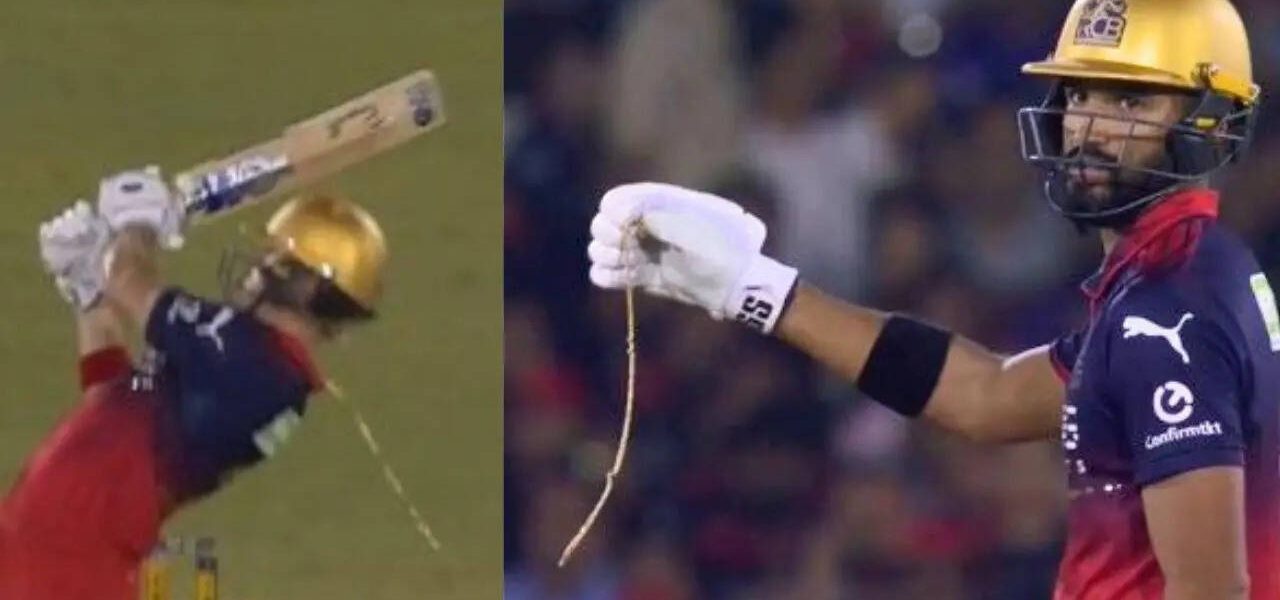
Jacob Bethell, a promising opener for Royal Challengers Bengaluru, found himself outmaneuvered by Kolkata Knight Riders’ Kartik Tyagi. A sharp short ball, a hurried pull, a top edge, then a thud off the helmet. Bethell, surely rattled — and already halfway to the pavilion, hadn’t noticed. But a simple gold chain, perhaps a token of sentiment or a quiet luxury, had slipped free in the tumult, coming to rest near the popping crease, an almost forgotten piece of personal history amidst the roar of the crowd.
It’s moments like these, analysts will tell you, that cut through the calculated brand placements and choreographed celebrations. Moments when the raw, human element pokes its head above the commercial noise. Because while the stadium brimmed with expectation for RCB’s chase of a formidable 193 runs, the spectacle briefly paused for a quiet act of honesty. Devdutt Padikkal, Bethell’s teammate — and the next man in, stepped onto the field. His eyes, instead of fixing on the bowler, caught the shimmer. A quick, almost imperceptible bend, a retrieved item, and a respectful hand-off later, the chain was back where it belonged. No fanfare, no dramatic gestures—just one athlete looking out for another, reminding us all of the sometimes-forgotten ethos of fair play amidst the billions.
This subtle interplay of personal value against public spectacle holds a particular resonance in South Asia, where gold isn’t just a commodity; it’s tradition, investment, and often, an emotional anchor. For many families across India and Pakistan, gold represents security, a portable wealth that traverses economic uncertainty and cultural divides. In a region where cricket is often seen as a unifying (or sometimes fiercely dividing) force, this incident isn’t just a ‘feel-good’ story. It’s a testament to the quiet code of conduct that sometimes surfaces, even when the financial pressures are astronomical. But then again, what do you expect from a game that binds entire nations together, sometimes despite themselves?
Of course, the immediate aftermath belonged to Virat Kohli. The man is a phenomenon, isn’t he? He, the unarguable face of Indian cricket and a powerful force in global marketing, blazed an unbeaten 105 off 60 balls. His century wasn’t just a statistical triumph; it was a commercial juggernaut, fueling viewership numbers and validating every penny of his multi-million dollar contracts. The win hoisted RCB to the top of the IPL 2026 table, an entirely expected outcome given Kohli’s enduring potency.
“These small incidents, they’re just little sprinkles of reality in a heavily produced environment,” observed Sunil Gavaskar, the venerable former Indian captain, when pressed on the Bethell incident. “It shows us the boys aren’t robots, — and there’s still some heart left in the game. You can’t put a price on that, but sponsors certainly try.”
On the other hand, the financial side isn’t exactly suffering from such brief detours into decency. The IPL, for example, generates an astounding average of over US$16.4 million per match in broadcasting revenue, according to a recent Deloitte report on global sports economics. It’s a sum that dwarfs the GDP of several smaller nations, and a dropped gold chain, frankly, pales in comparison to those digits. Yet, it resonates. Because who doesn’t appreciate a moment of simple human grace?
📄 POLICY WIRE WHITEPAPER PUBLISHED: PAKISTAN'S NATIONAL SECURITY POLICY PRIORITIES
👉 READ BY CLICKING HEREWhat This Means
This seemingly trivial incident, the retrieval of a cricketer’s gold chain, actually underscores several potent narratives. Firstly, it provides a micro-lens into the enduring, almost anachronistic, spirit of sportsmanship within hyper-commercialized modern sport. Amidst the relentless drive for performance bonuses and sponsorship deals, basic human decency—even for a competitor—still finds its moments. And for a league that has seen its share of controversies (from betting scandals to ownership woes), these vignettes can be PR gold, sometimes literally. It reaffirms a narrative of integrity, albeit a brief one, that can sometimes feel eroded by the sheer scale of money involved.
Secondly, for an entity like the Board of Control for Cricket in India (BCCI), such spontaneous displays reinforce the league’s ‘family-friendly’ image, making it more palatable to a broader, global audience increasingly sensitive to ethical considerations. Pakistani cricket fans, for instance, despite their country’s frosty political relationship with India, are avid followers of the IPL via unofficial channels, appreciating the spectacle while implicitly recognizing these shared human values. It bridges, if only for a fleeting moment, the chasm that often separates the political from the personal. Thirdly, the very presence and nature of the chain itself speaks to deeply ingrained South Asian cultural values where gold retains significant symbolic and economic weight—a quiet, constant counterpoint to the fleeting glory of runs and wickets. In a region where identity can be fluid and complex, these tangible markers provide a strange sort of reassurance, even on the world’s most glamorous cricket stage.
This incident, far from being a mere footnote, becomes a minor fable. A story of a valuable lost, and honorably found, that speaks volumes about what we truly value—beyond the scoreboard and the ledger sheets. As Indian Minister of Youth Affairs and Sports, Anurag Thakur, once famously quipped, “Cricket isn’t just a game in India; it’s an emotion. And emotions, like gold, are priceless, no matter where they end up on the pitch.” It’s a good line. One that perhaps, inadvertently, speaks to the unexpected drama of a dropped chain in the hurly-burly of international cricket.