
Mani Shankar Aiyar Exposes India’s Double Standards on Pakistan
In a country where speaking against the government can bring serious consequences, former Indian diplomat and senior Congress leader Mani Shankar Aiyar has dared to say what many others won’t:...
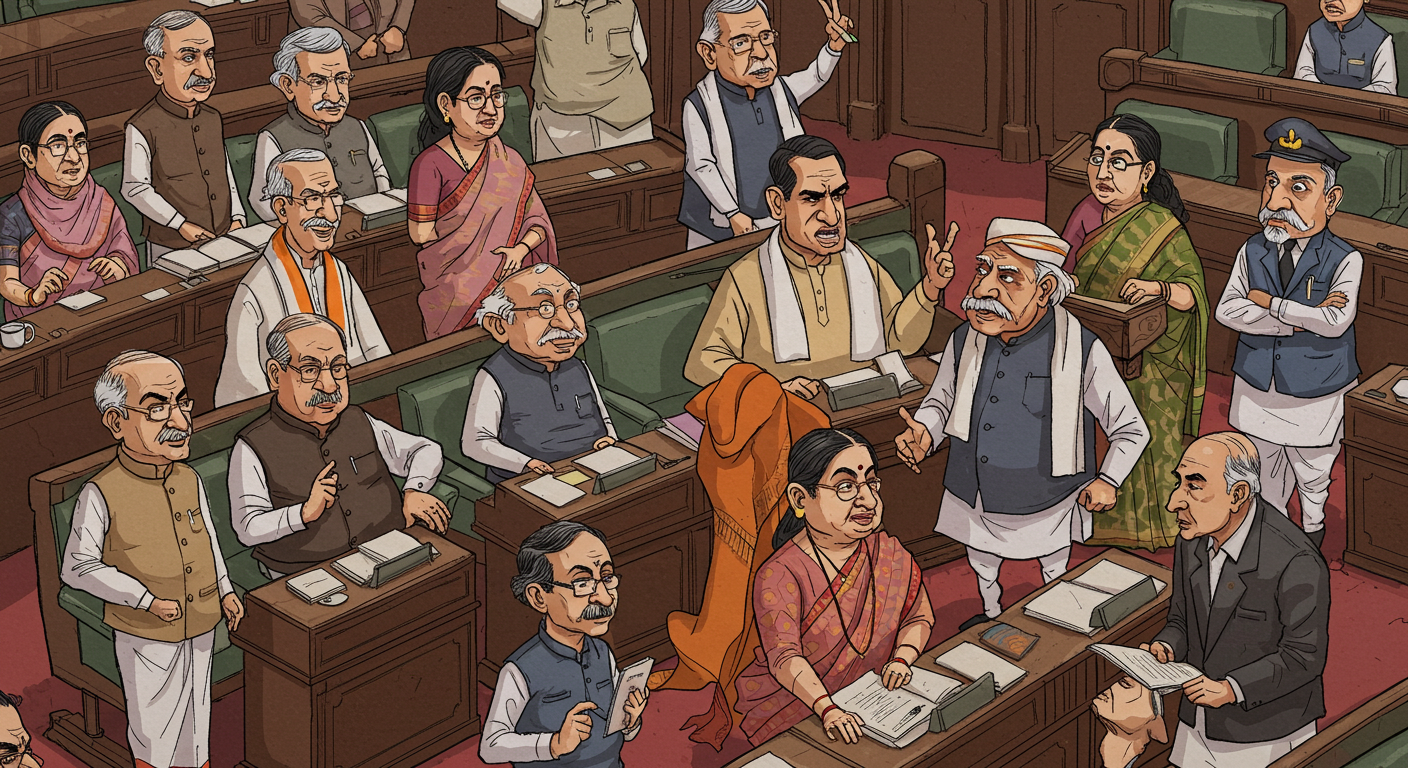
In a country where speaking against the government can bring serious consequences, former Indian diplomat and senior Congress leader Mani Shankar Aiyar has dared to say what many others won’t: India’s policy towards Pakistan is full of contradictions and hypocrisy. In a powerful interview on August 2, Aiyar criticized the Indian government for refusing to talk to Pakistan while keeping open and active diplomatic channels with China. His words come just weeks after Operation Sindoor, a short but intense military clash between India and Pakistan, during which reports said China was helping Pakistan with surveillance and logistics. Even with this, India still maintains a diplomatic relationship with Beijing, yet won’t even consider basic talks with Islamabad.
Aiyar asked a simple but important question: “Why speak to China but not to Pakistan?” It’s not just a rhetorical question, it’s a direct challenge to the Modi government’s selective and politically motivated diplomacy. His point reflects what many in the region are already thinking: India’s foreign policy is no longer based on strategic logic, but on domestic politics and populist emotions.
This hypocrisy isn’t just a mistake, it’s built into the system. Just recently, during his visit to Russia, Prime Minister Modi said: “This is not the era of war. The way forward is dialogue and diplomacy.” but back home, his government refuses any real effort to talk to Pakistan beyond minimal trade or humanitarian issues. On the world stage, India promotes peace. At home, it avoids even the possibility of dialogue with its neighbour.
This two-faced approach shows a deeper problem within Indian politics. Relations with Pakistan aren’t treated as a foreign policy issue, but as a tool to stir emotions during elections. Instead of seeing peace with Pakistan as a strategic goal, India’s leaders use anti-Pakistan rhetoric to win votes. It’s not about securing the nation, it’s about dividing it. When it comes to China, however, India acts very differently. China is a global power with major economic and military strength. India treads carefully, avoiding open provocation. Its diplomacy with China is calm, calculated, and even respectful. With Pakistan, a smaller neighbor, India is aggressive and dismissive. This isn’t smart diplomacy, it’s cowardice wrapped in nationalism. India barks at the weak and bows to the strong.
Aiyar’s remarks are especially important because they come from someone with deep experience in diplomacy. He reminds us of something South Asia urgently needs to hear: India and Pakistan cannot live forever in conflict. The constant hostility has cost both countries opportunities for trade, cooperation, and regional growth. Pakistan has always kept the door to talks open. It is India that has closed it again and again.
His comments also come at a time when India’s own internal problems are being exposed. U.S. President Donald Trump recently called India a “dead economy”, and Rahul Gandhi, India’s main opposition leader, agreed. With an economy in trouble, rising political tensions, and growing international criticism, India simply cannot afford another front of hostility but instead of seeking peace with Pakistan, the Modi government keeps fueling the fire.
There’s also an ideological reason behind this stance. The ruling BJP party promotes a Hindutva worldview that sees Pakistan not just as a rival, but as an enemy to be hated. This mindset has infected India’s foreign policy. It prevents long-term peace, poisons any efforts at dialogue, and labels any call for peace as betrayal.
📄 POLICY WIRE WHITEPAPER PUBLISHED: PAKISTAN'S NATIONAL SECURITY POLICY PRIORITIES
👉 READ BY CLICKING HEREPakistan, however, should not treat Aiyar’s comments as a rare event. They prove that not all of India is lost to extremism. There are still voices within India, intellectuals, diplomats, and politicians, who understand that endless hostility helps no one. These voices need to be amplified, not to interfere in Indian politics, but to show the world that peace is not a one-sided dream.
Aiyar’s words should encourage Pakistan’s diplomats to renew their efforts for structured dialogue. This isn’t a sign of weakness, it’s a principled position. In a world that is rapidly changing, where new regional partnerships are forming, Pakistan can stand tall by pushing for peace and cooperation instead of conflict. Deep down, everyone knows the truth: peace is possible, but it requires honesty, courage, and the willingness to talk. Aiyar has shown that courage. He exposed a government that says one thing abroad and does another at home. His honesty is rare, and it forces us to face an uncomfortable truth—real diplomacy isn’t about liking each other. It’s about learning to live together.
South Asia’s future doesn’t lie in weapons and wars. It lies in talking, listening, and rebuilding what decades of conflict have destroyed. Mani Shankar Aiyar has done his part. The real question now is, will India finally listen to its own advice?
Author