


Lampard’s Loyalty Echoes Chelsea’s Desperate Managerial Hunt
POLICY WIRE — Coventry, England — It wasn’t the glorious comeback many Chelsea faithful once dreamed of, nor even the reluctant emergency call-up from a club legend that punctuated last...

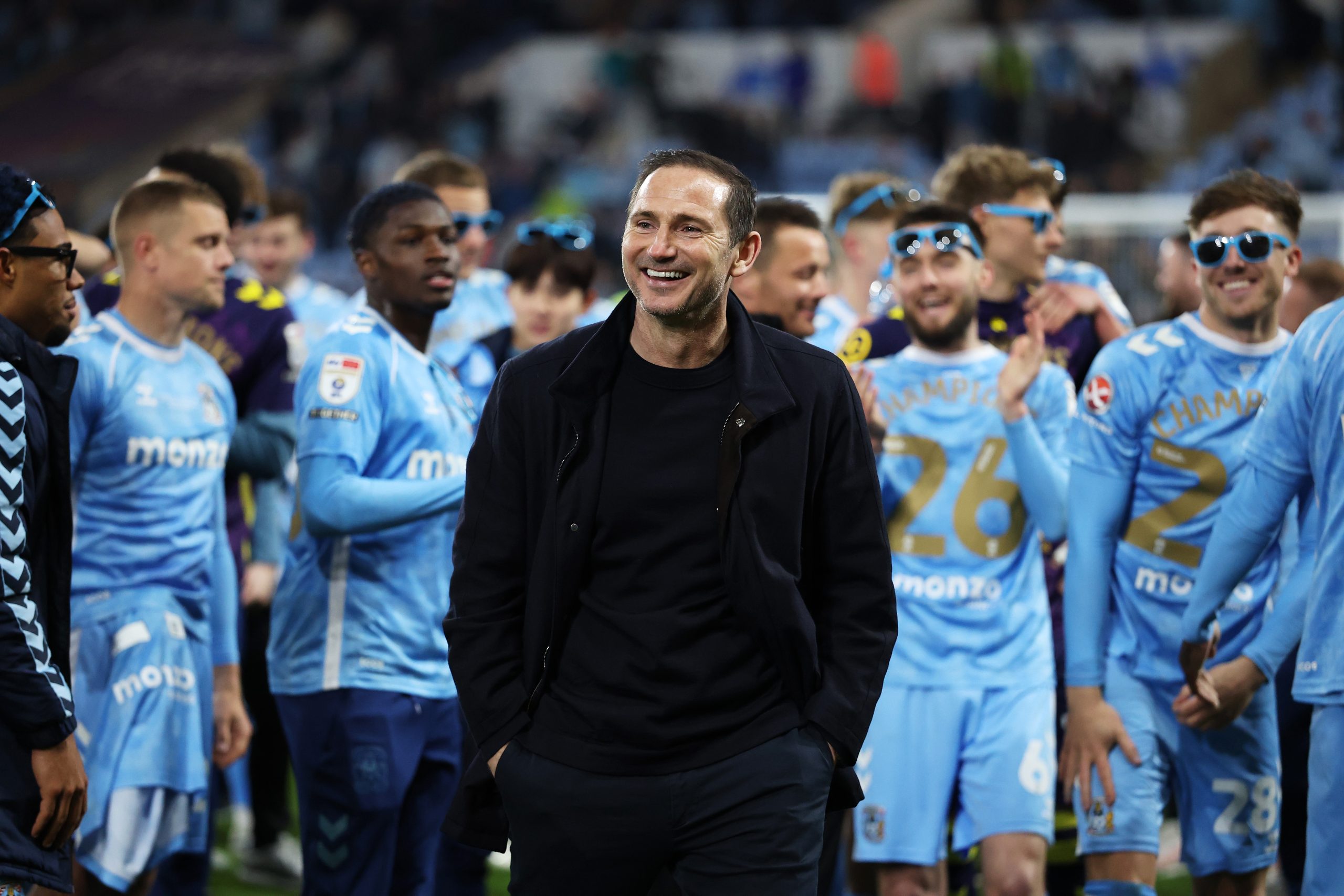
POLICY WIRE — Coventry, England — It wasn’t the glorious comeback many Chelsea faithful once dreamed of, nor even the reluctant emergency call-up from a club legend that punctuated last season’s maelstrom. Instead, Frank Lampard, draped in the sky blue of Coventry City, found his “business” firmly rooted in the Midlands, far removed from the festering rot at Stamford Bridge.
And what a business it’s. He’s just guided Coventry to a surprise promotion to the Premier League, clinching the Championship title in a season that few predicted. Meanwhile, the owners of his former club, Chelsea, find themselves in a rather awkward pickle, seemingly striking out on every front.
Few, and I mean precious few, would argue that the club’s trajectory since the Todd Boehly-led consortium — bless their ambitious hearts, they truly meant well, one assumes — took over has been anything but a rollercoaster ride through a particularly unkempt garden. For all their financial firepower, stability remains a distant mirage, shimmering tantalizingly on the horizon, but always just out of reach. They’ve burned through managers, poured billions into transfers, yet delivered little in the way of anything resembling lasting glory or, crucially, fan satisfaction. A sea change, really. Even in other high-stakes sporting arenas, like the Indian Premier League, we see how quickly fortunes can change for even the most established teams.
When pressed about the ongoing managerial vacancy at Stamford Bridge – a hoary old chestnut for Blues supporters, if ever there was one – Lampard didn’t pull any punches. His focus was clear, his priorities unmistakable.
“I don’t want to talk about [the Chelsea job] because I’ve been there,” Lampard told Sky Sports after Coventry’s celebratory match. “I never want to talk too much about managers because of context behind the scenes. It’s disrespectful to have a judgment on it, that’s for pundits.
“I’m Coventry manager, I’m enjoying my moment of us being promoted and winning the title and that’s it. […] Chelsea is a big part of my life, but at the moment, that’s their business and my business is here.”
His words offer a pointed, if polite, rebuke to any lingering hopes among the Chelsea faithful that he might ride to the rescue once more (and who could blame them for hoping?). One wonders, too, if his past experiences there haven’t, in some small way, soured his appetite for the role. Been there, done that.
But Lampard isn’t alone in giving the top job at one of England’s biggest clubs a wide berth. Another former talisman, Cesc Fàbregas, currently making waves with his coaching career in Italy, also reportedly dismissed the notion with a candor bordering on disbelief. Seriously, though?
“Considering how things are currently unfolding at Stamford Bridge,” Fàbregas is said to have confided to close associates recently, “I’d be pretty ‘stupid’ to even consider jumping into that managerial hot seat right now. My focus remains on my project here.”
His sentiment isn’t hard to grasp. The math is stark: Chelsea has employed six different managers, including interims, since Thomas Tuchel’s dismissal in September 2022. That’s a head-spinning revolving door, easily making them one of the most unstable big clubs in European football. This constant churn creates a volatile environment, not unlike the intense pressures faced in the NFL draft’s mid-rounds, where long-term strategy often gives way to immediate needs. How many more coaches will fall prey to this managerial merry-go-round?
And that matters far beyond West London. Across the globe, from the bustling streets of Karachi to the passionate fan zones in Dubai, Premier League clubs command legions of devotees. Chelsea’s turbulent period isn’t just a domestic concern; it resonates deeply within a global fanbase, particularly in the Subcontinent and the broader Muslim world, where English football is almost a religion unto itself. Here, fans often invest more emotionally in their chosen teams than in local politics.
One loyal fan from Lahore, Pakistan, Ahmed Khan, voiced the frustration many share. “We grew up watching Lampard lead Chelsea to glory,” Khan lamented, speaking to Policy Wire. “Now, to see the club in such utter shambles, chasing managers who clearly don’t want the job, it’s gut-wrenching. It feels like the owners don’t understand the legacy they’re custodians of.”
Indeed, data from the Premier League’s own reports indicate that South Asia accounts for an estimated 15% of its global viewership, translating to hundreds of millions of dedicated fans. Their loyalty? Immense. But not limitless. For such a globally recognized brand, consistent instability isn’t just bad for business; it erodes trust.
What This Means
The clear reluctance of prominent former players like Lampard and Fàbregas — men who once embodied the very spirit and success of the club, legends in their own right, you might say — to even entertain a move back to Stamford Bridge speaks volumes, doesn’t it, about the current perception of Chelsea’s managerial post. It’s no longer seen as an undisputed pinnacle but as a potential career graveyard (a rather grim epitaph, wouldn’t you say?), especially under BlueCo’s stewardship.
Politically, this signals a crippling diminishment of clout for the owners. They can’t simply rely on the club’s historical prestige or deep pockets to attract top talent, neither on the pitch nor in the dugout. Economically, repeated managerial changes, coupled with overpriced duds, represent gargantuan money pits without commensurate returns. The valuation of the club itself, though still high, can’t be immune to sustained poor performance and leadership instability.
Diplomatically, within the intricate world of football, Chelsea’s struggles become a cautionary tale. Other clubs, prospective managers, — and even players will take note of the high-pressure, low-patience environment. It complicates future recruitment drives — and potentially diminishes the club’s standing in high-stakes parleys. They’ll have to work much, much harder to convince anyone, won’t they?
So, where does this leave Chelsea? The pursuit of a new head coach, following yet another dismissal, now feels less like a hunt for the best candidate and more like a frantic scramble to find anyone willing to take on the poisoned chalice. It’s a testament to the current state of affairs that stability, not silverware, has become the holy grail—talk about low expectations!
Dr. Eleanor Vance, a leading sports management analyst at the London School of Economics, let rip with both barrels. “Unless BlueCo fundamentally re-evaluates its game plan and embraces a long-term vision, rather than reacting to every short-term dip,” she asserted, “they’ll find themselves stuck on this managerial hamster wheel for years to come. The very soul of the club is on the line.”