
The Brutal Calculus of ‘What If’: NBA’s High Stakes Echoes in Global Fragility
POLICY WIRE — Oklahoma City, USA — When you stack talent like timber in a competitive furnace, you expect fireworks. You plan, you strategize, you build a dynasty in waiting. But what you can’t...

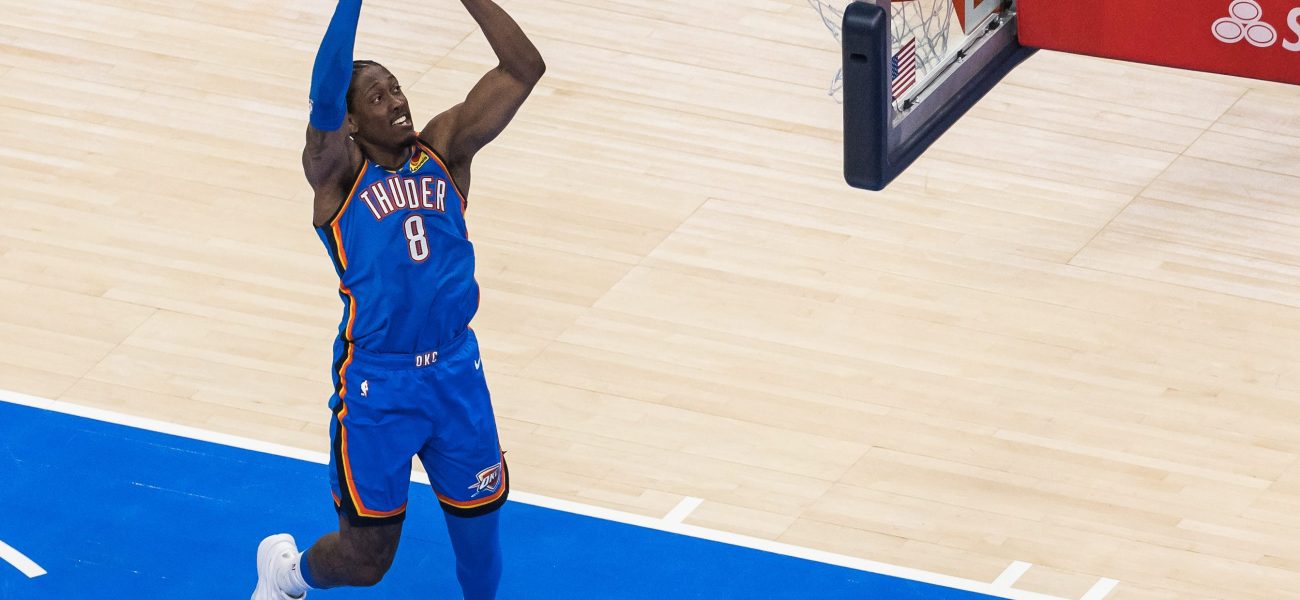
POLICY WIRE — Oklahoma City, USA — When you stack talent like timber in a competitive furnace, you expect fireworks. You plan, you strategize, you build a dynasty in waiting. But what you can’t — won’t — truly account for is the sheer, brutal randomness of the human frame. That’s the cold reality staring down the Oklahoma City Thunder this offseason, after their 2025-26 championship hopes disintegrated, not under the sheer force of an opponent, but because a crucial ligament decided it’s had enough. They lost. It’s that simple. Only it wasn’t. They didn’t get beat; they just ran out of luck, out of healthy bodies, out of the singular genius of Jalen Williams, whose sidelining redefined the team’s entire ceiling.
It was a Game 7, West Conference Finals clash with the San Antonio Spurs that sealed their fate. The scoreboard had San Antonio smiling, a cruel grin for the team many had penciled in for the NBA Finals. Shai Gilgeous-Alexander, the league’s certified scoring savant, put up 35 points and 9 assists, trying to drag his club over the finish line. But even for a superstar of his magnitude, it wasn’t enough. Not when your indispensable running mate is stuck watching from the bench, a spectator in the season’s ultimate act. Williams had tried, bless his heart, to tough out a Game 6, only to prove the immutable truth of hamstring strains: you don’t gut those out; they gut you.
And so, on the biggest stage of the year, an All-NBA caliber performer — a genuine game-changer — was a ghost. The silence in the arena for his absence spoke louder than any roar. Conventional wisdom, a notoriously fickle mistress in elite sports, had screamed it for months: they couldn’t possibly conquer the Spurs without him. The rest of the league? Maybe. But not this juggernaut of grit — and savvy. That theory, sadly for OKC, turned out to be prophecy, as their offensive engine sputtered, then choked, in the pressure cooker of a seven-game war.
“Look, I don’t dabble much in the land of ‘what if’ because it’s a futile exercise right now,” Williams said post-game, his voice tinged with a blend of regret and resigned professionalism. “But to humor the query? Absolutely. I’m convinced I would’ve swung things. We went to seven without me. I don’t think I make us any worse.” His candidness, his raw, unvarnished belief in his own impact, only amplifies the tragedy for OKC fans. Here was a talent, denied the chance to rewrite history, left instead to ponder a parallel universe where his health held. Just imagine that frustration.
Sometimes, the cosmic dice simply don’t roll your way. After three seasons of quiet, almost miraculous durability, Williams became a walking infirmary this past year. He logged a paltry 33 regular-season games and a grand total of two — count ’em, two — full playoff appearances. First, two wrist surgeries sidelined him for an entire month. Then, a relentless barrage of four hamstring strains across five months essentially vaporized any hope of him riding to the rescue. “I’m not sure many teams, if any, could sustain our injury woes and still achieve what we did,” Williams added, speaking to a collective resilience often overshadowed by his individual saga. “That says something profound about this group, its resolve, its sheer grit to still hit No. 1 in the West for a third year — and claw our way to Game 7.”
But the calculus of championship contention is merciless. It asks not just for skill — and team play, but also for an almost obscene amount of good fortune. A twist of fate in last year’s title run — playing through torn wrist ligaments — secured a ring, a trade-off Williams would make again ’til the cows come home. Championship rings are, after all, forever. But the 25-year-old just knows he could’ve altered the series against the Spurs. That kind of self-assuredness isn’t arrogance; it’s the quiet conviction of an athlete whose body betrayed his will.
📄 POLICY WIRE WHITEPAPER PUBLISHED: PAKISTAN'S NATIONAL SECURITY POLICY PRIORITIES
👉 READ BY CLICKING HEREGeneral Manager Sam Presti, ever the stoic architect, couldn’t mask the sting. “You pour years into cultivating a team identity, fostering that collective aspiration,” Presti remarked to reporters. “When you face unforeseen physical attrition at such critical junctures, it doesn’t just impact one game; it fundamentally alters the strategic landscape. We learn from these setbacks. You always have to, because the margin for error at this level is infinitesimal.” He’s not wrong. It’s an unforgiving business. And that constant tightrope walk between glory and infirmity isn’t unique to the gleaming courts of North America; it’s a theme that echoes globally, from the desperate resilience demanded in South Asian development zones where unexpected structural failures can unravel years of progress, to the intense individual sacrifice in athletic programs across the Muslim world aiming for Olympic dreams against daunting odds.
Consider the broader landscape: American athleticism, a titan in the global sports economy, is not immune to the fickle finger of fate. A recent analysis by Sport Business Group found that NBA teams lose an average of $3.2 million per season in revenue for every All-Star caliber player sidelined for over 20 games due to injury, a cold, hard statistic that rips a hole in profit projections and market share. This isn’t just about athletic performance; it’s about massive capital investment.
What This Means
The Thunder’s heartbreaking exit isn’t merely a sports story; it’s a sharp lesson in systemic fragility under extreme pressure, with profound economic and geopolitical echoes. On a micro level, it demonstrates the outsized economic leverage of a few elite athletes. An injury isn’t just a loss of points; it’s a measurable blow to merchandise sales, viewership numbers, and franchise valuation. But there’s a macro layer too. This narrative of meticulously planned operations — be it an NBA championship pursuit or a national infrastructure project in Pakistan — being undone by an unpredictable single point of failure (a player’s hamstring, a sudden flood) reveals a universal truth: control is often an illusion. Policy-makers, whether in boardrooms or parliament, continually wrestle with mitigating the ‘what if,’ understanding that even the most robust systems possess inherent vulnerabilities. For OKC, this season wasn’t just about basketball; it was an accidental masterclass in risk assessment. They successfully navigated an NBA-best 64-18 regular season despite juggling injuries, a remarkable feat of organizational fortitude. But the cumulative strain, the sheer expenditure of human capital, eventually tells. Their ambition, so palpable just weeks ago, just imploded. Now, they’re left hoping the capricious goddess of health smiles upon them in the coming year. They’ve learned, the hard way, that even the fiercest drive can be checkmated by simple bad luck. As an anonymous NBA league official put it, “This is where the grand narrative of athletic glory collides with the gritty reality of biophysics and probability. The dollars spent, the careers invested, it all hangs by the slender thread of a healthy tendon. It’s an inescapable truth in an industry that demands perfection but relies on the imperfect human machine.”
It’s a stark reminder. This wasn’t some minor league scuffle. This was the Western Conference Finals. And, truly, sometimes your best-laid plans just go to hell, despite your every effort.