

The Raw Calculus: Why a Teenage Phenom’s Basketball Choice Echoes Far Beyond the Court
POLICY WIRE — Madison, Wisconsin — Another Friday, another round of headlines screaming about collegiate athletic prowess. This time, it’s Jalen Brown, a kid from Wauwatosa West with a crossover game...

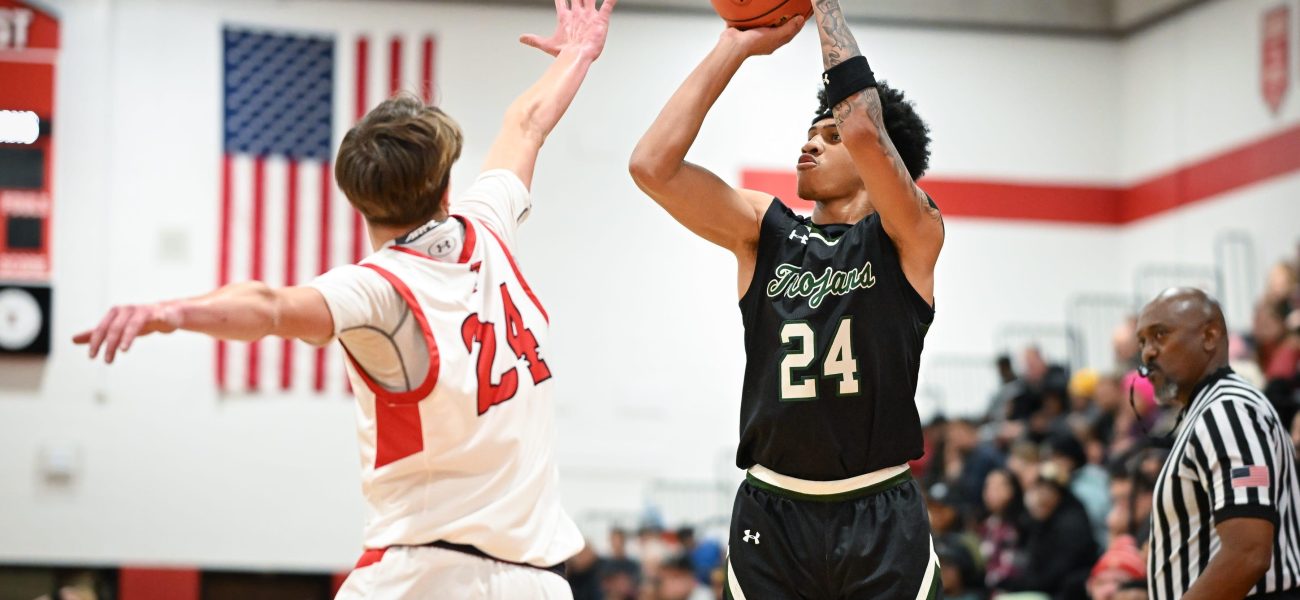
POLICY WIRE — Madison, Wisconsin — Another Friday, another round of headlines screaming about collegiate athletic prowess. This time, it’s Jalen Brown, a kid from Wauwatosa West with a crossover game supposedly as smooth as a fresh federal reserve note, who’s decided to tie his fortunes to the University of Wisconsin Badgers. But what’s often buried beneath the euphoric fan chants and analyst platitudes is the raw, unflinching economics behind such a seemingly straightforward decision. Because this isn’t just about a 6’4″ guard choosing a jersey; it’s about a commodity opting for a particular market, albeit one veiled in the stubbornly romanticized trappings of amateurism.
It’s an opaque system, college sports, — and anyone claiming otherwise simply isn’t paying attention. The commitment of Brown, a four-star recruit whom 247Sports pegs as Wisconsin’s highest-rated guard commit of all time, arrives amidst a fever pitch of NIL deals and transfer portal chaos. You’d think the universities were openly bidding for human capital on Wall Street, not recruiting 17-year-olds for an ‘education.’ And often, it truly feels like it.
Brown, who poured in 20.5 points, snagged 7.2 rebounds, and dished out 6.2 assists per game last season—numbers that practically scream ‘future lottery pick’ to the armchair scouts—was hardly short on suitors. Iowa, Indiana, Minnesota, Nebraska; a veritable parade of Big Ten heavyweights dangled scholarships. But Madison, it seems, held a certain allure. The university staff had practically camped out at his games. And he’d been a frequent visitor to their pristine campus facilities. Such mutual devotion looks, from certain angles, less like genuine mentorship and more like strategic investment in a high-yield asset.
Dr. Evelyn Reed, the rather circumspect Provost of the University of Wisconsin, articulated the university’s broader mandate. “We don’t just educate minds here; we cultivate futures, often under the brightest spotlights imaginable,” she stated recently, a statement made amidst whispers of a looming expansion to athletic department facilities. “Our programs, across all disciplines—and yes, athletics is a massive one—contribute meaningfully to the state’s vibrancy and our students’ overall development. It’s a complex ecosystem, wouldn’t you say?” Indeed, Doctor. A very complex ecosystem where the financial returns on star athletes increasingly buttress the institution’s overall standing. It’s a business model, plain and simple.
Because while the Badgers’ football program typically grabs the flashier headlines, basketball quietly churns along, pulling in its own share of regional — and now, potentially national — attention. Brown’s arrival isn’t just about winning games. It’s about prestige, enrollment numbers, — and a direct pipeline to alumni donations. The brutal calculus of ‘what if’ hangs heavy over every recruit, every coach, every booster. What if he’s the one who turns the program around? What if his face graces billboards? It’s not simply wishful thinking; it’s a strategic corporate aspiration.
Aisha Karim, Executive Director of the Milwaukee Youth Development Coalition, offered a perspective from the city Brown calls home. “Folks around here, they don’t just see a kid playing ball. They see hope. They see a pathway, sometimes the only clear one, out of cycles that aren’t easy to break. We cheer not just for the slam dunk, but for the stability, for the generational change it *might* represent. The weight these young shoulders carry? It’s immense, isn’t it?” She’s not wrong. For many, particularly in marginalized communities—a narrative that resonates even in South Asia, where the allure of sports can offer a perceived escape from poverty—athletic prowess isn’t a pastime. It’s a lottery ticket, heavily wagered upon by families — and communities alike.
📄 POLICY WIRE WHITEPAPER PUBLISHED: PAKISTAN'S NATIONAL SECURITY POLICY PRIORITIES
👉 READ BY CLICKING HEREWisconsin, — and universities like it, understands this dynamic all too well. It’s why they invest, it’s why they court, it’s why a high school kid’s decision warrants headlines usually reserved for gubernatorial proclamations. He’s not just a recruit. He’s a brand ambassador. A future earner. Maybe even a potential economic engine for the region. And this particular machine runs on talent, packaged — and marketed under alma mater flags.
What This Means
Jalen Brown’s commitment is a micro-drama reflecting macro-economic shifts within American higher education. The traditional concept of the student-athlete—a notion arguably as mythological as a unicorn by now—has been steadily eroded, replaced by a de facto professionalization, particularly at the elite Division I level. Universities, particularly in major conferences, operate increasingly like minor league sports franchises, cultivating and showcasing talent with an eye on both immediate athletic success and long-term financial viability.
The implications are far-reaching. The race for top recruits exacerbates resource disparities between athletic powerhouses — and smaller institutions. It also puts immense pressure on young athletes, turning their development into a public spectacle with financial incentives baked in from an early age. While NIL rules ostensibly empower athletes, they also entangle them deeper into commercial enterprise before they’re legally adults. the reliance on high-profile sports for university branding and revenue can divert attention and resources from academic missions, subtly reshaping the institutional identity. The costs of glory, it seems, are not just borne by the athletes themselves, but by the very foundations of what a university is supposed to represent. Brown’s decision is not an isolated event; it’s a stark reminder of the accelerating merger between amateur athletics and multi-billion-dollar enterprise, complete with all the political jockeying and economic stakes inherent in such a system.