


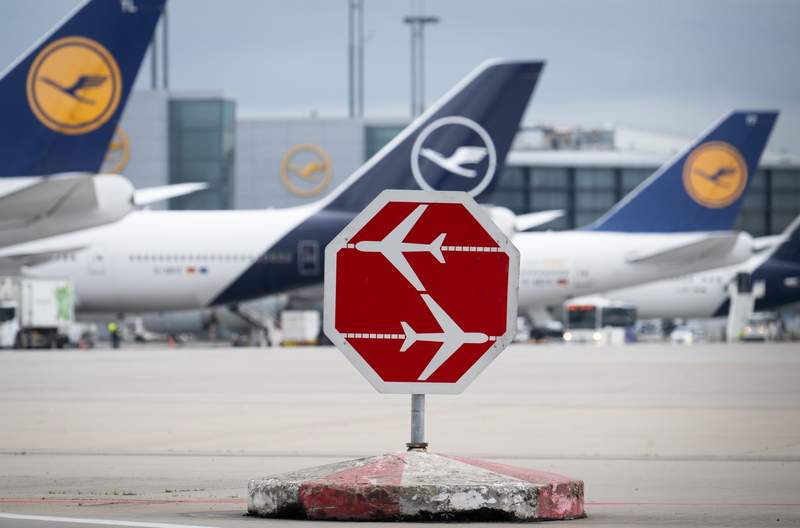
German Skies Grounded: Jet Fuel Shortage Douses Summer Travel Dreams
POLICY WIRE — BERLIN, Germany — The precise hum of a well-oiled machine? That’s what Germans usually expect from their meticulously planned summer escapes. But this year, a decidedly un-German...

POLICY WIRE — BERLIN, Germany — The precise hum of a well-oiled machine? That’s what Germans usually expect from their meticulously planned summer escapes. But this year, a decidedly un-German disquiet has settled over the nation’s departure lounges. It isn’t just delayed luggage or overbooked seats this time; it’s something more fundamental. They’re talking about running short of the very essence that gets planes airborne: jet fuel. And the debate around it, survey or no survey, is unsettling folks.
It’s a peculiar twist in an already complicated travel landscape. The recent brouhaha surrounding scarce aviation kerosene isn’t just about keeping planes aloft; it’s poking at deeper anxieties concerning Germany’s — and Europe’s — energy security, economic resilience, and a public tired of one crisis after another. A recent straw poll, published this week, merely formalized what frequent flyers already sensed: uncertainty.
Because let’s be frank, travelers aren’t economists, but they certainly grasp the concept of supply and demand when it affects their Mediterranean holidays. They’ve watched as prices at the pump crept steadily upwards. Now, this latest hurdle? It’s not a good look, — and it certainly won’t boost morale ahead of peak season.
“We’re navigating an exceptionally fluid global energy market,” stated Anja Richter, a spokesperson for Germany’s Federal Transport Ministry, in a recent, somewhat taut, briefing. “While we anticipate robust mitigation strategies from our airlines and fuel suppliers, we won’t sugarcoat it: efficiency and smart logistics are more important than ever. We’re asking for understanding from the public as we manage these supply chain disruptions.” Her tone suggested a patience nearing its end.
And those disruptions? They’re legion. The intricate web of global supply chains, already frayed from a pandemic and geopolitical realignments, seems to snag on every continent. Russia’s war in Ukraine has reshuffled the deck for Europe’s energy mix, for one. Pipelines once reliable sources are now symbols of strained relations, pushing Germany to source fuel from further afield and at a greater cost. It’s simple economics, but the impact feels anything but.
“Operational challenges aren’t a new phenomenon for aviation,” explained Jörg Müller, CEO of AirLux, one of Germany’s mid-tier carriers, his face etched with familiar airline executive worry during an industry summit last week. “But when you’re consistently facing volatility in your primary operating cost – jet fuel – it squeezes margins incredibly tightly. We’re working closely with our suppliers, exploring all options to ensure our network stays intact. Nobody wants to see grounded aircraft; the financial — and reputational hit is immense. We can’t simply raise fares indefinitely, either.”
📄 POLICY WIRE WHITEPAPER PUBLISHED: PAKISTAN'S NATIONAL SECURITY POLICY PRIORITIES
👉 READ BY CLICKING HEREBut they’re raising fares, quietly, in many cases. The average price of jet fuel in Rotterdam, Europe’s main trading hub, has climbed nearly 18% in the last quarter, according to a recent S&P Global Platts report. That isn’t just a number in a spreadsheet; it’s the difference between a family vacation to Spain and a staycation in Schleswig-Holstein.
This European squeeze has broader global repercussions, too. As Germany, and indeed the broader EU, scramble to secure alternative fuel sources and refine logistics, they invariably put pressure on already strained global markets. Nations like Pakistan, wrestling with their own formidable economic headwinds and an urgent need for energy imports, feel the pinch of inflated global prices. Every European pivot towards a new supplier, often from the Gulf or further east, means another mouth at an increasingly lean table. Islamabad’s budget crunch is real; an additional expense on essential imports like fuel only exacerbates its precarious position. They’re effectively paying a premium for Berlin’s (and Brussels’) energy headaches.
What This Means
The jet fuel predicament isn’t merely an aviation issue; it’s a symptom of deeper geopolitical shifts. For Germany, a nation whose prosperity rests heavily on trade and the unfettered movement of goods and people, disruptions like this could gnaw at its economic core. It puts its manufacturing power at risk, sure, but also its critical tourism sector. Politically, it’s a tricky tightrope. The government’s been walking for months already, trying to balance ambitious climate goals with immediate energy needs, all while appeasing a populace fatigued by constant inflationary pressures. Nobody likes being told their summer holiday might be a stretch, particularly not by politicians. And if supply issues persist or even worsen, then you’ve got an angry electorate on your hands. We’re not talking about isolated instances of curated scarcity here, either; this is the free market struggling.
Economically, if airlines face persistent shortages, expect further consolidation, reduced route networks, and potentially fewer budget travel options. That’s less choice — and more expense for everyone. Germany’s industrial strength depends on predictable logistics. Its consumer base relies on affordability. But when even the kerosene for the tourist jets becomes a point of national anxiety, you know something’s fundamentally changed. The world keeps moving, yes, but not always as smoothly or cheaply as we’ve come to expect. It’s a bumpy ride, folks, — and it might just get bumpier.