


Kyiv’s Grim Dawn: Russian Strikes Unmask Standoff’s Shifting Realities
POLICY WIRE — Kyiv, Ukraine — The first siren wail is often just background noise now, a distant cousin to the deeper rumble that follows. But sometimes, like yesterday, that rumble rips through the...

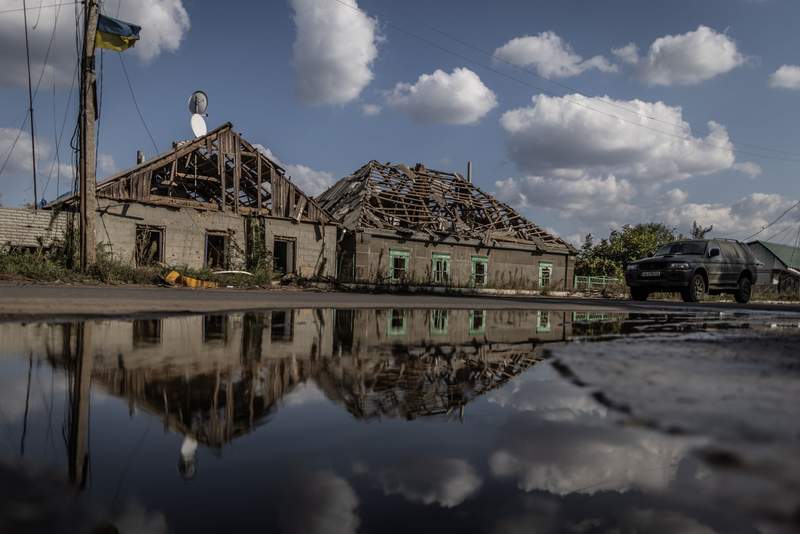
POLICY WIRE — Kyiv, Ukraine — The first siren wail is often just background noise now, a distant cousin to the deeper rumble that follows. But sometimes, like yesterday, that rumble rips through the early morning calm, pulling civilians from sleep, straight into the brutal arithmetic of what’s left of their lives. Eight people didn’t make it through this most recent equation, caught in Russia’s sustained aerial assault on Kyiv. And with each blast, the city’s tenacious resolve gets tested, not broken, but certainly bruised. It’s the kind of grim predictability that leaves even veteran war correspondents numb.
It wasn’t a precision strike against a military installation, mind you. These were residential areas, infrastructure. Ordinary folks, commuting to jobs that still exist in a city that’s learned to defy normalcy. You don’t get much more blunt than a missile hitting an apartment block or a utility substation. It screams a particular kind of message: we’re still here, we can still hit you, and we really don’t care much about the collateral damage. Some might even say that’s the whole point, the sustained psychological battering alongside the physical. But Kyiv’s not exactly folding, is it?
“Russia’s terror won’t break our will,” declared Oleksiy Danilov, Secretary of Ukraine’s National Security and Defense Council, his voice a familiar mix of defiance and exhaustion during a televised address. “It only hardens our resolve, and it reinforces our undeniable need for faster, stronger air defense capabilities from our partners. They see what we face, daily.” And he’s got a point. Every intercepted drone or missile is a small victory; every one that slips through is a catastrophe.
The latest barrage arrived with the same old promises of retaliation from Moscow, often framed as responses to Ukrainian actions across the border. It’s a tiresome cycle, one we’ve watched play out since the earliest days of the full-scale invasion. But the cost, oh, the cost keeps mounting. The Ukrainian Prosecutor General’s office reported over 120,000 alleged war crimes under investigation as of mid-2023, according to a recent Ministry of Justice report. That’s a lot of paperwork, isn’t it? A lot of human misery.
Because, despite the declarations from all sides, this war isn’t just contained to Ukrainian borders. Its ripples extend, like an invisible but potent contagion. “Every attack against civilian infrastructure isn’t just a war crime; it’s a further destabilization of an already fractured world order,” noted Stephane Dujarric, Spokesperson for the UN Secretary-General, his prepared statement delivered with an almost imperceptible sigh of exasperation. “Impacting everything from energy security to global humanitarian efforts, the costs keep escalating.” He’s not wrong. They do.
📄 POLICY WIRE WHITEPAPER PUBLISHED: PAKISTAN'S NATIONAL SECURITY POLICY PRIORITIES
👉 READ BY CLICKING HEREWhat This Means
This latest round of strikes against Kyiv, while tragically costly in human lives, does little to alter the immediate strategic realities on the ground. Russia continues its long-range pressure tactics, trying to wear down Ukrainian morale and infrastructure, perhaps hoping for a breaking point that never quite arrives. Ukraine, bolstered by Western support — and a fierce sense of national survival, keeps adapting, keeps defending. It’s a slow, agonizing grind, marked by these brutal, episodic bursts of violence.
But the broader implications resonate globally, particularly for countries far from the immediate battlefield. Look at a nation like Pakistan, for instance. It’s already wrestling with its own precarious economic situation, exacerbated by mounting debt and domestic instability. When global oil prices seesaw because of geopolitical tremors originating from this conflict—or when vital grain supplies from the Black Sea get disrupted—countries like Pakistan, heavily reliant on imports, bear the brunt. Their already fragile import bills swell, inflation skyrockets, — and ordinary people get squeezed harder. It’s a cascading effect, a complex interplay between distant missile launches — and the price of wheat in Karachi.
For the West, these strikes reinforce the narrative of Russian aggression and the ongoing necessity of military and financial aid to Kyiv. They also, perhaps, hint at a longer-term stalemate, where neither side can deliver a decisive knockout blow, and the world just watches, provides aid, and sanctions, while the human cost rises. But Washington, London, — and Berlin aren’t immune to public fatigue or domestic political shifts, you know. Funding wars isn’t a popular platform forever, especially when things back home feel tight. That’s the real danger, isn’t it? That the world simply looks away, one horrific sunrise at a time, until the sheer scale of the conflict — like other complex global issues — becomes too overwhelming to truly comprehend.