

Hormuz’s Echoes: Seoul’s Blistering Claim Ignites Persian Gulf Tensions
POLICY WIRE — Seoul, South Korea — The waters of the Strait of Hormuz — that ancient, notoriously narrow artery of global commerce — are once again feeling a dangerous kind of...

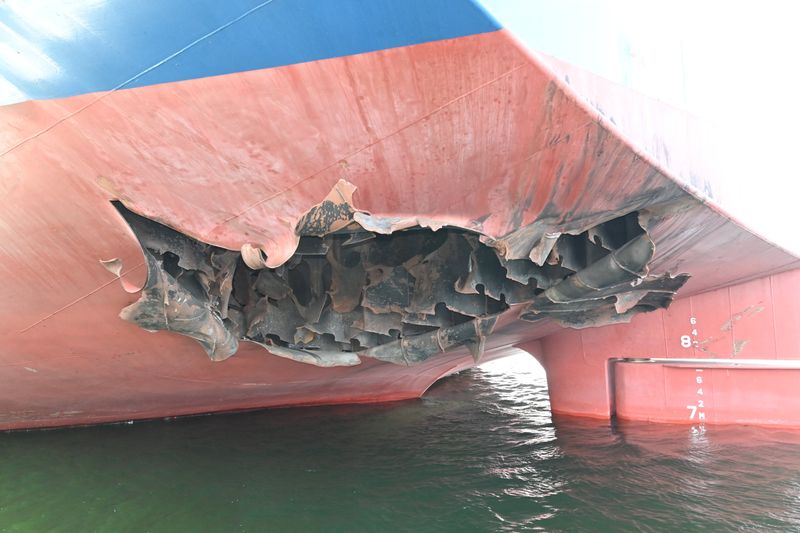
POLICY WIRE — Seoul, South Korea — The waters of the Strait of Hormuz — that ancient, notoriously narrow artery of global commerce — are once again feeling a dangerous kind of pressure. Forget subtle geopolitical maneuvering for a moment; we’re talking about outright, unsubtle finger-pointing. Because according to Yonhap News, a senior South Korean official isn’t mincing words about who’s to blame for a recent ship attack there. Their contention? Nobody but Iran, pure and simple. It’s a statement that rips away the thin veil of diplomatic ambiguity that usually drapes such incidents, putting Tehran directly in the crosshairs.
It wasn’t a vague ‘bad actors’ scenario, nor a shadowy ‘regional force.’ No, this official — unnamed, as these things often are in wire reports, but representing Seoul’s thinking — has essentially drawn a line in the sand. We don’t have specifics on the ‘attack’ itself, just the raw implication it carries: an oil tanker, perhaps, or a cargo vessel taking a hit. This isn’t just about South Korean commercial interests, mind you; it’s about the broader narrative of instability in a region where nerves are perpetually frayed, and one wrong move can easily blow up. And it reminds you just how volatile everything remains, always.
Seoul’s directness marks a sharp escalation in rhetoric. Historically, incidents in the Strait of Hormuz often draw oblique condemnations, calls for ‘all parties to exercise restraint,’ that sort of thing. This time, there’s little pretense. “When you review the evidence — the method, the location, the motive — it’s exceptionally difficult to conclude that any actor other than Iran was responsible,” a South Korean foreign ministry official, speaking on background, conveyed to Policy Wire. “We cannot stand by when international shipping is imperiled.” Strong words, certainly, especially coming from a nation that typically prefers quiet diplomacy to overt accusations. They’ve got their own energy security to worry about, like so many others.
But Tehran, predictably, isn’t having any of it. They’ve got a stock response, you know, perfected over decades of regional skirmishes — and international pressures. “Such baseless accusations are nothing more than an attempt to divert attention from the destabilizing actions of extra-regional powers,” shot back Iranian Foreign Ministry spokesperson Nasser Kanaani, whose statements were made available through official channels. “Iran has always been, — and will remain, a guarantor of stability in the Persian Gulf. These provocations serve only those who seek chaos.” A familiar refrain, that. It’s almost like a carefully choreographed dance — accusation, denial, round and round it goes, usually with oil prices jumping for a bit in between.
The geopolitical backdrop here is critical. The Strait of Hormuz is the world’s most crucial oil transit chokepoint. Roughly 20% of the world’s total petroleum consumption passes through this narrow waterway daily, according to the U.S. Energy Information Administration (EIA). Any disruption there spells trouble, not just for the immediate shipping lanes but for global energy prices and economic stability. Because if ships can’t get through, or insurers price them out of existence, then the world’s fuel tanks run dry fast.
📄 POLICY WIRE WHITEPAPER PUBLISHED: PAKISTAN'S NATIONAL SECURITY POLICY PRIORITIES
👉 READ BY CLICKING HEREAnd where does that leave everyone else? Countries across South Asia and the wider Muslim world, many already wrestling with their own economic woes, watch these developments with bated breath. Pakistan, for instance, relies heavily on crude imports passing through this very strait. Escalations directly threaten its energy supply lines — and could exacerbate inflation. Their government often walks a delicate diplomatic tightrope between its historic ties to Saudi Arabia and its complex, transactional relationship with Iran. This fresh round of finger-pointing only makes that tightrope shakier. Delhi, too, is keen to maintain strategic autonomy, and escalating regional tensions don’t help. The situation isn’t just a headache for the big powers; it’s a gut punch for regional economies.
What This Means
This isn’t just another fleeting news cycle; it’s a significant inflection point, certainly for Seoul and its usually understated approach to regional squabbles. The explicit attribution to Iran, reported by South Korea’s national news agency, puts Seoul firmly on the side of nations seeking accountability for shipping disruptions. It potentially signals a hardening stance against Tehran’s alleged maritime provocations, which could translate into stronger diplomatic pressure or even, God forbid, coordinated naval responses from international coalitions down the line. We’ve seen this playbook before.
Economically, expect an immediate, albeit perhaps temporary, upward jolt in oil futures. Shipping insurance rates for the Gulf are already exorbitant; this kind of news just pushes them further into the stratosphere. Long-term, if these kinds of accusations become more frequent, we could see a push for alternative trade routes or increased stockpiling in importing nations, all of which carry hefty price tags. Politically, the United States, often a broker — or instigator, depending on your perspective — in this arena, will undoubtedly seize on South Korea’s statement to further its own narrative against Iran. It gives them leverage, naturally. And it’s not a pretty picture for anyone trying to dial down the temperature in a part of the world that rarely seems to lack for conflict.