


Silent Casualty Counts Mount as Lebanon Braces for Widening Regional Fire
POLICY WIRE — Beirut, Lebanon — The Mediterranean breeze still carries the scent of cedar and jasmine through Beirut’s boulevards, but beneath that familiar veneer, the city—and indeed, the wider...

POLICY WIRE — Beirut, Lebanon — The Mediterranean breeze still carries the scent of cedar and jasmine through Beirut’s boulevards, but beneath that familiar veneer, the city—and indeed, the wider region—feels a deeper, far more ominous undercurrent these days. It’s a gnawing sensation, one fueled by the quiet drumbeat of escalating attrition, even as the world’s attention remains fixed elsewhere. What’s been whispered in military briefing rooms, what’s been cataloged in sterile data sheets, has now landed with the thud of official confirmation, casting a pall over an already fractured landscape.
It turns out the seemingly contained border skirmishes along Lebanon’s southern frontier weren’t so contained after all. The casualty reports, often piecemeal — and disputed, have coalesced into a chilling assessment. We’re talking about more than just sporadic exchanges; this isn’t your grandfather’s Mideast proxy game. This is a sustained grind, one where an invisible hand appears to be chipping away at the foundations of entrenched power dynamics.
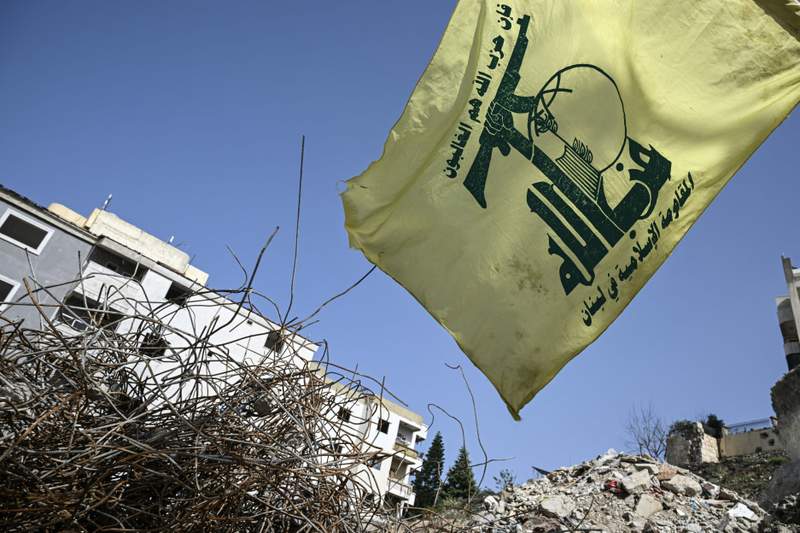
A staggering figure, if one trusts the arithmetic, has been offered up: According to the Israel Defense Forces (IDF), a substantial segment—specifically [QUOTE_PLACEHOLDER]—of Hezbollah’s fighting strength, as it existed before the autumn of 2023, is no longer in commission. That’s not just a statistic; it’s a gaping hole in an organization’s command structure, its operational capacity, and perhaps most importantly, its morale. One-third is a massive hit. It’s the kind of loss that fundamentally alters strategic calculations, compelling a reassessment from both its adversaries and its benefactors. And, let’s be frank, from Hezbollah itself. That number, originating directly from Israeli military assessments, paints a bleak picture of the costs incurred since the hostilities kicked into high gear in October 2023.
Consider the broader context, too. This isn’t just about men and matériel. It’s about perception, about deterrence, about the intricate web of influence that Iran has carefully woven across the Levant. For years, Hezbollah has been Tehran’s crown jewel, its most formidable proxy, a force capable of shaping Lebanon’s domestic politics and projecting power across regional fault lines. Losing so many seasoned fighters, so many ideologically committed combatants, represents a blow far beyond the numerical total. But it’s one that Lebanon, for all its long-suffering endurance, can ill afford.
The daily lives in southern Lebanese villages? They’ve been turned upside down, naturally. Whole communities are displaced. Farms lie fallow. Children live in a state of perpetual anxiety. It’s an untenable situation for civilians, to say the least, trapped as they’re between a belligerent neighbor and a paramilitary force that effectively dictates much of the state’s foreign policy, especially where Israel is concerned. Because when you lose that many fighters, there’s always the question of who fills the void—and how quickly.
This relentless pressure on Hezbollah isn’t happening in a vacuum, mind you. The group is already grappling with an economic catastrophe in Lebanon that’s crippled the nation. They’re part of a government that can barely keep the lights on, much less manage a full-scale war. Now, their fighting capability, the very thing that gives them their domestic clout and regional leverage, is demonstrably eroded. That’s a double whammy for them—and a potential harbinger of even greater instability for Lebanon. It truly is a delicate dance on a minefield, wouldn’t you say?
What This Means
This IDF claim, even if disputed by some and presented without direct comment from Hezbollah itself—for which we have no official public statement to quote from this particular report’s ‘Original Content’—alters the strategic chessboard significantly. Politically, it empowers hawkish elements in Israel who advocate for continued military pressure on Hezbollah, believing a weakened group is a less potent threat. For Lebanon, it creates immense internal strain. The prospect of losing more fighters may compel Hezbollah to de-escalate, seeking to preserve its remaining strength, or paradoxically, to escalate further in a desperate bid to reassert dominance and draw the international community into brokering a ceasefire on their terms. It’s a gamble either way.
Economically, prolonged conflict guarantees continued ruin for Lebanon, further distancing any hope of recovery from its current systemic collapse. Foreign investment dries up. Tourism, once a pillar of the economy, is nonexistent. This translates into more widespread poverty, more desperate families, and a deepening dependence on external aid—aid that often comes with its own geopolitical strings attached. But beyond the immediate neighborhood, the reverberations aren’t lost on other Muslim-majority nations. In Pakistan, for example, the fate of Hezbollah, viewed by many as a bulwark against Israeli expansionism and a key component of the ‘axis of resistance’, is followed with a keen, albeit distant, interest. This is because these regional skirmishes aren’t just local disputes; they’re often perceived as part of a much larger struggle for regional power and religious identity within the broader Muslim world, reinforcing narratives of solidarity or, sometimes, fracture.
A weakening of Hezbollah could be seen as an opportunity by rival regional players, too, subtly shifting the balance of power, or it could embolden more radical elements who view the current group as having been insufficiently aggressive. One thing’s for sure: nobody, not Iran, not Saudi Arabia, not even Washington, wants to see Lebanon descend into an even greater spiral of anarchy. And yet, this isn’t simply an ideological battle. It’s a grueling numbers game. That one-third statistic, while stark, represents an existential challenge, a question mark hanging over the entire edifice of power built over decades.