


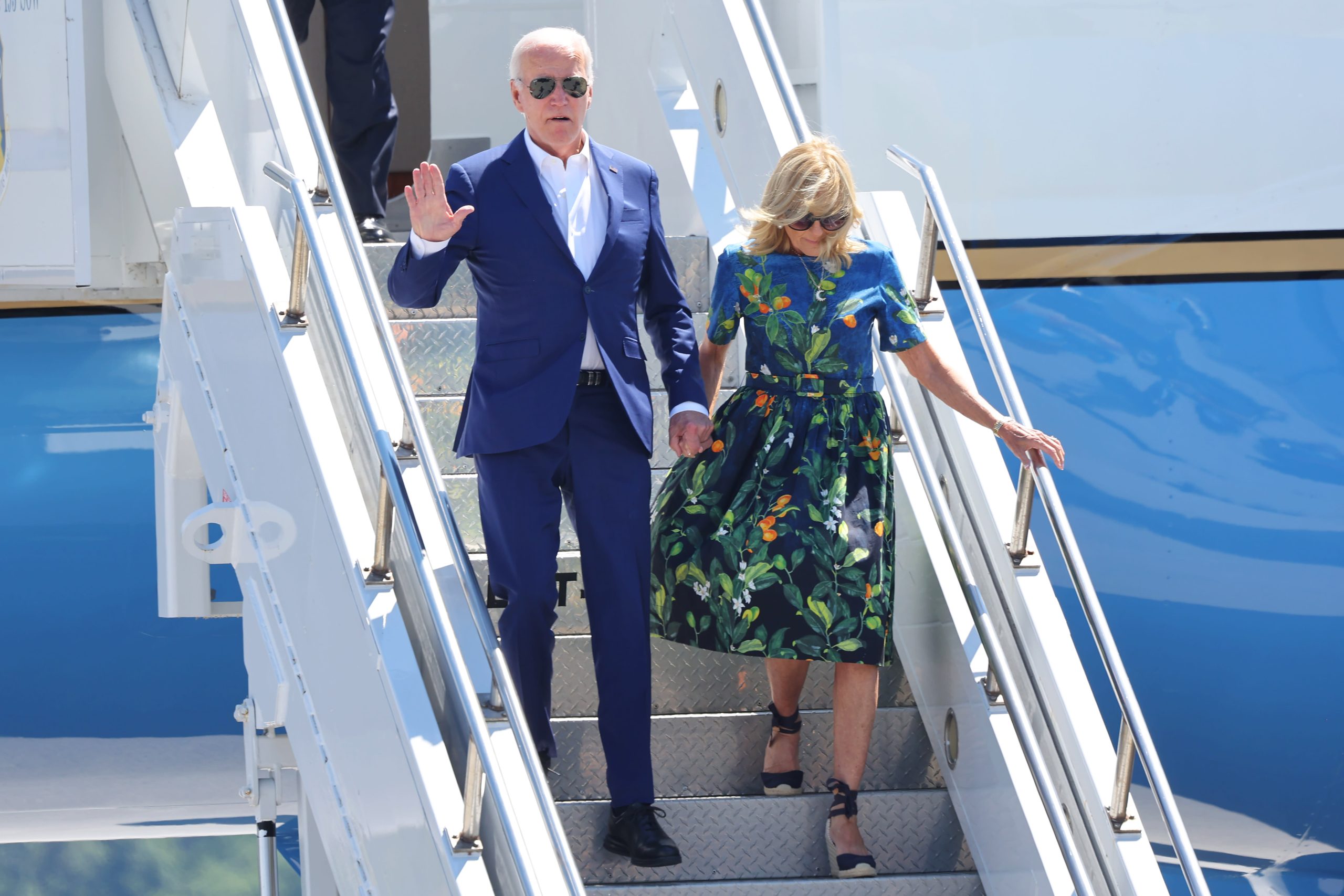
The Biden Blues: Democrats Grumble Over a Lingering Political Headache
POLICY WIRE — Washington D.C. — It’s a sentiment whispered in hushed tones down K Street corridors, over late-night Capitol Hill drinks, and behind closed doors at campaign headquarters: a...

POLICY WIRE — Washington D.C. — It’s a sentiment whispered in hushed tones down K Street corridors, over late-night Capitol Hill drinks, and behind closed doors at campaign headquarters: a weary, exasperated sigh. Not for an upcoming policy debate or a tough re-election bid, but for the one family—the first family, no less—whose protracted entanglements seem determined to overstay their welcome. Forget the legislative battles or the upcoming economic data; for a significant chunk of the Democratic apparatus, the persistent Biden family narrative has become a wearying background hum they just can’t seem to silence. It’s like a perpetually misfiring exhaust pipe—annoying, persistent, and slowly but surely, it’s draining your gas tank.
Many a party stalwart and aspiring operative can’t help but ponder aloud, with a palpable sense of fatigue, the very question that now gives a Policy Wire column its name: [QUOTE_PLACEHOLDER]. They’re talking, of course, about the seemingly endless cascade of scrutiny—judicial, congressional, and public—that clings stubbornly to President Joe Biden’s family, especially his son Hunter. For a party that prided itself on turning the page, on projecting stability and a return to conventional governance after a tumultuous predecessor, this sustained focus feels like a cruel jest. They want to discuss infrastructure, climate initiatives, or perhaps how the opposition seems to have misplaced their collective legislative agenda. But the news cycle, as it often does, has other plans.
It isn’t a rebellion, not overtly anyway. You won’t find many senators publicly castigating the Commander-in-Chief over these family matters, not on C-SPAN. But the quiet grumbling? Oh, it’s there. Senior staffers confess—off the record, naturally—that these ongoing storylines are an albatross, weighing down every carefully crafted message, providing perpetual ammunition for political adversaries. Every press conference becomes a tightrope walk, every prime-time appearance an invitation for new questions on old accusations. It doesn’t matter if you’re talking about tax credits or international diplomacy; somehow, somewhere, a journalist’s hand will shoot up, veering back to family finances. And then the exasperation truly kicks in.
Consider the timing, for instance. We’re hurtling towards a presidential election. Republicans are seizing every available opportunity to tie President Biden to his son’s controversies, hoping to erode public trust. This isn’t just about Hunter’s specific legal battles; it’s about the broader narrative of integrity, influence-peddling, and perceived impropriety that opponents are working tirelessly to cement in the minds of swing voters. It’s a textbook opposition tactic, one designed to stick. And, candidly, Democrats are finding it profoundly difficult to scrape off.
Some of this weariness might stem from the uncomfortable echo of historical precedent, too. Washington’s political ecosystem is accustomed to family drama, sure. But the current intensity feels different, sustained. It’s a bit like watching a slow-motion car crash that never quite reaches its final, explosive conclusion, just keeps grinding and grinding. They just wish it would, you know, resolve itself. They want a clear, concise off-ramp, a narrative end. It’s becoming less about the facts — and more about the incessant volume of the conversation itself.
This kind of domestic distraction, while consuming Washington, rarely stays put. Its ripples are felt globally, affecting how America’s allies—and rivals—perceive the stability and coherence of its leadership. For instance, in complex, politically charged regions like South Asia, where delicate power balances are maintained through meticulous diplomatic messaging, any perception of White House instability or internal squabbles can be problematic. Countries like Pakistan, which frequently navigate geopolitical tensions involving powerful neighbors and internal extremist threats, rely on a steady, predictable U.S. foreign policy stance. Uncertainty stemming from domestic political friction can embolden regional actors or cause hesitation in strategic partnerships. It complicates the optics of leadership on a world stage where confidence matters.
And these optics are already taking a hit. According to a 2023 Gallup poll, approval of the job Congress is doing hovered around a dismal 13 percent, indicating widespread disillusionment with American political institutions. When the spotlight persistently shines on family matters rather than substantive policy debates, that number isn’t likely to improve. It only further fuels the cynicism.
But the Democrats’ options are sparse. A president can’t simply disown his son—nor should he, many would argue, for human reasons. But the political costs are real. They’re stuck defending, deflecting, and generally attempting to steer the conversation elsewhere, often to little avail. They can’t win by simply ignoring it either, because that strategy hasn’t exactly worked wonders up to this point. They’ve found themselves in a unique purgatory, unable to shake free from a narrative that many feel doesn’t serve their agenda, their vision, or frankly, the nation’s priorities.
It leaves a campaign, — and a party, in a tricky spot, doesn’t it? Needing to look forward while constantly being pulled back by specters of past alleged dealings, past mistakes. There’s a quiet desperation, a palpable hope for an escape hatch, a clean break. Until then, the sighs will continue.
What This Means
The Democratic Party’s covert exasperation with the perpetual Biden family sagas signals more than just an internal annoyance; it represents a significant, yet rarely acknowledged, drag on their 2024 electoral strategy. Politically, the constant drumbeat of scandal—or perceived scandal—provides a ready-made narrative for Republican attack ads, irrespective of their factual merits. It forces the party to play defense, consuming valuable time, resources, and media oxygen that could otherwise be dedicated to highlighting policy achievements or defining the contrast with their opponents. It also fosters a sense of political fatigue among swing voters, who may view the administration as perpetually embattled rather than capably leading. This kind of persistent distraction, especially regarding ethical perceptions, tends to stick in the public consciousness more than legislative triumphs, directly impacting the brutal economics of political campaigns.
Economically, the indirect implications are equally troubling. A leadership perceived as mired in personal controversy, however distant from direct policy-making, can impact investor confidence or the perceived stability of government, though this effect is often subtle and long-term rather than immediate. For global partners, especially in volatile regions, such domestic tumult risks signaling a diversion of focus from international affairs, potentially causing uncertainty in foreign policy initiatives or strategic alliances. It can affect everything from trade negotiations to how seriously America’s commitment to aid or security agreements is taken. This constant political noise diminishes America’s soft power, making the nation’s policy objectives harder to advance, not just in Islamabad or New Delhi, but across the world where consistent leadership from Washington is often considered foundational.