


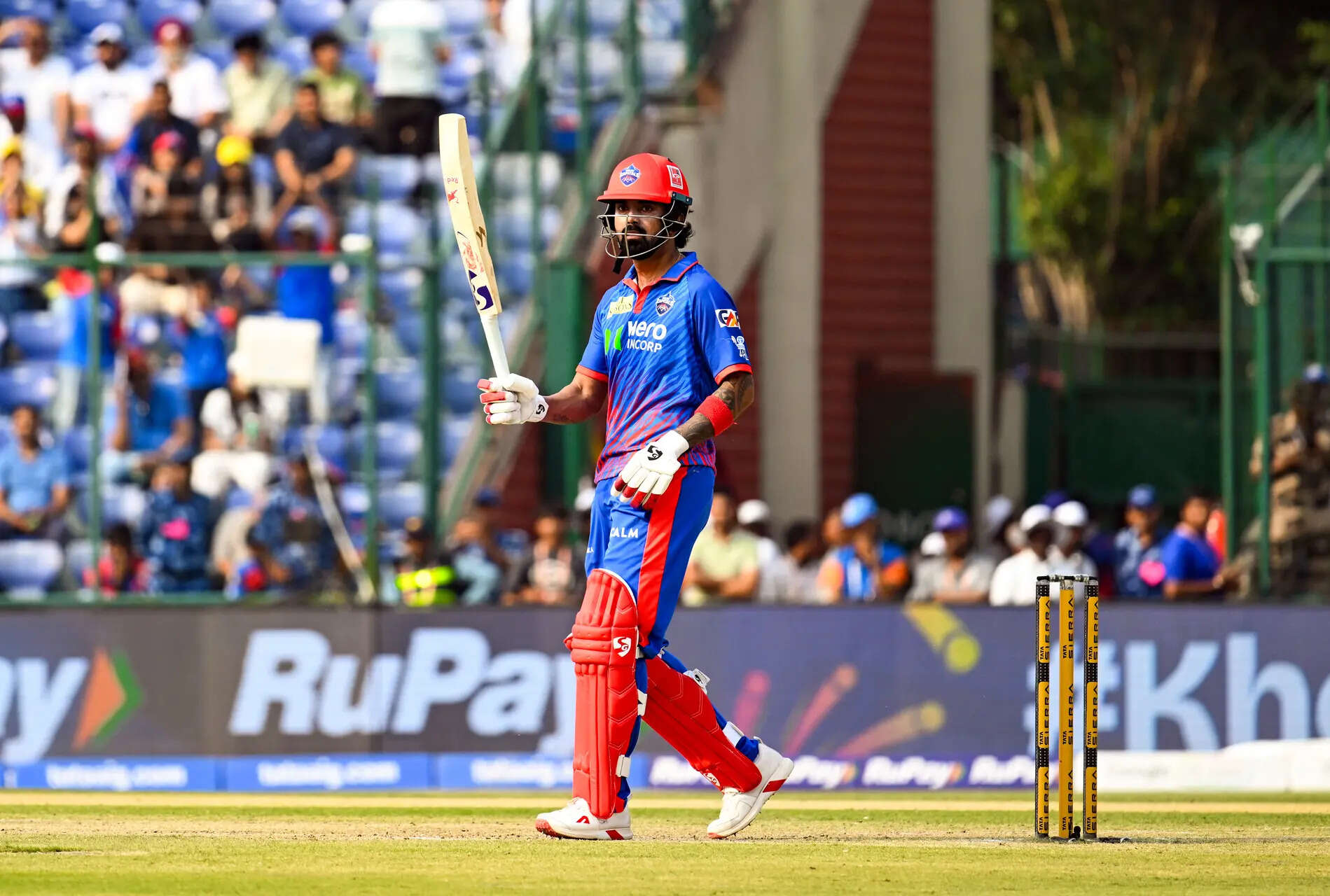
KL Rahul’s Century: The Cost of Second Chances in Cricket’s High-Stakes Arena
POLICY WIRE — New Delhi, India — It wasn’t the searing drives or audacious scoops that truly defined KL Rahul’s monumental performance against the Punjab Kings this week; it was, rather,...

POLICY WIRE — New Delhi, India — It wasn’t the searing drives or audacious scoops that truly defined KL Rahul’s monumental performance against the Punjab Kings this week; it was, rather, the stark, brutal arithmetic of two dropped catches. For any franchise, indeed any enterprise with significant capital invested, such lapses don’t merely represent missed opportunities—they constitute quantifiable economic hemorrhaging. On a balmy evening, Punjab Kings learned this lesson in the most emphatic, wallet-wrenching fashion possible.
And so, what began as a routine T20 encounter transmuted into a masterclass in redemption, a testament to a player seizing every bestowed lifeline. Rahul, donning the Delhi Capitals’ colors, didn’t just score a century; he hammered one, reaching the triple-figure mark in a mere 47 deliveries. This wasn’t just a batting display; it was a psychological dismantling of an opponent—a profound statement on the unforgiving nature of elite sport, where second chances are often gold-plated.
The tale of those blunders is almost Homeric in its tragedy for Punjab. First, a relatively straightforward chance went begging when Rahul was a nascent 12 runs. Shashank Singh, perhaps distracted by the sheer velocity of the ball, spilled it. Later, at a pivotal 51, Vijaykumar Vyshak — off his own bowling, no less — fumbled a return catch. These weren’t mere fielding errors; they were strategic miscalculations, costing Punjab dearly in runs and, ultimately, perhaps even in crucial league points. One can almost hear the accountants groaning.
But Rahul, a man often criticized for temperament, transformed those reprieves into a relentless onslaught. He didn’t just capitalize; he exploited. Partnering with the equally resurgent Nitish Rana, who contributed a forceful 72 not out, the duo forged an unbroken 185-run stand. This partnership, incidentally, isn’t just an impressive statistic; it’s now etched into the IPL annals as the highest for any wicket between Delhi Capitals and Punjab Kings, eclipsing a 146-run stand from 2011, according to IPL historical data. That’s a shift in the historical ledger, isn’t it?
Still, Rahul wasn’t content with team records. His sixth IPL century placed him squarely alongside West Indies titan Chris Gayle, moving him closer to the apex held by Virat Kohli and Jos Buttler. And in a league increasingly defined by player mobility and mercenary talent, Rahul etched a truly unique record: he’s now scored multiple IPL centuries for three distinct franchises—Punjab Kings, Lucknow Super Giants, and now Delhi Capitals. No other player, in the tournament’s glittering history, has managed such peripatetic brilliance. It’s quite the resume, you’d have to admit.
“Rahul’s resilience is simply unmatched,” opined Anil Sharma, CEO of Delhi Capitals, his voice undoubtedly buoyed by the evening’s fortunes. “To seize those opportunities, to transform potential failure into such a dominant display—it speaks volumes about his character and our strategic investment in his talent.”
Conversely, the air in the Punjab Kings’ camp must’ve been thick with recrimination. “We know the stakes,” lamented Ness Wadia, co-owner of Punjab Kings, in a terse post-match statement. “Such errors are magnified on this stage. We don’t just lose a game; we lose momentum, we lose confidence, and frankly, we pay a heavy price for any lapse in concentration. This league leaves no room for generosity.”
Behind the headlines of sixes and fours, this performance offers a granular look into the mechanics of modern cricket, particularly in South Asia. The IPL, an economic juggernaut worth billions, isn’t merely a sporting contest; it’s a colossal talent market, a brand battleground, and a cultural touchstone across the subcontinent. Performances like Rahul’s—born from individual brilliance yet magnified by an opponent’s operational failings—reverberate far beyond the stadium’s floodlit confines. From Karachi to Kolkata, these individual sagas captivate millions, influencing everything from national team selections to burgeoning endorsement deals. The success of this model even provides a blueprint, or at least a tantalizing aspiration, for cricket in neighboring nations, as evidenced by conversations surrounding Lahore’s Grand Stand and Pakistan’s own efforts to elevate its domestic leagues.
What This Means
At its core, KL Rahul’s record-breaking century, punctuated by Punjab’s fielding frailties, provides a stark lesson in the brutal calculus of modern sports economics. Each dropped catch in the IPL isn’t just a missed chance at a wicket; it’s a direct capital drain. A batsman of Rahul’s caliber, once given a reprieve, can inflate an opposition’s score by dozens of runs, directly impacting net run rate—a crucial tie-breaker—and thus, playoff chances. These outcomes translate directly into millions in revenue, from gate receipts and broadcasting deals to sponsorship bonuses. Franchises spend fortunes—often upwards of $10 million for a top player—and demand a near-flawless return on investment. The psychological cost for the fielding team is equally tangible, eroding morale and confidence, which can cascade into subsequent performances. For players like Rahul, these innings solidify their market value, ensuring lucrative contracts in an increasingly cutthroat environment where talent, ruthlessness, and a penchant for seizing opportunities are the most prized commodities.