

Kellogg Revives Cereal Box Toy Tradition Amid Digital Overload and Market Shifts
POLICY WIRE — New York, USA — For a generation weaned on touchscreens and endless digital streams, the simple act of digging through a box of breakfast cereal for a hidden plastic treasure might feel...

POLICY WIRE — New York, USA — For a generation weaned on touchscreens and endless digital streams, the simple act of digging through a box of breakfast cereal for a hidden plastic treasure might feel positively antediluvian, even archaic. Yet, WK Kellogg Co., that venerable food titan, is staking its reputation on precisely that analog appeal, announcing the return of toys to select cereal boxes after more than a decade’s absence.
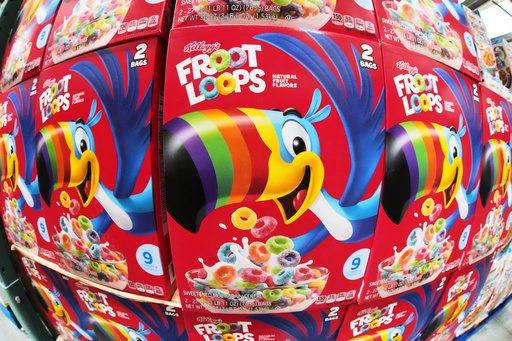
It’s a move that feels less like a mere marketing gimmick and more akin to a cultural pronouncement, a curious counter-current, a tiny analog island in a digitized ocean. Starting this week, consumers will once again find small plastic characters from Disney and Pixar’s upcoming Toy Story 5 nestled within special edition boxes of Frosted Flakes, Froot Loops, AppleJacks, and Corn Pops—you know the ones—reigniting a tradition many thought permanently relegated to childhood memories.
And yet, few (save perhaps the most optimistic marketing gurus) could’ve predicted such a comeback. Back in the early 2000s, manufacturers quietly jettisoned these once-ubiquitous incentives. The reasons were, let’s be honest, multifarious—a bewildering stew of corporate belt-tightening and escalating public apprehensions, particularly concerning those tiny, ingestible parts—but they largely converged on the twin pillars of brutal cost efficiency in a cutthroat market and nagging safety worries, especially choking hazards. One notable incident in 2004 involved a public outcry over Kellogg’s inclusion of Spider-Man watches containing mercury batteries, a controversy that cast a long, rather menacing shadow over the future of in-box premiums.
So, what prompts this seemingly backward step in 2026, really? A deeper look suggests a cunning conjuring trick, a strategic play leveraging nostalgia like a well-worn comfort blanket against the backdrop of pervasive screen time. This isn’t just about selling cereal; it’s about selling an experience. A memory. Something more, don’t you think?
“Bringing toys back inside the box reintroduces that sense of discovery through a simple, screen-free moment of play that parents can now share with their own kids,” explained Laura Newman, Vice President of Brand Marketing at Kellogg, in a recent statement. “It’s about fostering imagination in an era where digital distraction has become the default. We believe there’s a real hunger for tangible, interactive experiences that don’t involve a glowing screen.”
Indeed there’s. A 2023 investigation by Common Sense Media? Revealed that children aged 8-12 spend an average of 4 hours — and 44 minutes on screen media daily. That’s a hefty chunk of time, a veritable digital black hole, — and it underscores a burgeoning market for… well, anything that isn’t a glowing screen, frankly. Something tangible, for once.
But the calculus isn’t purely nostalgic, no. The choice of Toy Story 5 as the launching pad (a franchise, mind you, that pretty much *is* the meta-narrative of toys in a digital age) is particularly astute. The franchise itself explores the very essence of toys in a modern, tech-driven landscape, creating a meta-narrative that resonates deeply with the marketing push. It’s a neat, almost poetic alignment, if you think about it.
Across the globe, from bustling markets in Lahore to quiet suburban homes in London, the debate around childhood and technology simmers fiercely. In countries like Pakistan and other parts of South Asia, where smartphone penetration continues to surge, parents wrestle with similar concerns about digital addiction and the erosion of traditional play. Brands, recognizing this universal anxiety, often tweak global strategies to local contexts.
However, the reanimation of plastic toys also reignites dormant environmental concerns, doesn’t it? The original phase-out partially stemmed from a global awakening to plastic waste. Will this revival be a net positive for family engagement, or simply add to a fresh tidal wave of non-biodegradable refuse, a plastic albatross around the planet’s neck? It’s a real pickle, frankly.
“While the sentiment is understandable, we can’t ignore the environmental footprint,” commented Dr. Sana Karim, a prominent environmental policy expert based in Islamabad, during a recent virtual seminar on consumerism. “Every piece of plastic, however small, has a life cycle far outlasting its play value. For companies operating globally, especially in regions already battling severe plastic pollution, responsible sourcing and eventual disposability must be paramount. We’re talking about billions of these small items, potentially.”
What This Means
The return of cereal box toys isn’t just a quirky anecdote; no, it ushers in a compelling pivot in consumer psychology and corporate strategy. Economically, it represents a calculated gamble on ‘retro-innovation,’ betting that the pull of nostalgia and a desire for ‘unplugged’ moments can drive sales in a dog-eat-dog food sector. It’s also an acknowledgment that the market isn’t just about convenience and price anymore; it’s increasingly about experience and emotional connection. A big change, for sure.
Politically—or rather, from a stringent policy perspective—it could rekindle discussions around consumer safety regulations for children’s products, especially as these pint-sized items re-enter mainstream circulation. Governments might face renewed pressure to ensure toy safety standards are not only robust but also consistently applied to all consumer goods, regardless of their diminutive size or perceived innocence. And environmental advocacy groups, rest assured, they’ll undoubtedly keep a close watch on the volume and type of plastic used, potentially pushing for more sustainable, biodegradable options. You can bet on that.
Ultimately, this whole kerfuffle—this bringing back of plastic bits to cereal boxes, this seemingly retrograde marketing maneuver—it just spotlights the utterly cyclical, often perplexing, nature of consumer culture, where old fads, once declared dead and buried, always seem to resurface, gussied up and reimagined for whatever bizarre contemporary sensibilities currently hold sway. This sort of billion-dollar battle for consumer attention is rarely straightforward. Never is, really.
“This isn’t just about a toy; it’s about reclaiming a piece of a simpler past—a past, one might recall, that also had its fair share of problems—in a complex present,” mused Michael Chen, a leading brand strategist at Aperture Marketing Group. “The real test will be whether this initial wave of nostalgia can translate into enduring brand fealty, or if it’s merely an ephemeral trifle. But make no mistake, other brands are watching. If Kellogg proves this works, we’re likely to see a wave of similar ‘retro-innovations’ across various consumer sectors, all aiming to capture that will-o’-the-wisp, screen-free magic.”