

Iran Prevails, Israel Rethinks: The Strategic Reality of the 12-Day War
The short but fierce Iran–Israel war in June 2025, now also referred to as the “12-Day War,” has changed long-held presumptions on power, defense, and political intention in the...

The short but fierce Iran–Israel war in June 2025, now also referred to as the “12-Day War,” has changed long-held presumptions on power, defense, and political intention in the Middle East. It started with an overwhelming Israeli aerial bombing of Iranian nuclear and missile facilities before expanding into a brutal mutual exchange of ballistic missiles and drone warfare. It concluded in a ceasefire that is now seen as a political and psychological victory for Tehran. Even when Israel enjoyed an initial military advantage, Iran’s power to withstand, respond, and negotiate proved the limits of military power when up against strategic resistance.
Israel’s campaign from the start was audacious and seemed to target regime destabilization. Designated Operation Rising Lion, the attack involved more than 200 planes striking Iranian military facilities, nuclear research centers, and long-range missile sites. Israeli security officials candidly discussed incapacitating the Islamic Revolutionary Guard Corps and compelling Tehran to abandon its nuclear dreams. Sabotage missions within Iran, claimed to be led by Mossad agents, aimed at air defenses and important personnel. The extent and tempo of the attack indicated Tel Aviv’s desire to change the balance of power and possibly advance internal opposition in Iran.
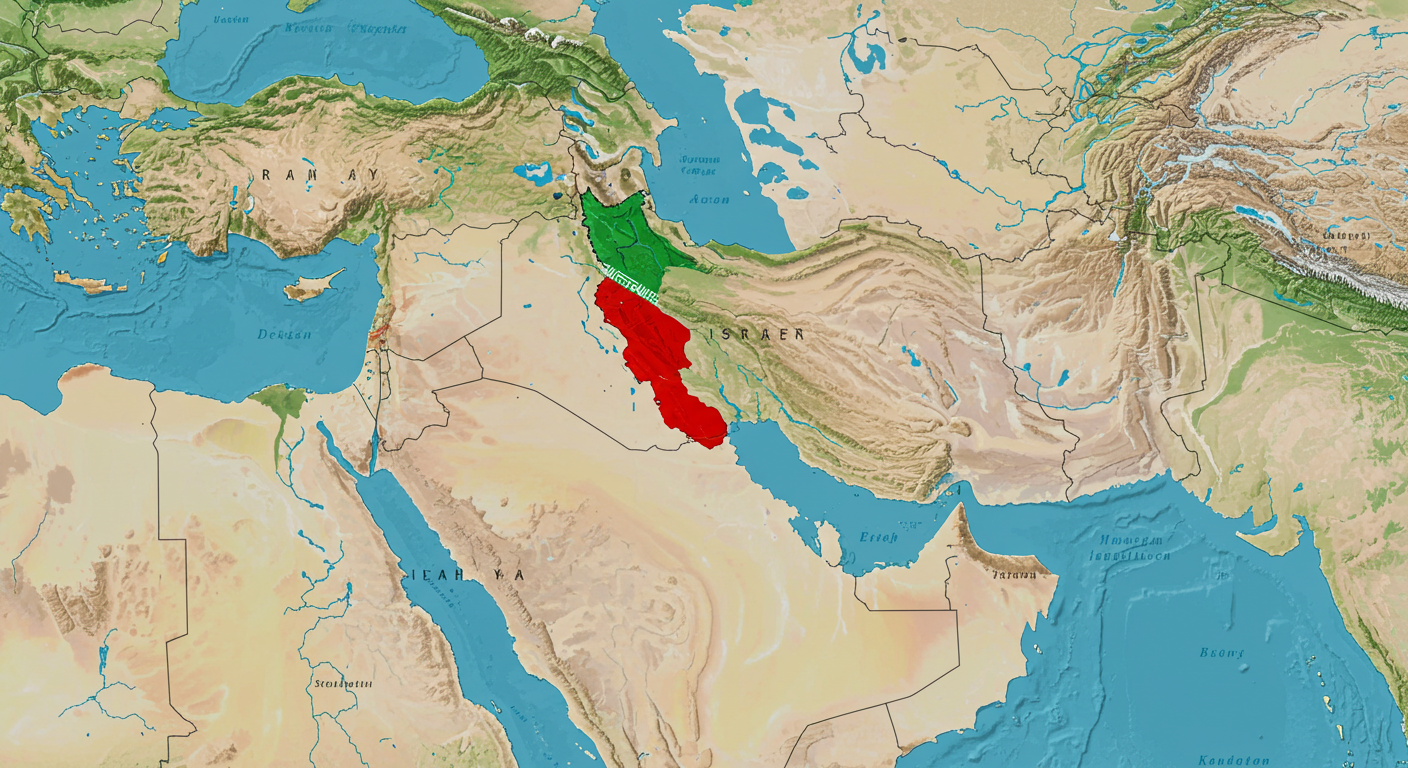
Iranian countermeasures were prompt and strategically managed. Over 150 ballistic missiles and 100 drones were fired at Israel on June 13, as reported by both Iranian and Western media outlets. The subsequent days witnessed an onslaught of deep penetrating strikes. Iranian missiles covered a distance of more than 1,500 kilometers and succeeded in penetrating Israel’s much-hyped multi-layered air defense system, comprising the Iron Dome, David’s Sling, and Arrow systems. Although some of projectiles were deflected, the number that were not had raised serious questions regarding the capacity of Israeli defense systems under prolonged saturation fire.
Israel had at least 24 killed and more than 2,400 wounded. Iranian losses were even worse, with Reuters verifying close to 1,000 dead, many of them military personnel, nuclear scientists, and civilians caught in retaliatory air raids. But even at such a steep price, Iran came out with its political and military chain of command unbroken. Its capacity to retaliate massively, and to bargain out of strength, cut across Israel’s core war goal: destabilizing the Islamic Republic or inducing a regime meltdown. The result was most definitely a political and psychological victory for Iran.
The truce, announced late on June 23, had been brokered by U.S. President Donald Trump with backing from Qatar. Under the agreement, as reported by the media, the deal followed furious behind-the-scenes negotiations and was preceded by a final flurry of missile exchanges. The accord, though welcomed by weary civilian populations, failed to represent any shift in underlying positions. Iran had committed to suspending strikes if Israel did likewise. No concessions were made by Tehran on its missile program or nuclear sites. The agreement halted the war but settled no part of the strategic disagreement.
One of the most important consequences of the war is the weakening of Israel’s image as invincible. The Israeli defense community has long cultivated a history of unchallenged air defense superiority and regional hegemony. What transpired in June 2025 severely tested that image. Iran’s capability to hit deep inside Israeli territory from a distance of more than 1,500 kilometers, again and again and with a level of accuracy, has changed the calculus of the region. If the supposedly most fortified state in the region, Israel, can be breached, then other players have to rethink their own ideas about deterrence and response limits.
In Tehran, history is already being framed as a victory of resistance. The leadership has cast the war in a defensive success and Iranian strategic depth as a proof. Iran has arguably consolidated its position at home and in the region by surviving the initial assault, striking back effectively, and coming out of negotiations with no significant concessions. This could encourage Tehran to pursue its influence agenda in the region and advance its military modernization program with more assurance.
📄 POLICY WIRE WHITEPAPER PUBLISHED: PAKISTAN'S NATIONAL SECURITY POLICY PRIORITIES
👉 READ BY CLICKING HEREFor Israel, the war will trigger profound strategic soul-searching. The government realized some tactical goals, hitting Iranian infrastructure and causing casualties, but did not modify Tehran’s strategic position or induce domestic turmoil. The war revealed weaknesses, both in defense systems and in strategic thinking. The premise that overwhelming force would induce capitulation was erroneous. In the future, Israeli policymakers will have to rethink not just their defense strategy but also their overall policy in the region.
The United States, as a principal go-between, was instrumental in stopping the war. President Trump’s face-to-face talks with both Israeli Prime Minister Benjamin Netanyahu and Iranian Supreme Leader Ali Khamenei played a key part in defusing the crisis. But Washington still has a long way to go. The region is still unstable and the ceasefire precarious. Should the root causes of conflict remain unresolved, the chances of the hostilities breaking out again are strong.
Strategically, the 12-Day War did not result in regime change in Iran. It did not deprive Iran of its missile capability or deter it from going after its regional objectives. But it did signal a turning point. Iran did something for the first time: it showed that it could attack Israeli soil with long-range weapons, withstand retaliation, and still be able to negotiate. Israel, although causing great harm, could not bully Tehran into submission. This new balance, one that resulted not from diplomacy but from the mutual limits of power, will probably shape Middle Eastern geopolitics in the coming months.
What once was a daring Israeli campaign to reorient the regional equilibrium has turned into an uncomfortable standoff. Iran’s capacity for survival and retaliation has rewritten rules on deterrence and escalation. The fantasy of total military dominance has been replaced by a more realistic one: in a theater of intersecting conflicts, no party can assert complete hegemony. Israel now has to navigate a world where power is not merely a matter of aircraft and missiles, but also patience, endurance, and the ability to evolve with an era of diplomacy.
Author