


Prodigy’s Path: Examining the High-Stakes Calculus of Youth Sports Dynasties
POLICY WIRE — Washington D.C. — You’ve got to admire the hustle. But when an announcement about a 14-year-old’s high school choice lands with the gravity of a corporate merger, it’s worth a...

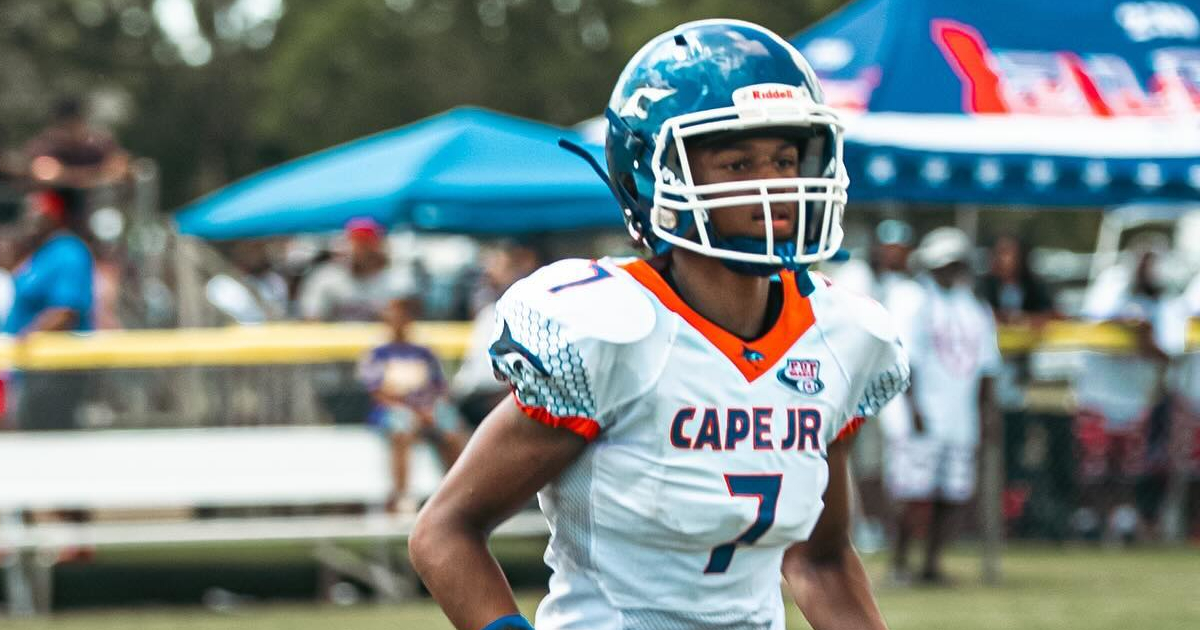
POLICY WIRE — Washington D.C. — You’ve got to admire the hustle. But when an announcement about a 14-year-old’s high school choice lands with the gravity of a corporate merger, it’s worth a second look, isn’t it? Young Noel Devine Jr.—yes, that Devine, progeny of West Virginia Mountaineers lore—has publicly declared his athletic allegiance, choosing Cape Coral (Fla.) High School for his freshman debut in the 2026-27 season. He’s years from graduating, yet the murmurs, offers, — and digital ink are already flying.
It’s a micro-event, sure, but it unpacks a macro trend: the accelerated professionalization of youth sports, a veritable proving ground where futures are seemingly cast in carbon fiber long before college entrance exams loom. Young Devine, a wide receiver slated for the Class of 2030, isn’t just picking a school; he’s signing onto a pipeline. And frankly, the pressure, the sheer commercial energy already surrounding this kid, it’s intense. It feels almost like a draft pick, but without the guaranteed millions (yet).
He’s already bagged collegiate offers from Miami, USF, — and even his father’s alma mater, West Virginia. This isn’t just about a kid playing ball; it’s about a commodity, an investment, a symbol. And the machine? It’s already purring. Cape Coral’s Seahawks, the beneficiaries of this generational talent, have seen an upswing in fortunes, logging 18 wins over their last two seasons. They haven’t had this kind of juice since 2009-10. Young Devine Jr. won’t be arriving in a vacuum, either. He’s joining a growing cadre of recognized talent, including 2028 defensive end prospect Maikol Armas and a couple of other rising 2027 standouts. It’s a full-on talent aggregation play, a strategy we often see in Silicon Valley, not usually on high school football fields.
His father, Noel Devine Sr., lived this very playbook. A former star at North Fort Myers High School from 2003 to 2006, the elder Devine practically rewrote the record books there, galloping for over 6,000 yards and an astonishing 78 touchdowns. He was, to no one’s surprise, an U.S. Army All-American Bowl selection, touted by scouts, and a truly coveted high school recruit. His subsequent career at West Virginia was equally prolific, carving out over 4,300 rushing yards — and 29 touchdowns. The expectations hanging over young Devine? They’re heavy. Think of it: inheriting a legacy in such a public, unforgiving arena. That’s a unique burden, don’t you think?
“We’ve got to remember these are still kids,” observed Dr. Evelyn Reed, a leading academic in sports sociology at Georgetown University. “The entire apparatus around elite youth athletics, while offering opportunities, can inadvertently build enormous psychological loads. We need systems, truly, that prioritize their holistic development, not just their on-field output.”
But the market dictates. And this market, the American youth sports market, was valued at a staggering $19.2 billion in 2023, according to a recent report by WinterGreen Research. It’s an economic behemoth, fueled by parental aspiration, collegiate scholarships, and the enduring myth of ‘going pro.’
Even across continents, this ambition resonates. You look at societies, say, in Pakistan or parts of the Muslim world, and the collective fervor for a cricket prodigy, a young chess grandmaster, or a tech innovator isn’t so dissimilar. The platforms might vary—it’s not always a structured high school sports league—but the dreams of upward mobility, the pride a community places in its exceptional youth, that’s a universal language. It speaks to deeper societal needs for heroes, for success narratives, — and for avenues to break out of circumstance. Just think about the sheer dedication families show, often making extraordinary sacrifices, to train their child for years in, say, traditional wrestling or calligraphy, hoping for a national breakthrough. The methods diverge, but the human yearning for talent recognized — and rewarded? That stays put.
It’s easy to get cynical, though, about the industrial complex surrounding a boy who hasn’t even hit his growth spurt. But it’s not just an American phenomenon, this intense focus on early talent. Other nations invest heavily too—in soccer academies, gymnastic programs, you name it. The difference, perhaps, is the scale — and commercial visibility of it here. Because what we’re really watching isn’t just a boy pick a school, it’s an ecosystem in motion, a high-stakes lottery where a fortunate few might truly strike gold, and countless others learn resilience (or simply move on).
Mayor Isabella Rodriguez of Fort Myers, familiar with the elder Devine’s storied local career, captured this dual perspective rather succinctly: “These young athletes bring incredible energy and attention to our community. We cheer for them, no doubt. But I also expect that we’re investing in responsible futures, making sure every young person, whether they go pro or not, gets the education and support they need to succeed in life. A scholarship’s great, but a complete human being? That’s better.” She’s not wrong. It’s an astute, if subtle, pushback against the current hyper-focus.
What This Means
This saga isn’t just locker-room fodder. Politically, the narrative of youth sports, particularly for prospects like Devine Jr., increasingly intersects with debates around educational funding, equity in athletic programs, and the blurring lines of amateurism—even before high school. When a child can garner college offers before reaching double digits in age, it forces conversations about name, image, and likeness (NIL) legislation at the high school level, which several states are already grappling with. Economically, the early identification and cultivation of elite athletic talent represents a significant informal investment by families, communities, and commercial enterprises. It’s a substantial, largely unregulated sector of the economy. The pressures here aren’t just personal; they’re systemic, influencing school policies, booster club operations, and even local land-use planning for sports facilities. The question isn’t whether talent like this gets nurtured, but at what cost, and with what safeguards in place for the kids involved? It’s a dynamic, complicated equation.