


IOC’s Olympic Gambit: Pushing Moscow’s Athletes Back onto the World Stage
POLICY WIRE — Lausanne, Switzerland — The Olympics, bless its heart, always pretends to stand above the messy scrum of global politics. But it rarely does, does it? Behind the pageantry and...

POLICY WIRE — Lausanne, Switzerland — The Olympics, bless its heart, always pretends to stand above the messy scrum of global politics. But it rarely does, does it? Behind the pageantry and platitudes about unity, there’s always a quiet hum of horse-trading, strategic concessions, and plain old realpolitik. So when the International Olympic Committee decided to dial back restrictions on Russian athletes, it wasn’t just a sporting announcement. Oh no, it was a diplomatic maneuver—a careful nudge back toward a precarious sense of global normalcy.
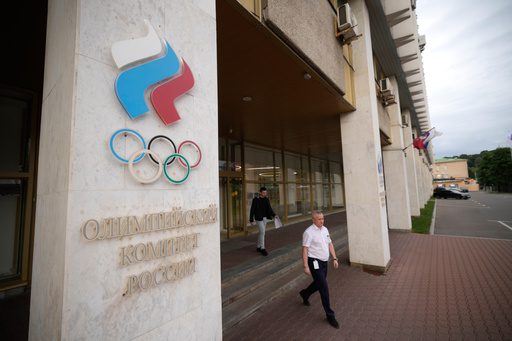
Many saw it coming. For months, there’s been a discernible shift, a growing fatigue with sweeping bans, particularly from quarters less eager to toe a rigid geopolitical line. This latest directive, cautiously dubbed an “important step” by the Kremlin, effectively reopens the door for Russia’s sports machinery to spin back into full, if somewhat masked, operation. The IOC lifted its provisional suspension on the Russian Olympic Committee and advised international sports federations to—and this is the good bit—stop individually vetting athletes for ‘neutral’ competition. Quite the burden, that vetting. Better just wave ’em through.
Dmitry Peskov, President Putin’s ever-present mouthpiece, didn’t waste a minute in spinning this as a triumph. “It’s an important step toward reinstating our athletes’ legitimate rights to participate in international competitions,” he reportedly told reporters, the usual measured tone barely concealing a victory lap. “Work will continue through our sports authorities. They’re conducting this work constantly and consistently, this work will continue.” It’s classic Moscow; methodical, persistent, always playing the long game. And frankly, who can blame them? A nation craves validation, even—especially—on the global sporting stage, a sort of soft power projection when hard power is drawing ire.
But the road back isn’t entirely paved in gold, certainly not yet. Not everyone’s lining up to applaud. Some international bodies, like World Athletics, aren’t exactly rushing to welcome Russians back. They’ve stuck to their guns, asserting their autonomy in keeping Russia’s track — and field athletes out. FIFA, soccer’s global behemoth, meanwhile, has been typically, admirably equivocal. “FIFA has been made aware of the decision taken by the IOC,” a spokesperson, opting for institutional anonymity, shared in a statement, “FIFA will analyze the decision before deciding on next steps in coordination with the relevant stakeholders.” You know, *analyze*. They do love a good analysis, those chaps. (But let’s be real, they’re probably already crunching numbers on how many rubles might flow if Russia fields a team in Euro 2028.)
However, FIFA’s actions already hint at their likely direction. Remember that under-15 Football Festival in Azerbaijan last year? Russia was invited, banners — and all, right after the IOC started easing rules for youth teams. That wasn’t an oversight. That was a test balloon, floating nicely in a Muslim-majority nation, showcasing an emerging sports diplomacy outside the traditional Western bloc. Nations like Azerbaijan, and indeed Pakistan, Iran, and many in Southeast Asia, frequently find themselves navigating the treacherous waters of global political alignments. For them, engagement, even with diplomatically challenged powers, often represents economic opportunity or simply a pragmatic refusal to fully align with Western-led boycotts. A subtle dance, this—an economic partnership today, a vote in a sports federation tomorrow.
Consider this: prior to the current conflict, the Russian Olympic Committee (ROC) was a significant player, annually contributing millions to various sports development funds, a figure which the IOC likely feels the pinch of absence from. For all the talk of ‘neutrality,’ money — and influence tend to win out eventually, no? Just look at the Olympic hosting bids, or for that matter, any global governance body.
📄 POLICY WIRE WHITEPAPER PUBLISHED: PAKISTAN'S NATIONAL SECURITY POLICY PRIORITIES
👉 READ BY CLICKING HEREWhat This Means
This isn’t just about athletic performance; it’s a thermometer for international relations. This IOC decision underscores a growing, if uncomfortable, push to decouple, or at least compartmentalize, sports from broader geopolitical conflict—especially when certain powerful nations are involved. The IOC, having weathered criticism for its slow response to the initial crisis, appears to be adopting a policy of slow normalization, hoping that gradual re-integration will be less provocative than a sudden, sweeping embrace.
For nations like Pakistan, it presents a delicate balancing act. They, like many in the broader Muslim world and South Asia, often maintain pragmatic relations with various global powers. Such a shift from the IOC creates space, politically speaking, for their own engagement without appearing to actively defy Western positions. But there’s also the underlying fear: is this an erosion of ethical standards, where aggression on one front is excused on another? Because if sports cease to reflect *any* moral compass, then what exactly are we celebrating?
The broader economic implications are pretty clear. Major sporting events are colossal generators of revenue — and prestige. Re-admitting Russia, even partially or under ‘neutral’ flags, promises a return of advertising dollars, viewership figures, and—crucially for organizations like the IOC—funding contributions. A 2023 financial report by PwC estimated that sports diplomacy globally had increased in strategic importance by almost 30% in the last decade, primarily due to rising broadcast rights and sponsorship values. The integrity of the Games might be compromised, sure, but the show, it seems, must go on. It’s always been about the show, hasn’t it? Just beneath the surface of fair play lies an intricate web of political maneuvering and hard cash, making the scales of sporting justice incredibly difficult to balance.