

Insights on Climate Crises from Cyclone Ditwah
Cyclone Ditwah, one of the deadliest storms to hit Sri Lanka this century, has left the island nation grappling with unprecedented destruction. Over two million people, nearly 10 percent of the...

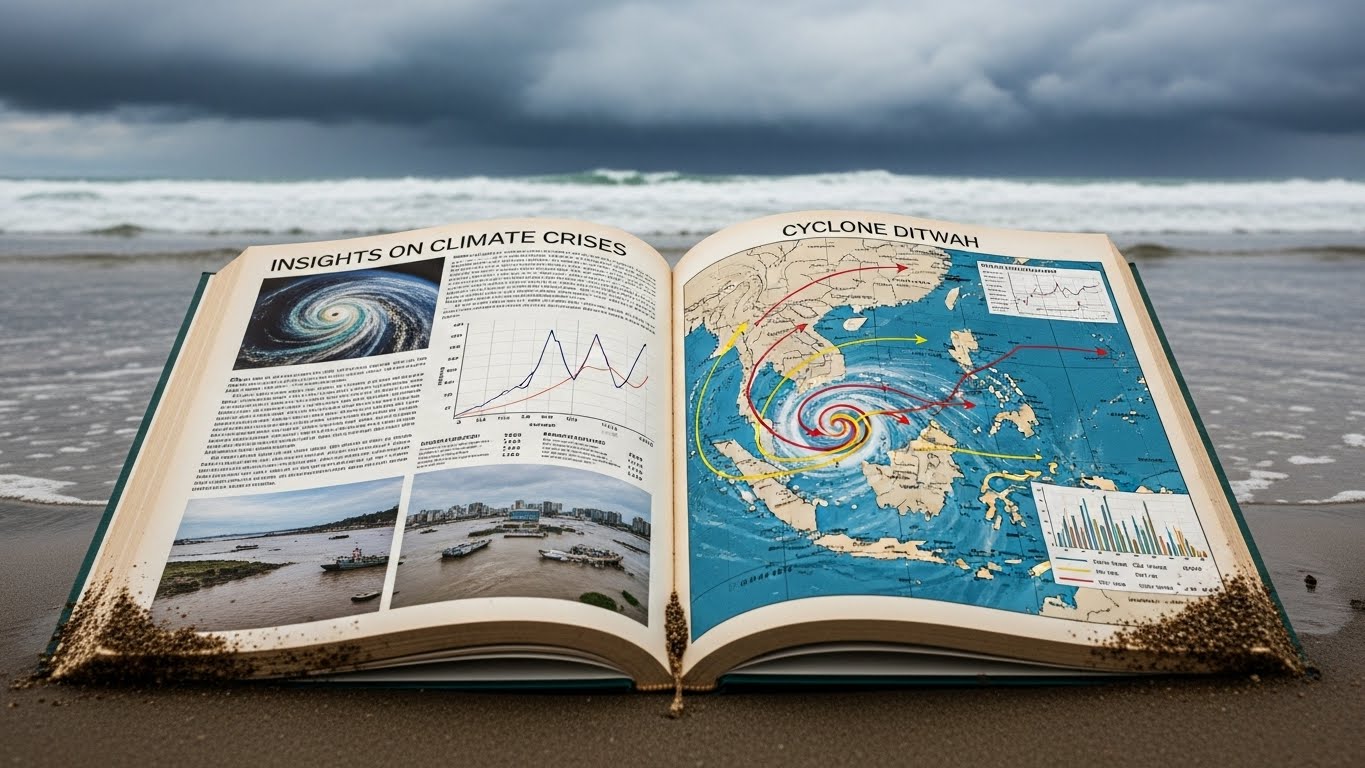
Cyclone Ditwah, one of the deadliest storms to hit Sri Lanka this century, has left the island nation grappling with unprecedented destruction. Over two million people, nearly 10 percent of the population, have been affected, with the death toll climbing past 618. Floods, landslides, and collapsing infrastructure have plunged communities into chaos, displacing hundreds of thousands and leaving them reliant on emergency aid. Amid this unfolding humanitarian crisis, Pakistan has emerged as one of Sri Lanka’s most consistent regional partners, providing timely relief, essential supplies, and specialized rescue teams. The recent dispatch of an additional 7.5 tons of humanitarian aid, including tents, tarpaulins, and powdered milk, is the latest manifestation of Pakistan’s commitment, coming on top of 200 tons of earlier aid and air shipments.
While the statistics are alarming, they only hint at the human cost. Entire neighborhoods have been washed away, schools and hospitals submerged, and lives uprooted. In these moments, material relief is indispensable, but so is the symbolic reassurance that the world has not abandoned the victims. Pakistan’s continued assistance carries both practical and symbolic significance: it saves lives in the immediate term and reaffirms a sense of solidarity between neighboring nations in an increasingly climate-stressed region.
Humanitarian engagement beyond material aid
Pakistan’s contribution goes beyond simply delivering supplies. The deployment of a 47-member urban search and rescue team, equipped with specialized machinery and personnel, highlights an approach that integrates material aid with human expertise. In disaster zones, the presence of trained professionals can mean the difference between life and death. Rescue teams assist in locating survivors trapped under debris, provide medical aid in the initial critical hours, and coordinate with local authorities to stabilize affected communities. By offering trained personnel alongside supplies, Pakistan is demonstrating an understanding of humanitarian aid as a multidimensional responsibility rather than a transactional act of charity.
Such gestures also reflect the broader moral and political ethos of regional cooperation. South Asia is a region particularly vulnerable to climate-induced disasters, from cyclones in coastal areas to floods in riverine plains. These crises do not respect borders, and the capacity of any single nation to respond comprehensively is limited. Pakistan’s repeated support for Sri Lanka, through air, sea, and human relief, sends a clear message that regional crises require collective responsibility and cooperation. It sets a precedent for other nations in the region to follow suit, particularly at a time when climate change is intensifying both the frequency and severity of natural disasters.
The scale of devastation and the limits of short-term aid
However, while Pakistan’s efforts are commendable, they also illuminate the enormity of the challenge. Cyclone Ditwah has exposed the systemic vulnerabilities of Sri Lanka’s disaster preparedness infrastructure. With 10 percent of the population affected, the destruction goes far beyond immediate relief needs. Roads, power lines, hospitals, and homes have been damaged or destroyed, leaving long-term recovery as a daunting task. Hundreds of thousands remain displaced, relying on temporary shelters and emergency supplies. The reconstruction of lives, homes, and livelihoods will require sustained and coordinated efforts, not just episodic aid.
This is where the distinction between short-term humanitarian assistance and long-term disaster resilience becomes critical. Pakistan’s aid addresses the immediate, life-saving needs—food, shelter, and rescue—but the long-term challenge will be the rehabilitation of communities, restoration of infrastructure, and the prevention of further disasters. Lessons from past cyclones and floods suggest that without systemic preparedness, such disasters recur with similar intensity and impact. In other words, while aid is essential, it is reactive; resilience, planning, and investment are proactive.
Climate change as the underlying catalyst
Cyclone Ditwah is a stark reminder of the growing intensity of climate-induced disasters. Rising sea levels, changing rainfall patterns, and increasing ocean temperatures are combining to produce cyclones of unusual strength and frequency. Sri Lanka’s vulnerability is not an isolated phenomenon—it is indicative of the broader South Asian and global climate crisis. In this context, regional cooperation and humanitarian support are not acts of optional solidarity; they are essential responses to shared existential threats. Pakistan’s aid, while primarily humanitarian, must also be seen in this framework: a recognition that climate disasters transcend national borders and require transnational coordination.
Moreover, there is a broader geopolitical dimension to this engagement. South Asia has historically been marred by rivalries and political tensions, yet disasters such as Ditwah have the potential to transcend these divides, fostering cooperation and goodwill. Pakistan’s swift and repeated response enhances its image as a responsible regional actor while reinforcing the principle that humanitarian imperatives must rise above political considerations. This, in turn, could serve as a model for regional crisis management: effective response anchored in both material support and solidarity.
Challenges ahead and the need for systemic response
Despite the ongoing aid, the challenges in Sri Lanka are enormous. Recovery will take years. Displaced communities require permanent housing solutions, access to clean water, education, healthcare, and the restoration of livelihoods. Farmers face ruined crops, small businesses have been destroyed, and infrastructure rehabilitation will require significant financial investment. The international community must recognize that immediate relief, though necessary, is insufficient for long-term recovery.
Herein lies a crucial lesson for South Asia: countries must invest not only in reactive aid mechanisms but also in pre-disaster preparedness. Early-warning systems, resilient infrastructure, and coordinated regional response frameworks are no longer optional—they are essential. Pakistan’s ongoing relief operations for Sri Lanka should not only be lauded but also leveraged to build lasting regional capacity to respond to climate crises. Regional cooperation could encompass shared disaster management resources, joint training programs, coordinated early-warning alerts, and collaborative research on climate resilience.
The moral imperative of solidarity
At its core, Pakistan’s aid is a moral statement. It reflects empathy, responsibility, and the recognition of shared humanity. While media attention often focuses on the scale of material aid, the underlying message is equally important: in a world increasingly fragmented by political disputes, humanitarian crises demand collective response and mutual support. Pakistan’s engagement demonstrates that even amidst global political complexities, the bonds of human solidarity can and must prevail.
Conclusion
Cyclone Ditwah has inflicted wounds that will take decades to heal. The destruction it has caused is a warning of the growing climate challenges facing South Asia and the world. Pakistan’s aid—both in material terms and through the deployment of rescue personnel—is a critical intervention that saves lives today. It is also a beacon of regional solidarity and a reminder that no nation is isolated in the face of climate catastrophe.
Yet, the crisis also underscores a harsh reality: humanitarian aid, however generous, is a temporary solution. Long-term resilience, systemic preparedness, and sustained regional cooperation are essential to mitigate future disasters. South Asian nations, with their shared vulnerabilities, must move beyond episodic responses to strategic planning, structural investment, and coordinated action. Pakistan’s assistance to Sri Lanka is commendable, but it must also serve as a clarion call: solidarity must be sustained, systemic, and proactive. The human cost of inaction is too high, and the lessons of Cyclone Ditwah are clear—climate disasters are inevitable, but the suffering they cause is not.
Author